Find me on facebook www.facebook.com/shamshad.haider https://www.youtube.com/shamshad14
Monday, March 17, 2014
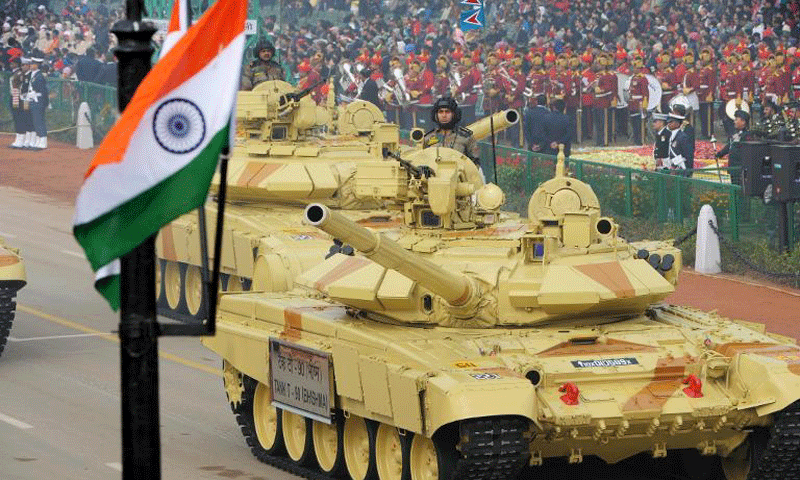
Indian arms imports almost triple China, Pakistan: study
PARIS: India remains the biggest buyer of arms in the world, importing nearly three times as many weapons as its nearest competitors China and Pakistan over the last five years, a Swedish think tank said on Monday.
The total volume of arms sales was up 14 per cent in 2009-13 compared to the previous five years, according to the Stockholm International Peace Research Institute (SIPRI).
Indian imports of major weapons rose by 111 per cent in the last five years compared to 2004-08. Its share of total global arms imports increased from 7 to 14 per cent, SIPRI said.
India replaced China as the world's biggest arms buyer in 2010. With its domestic defence industry struggling to manufacture high-tech arms, India is in the midst of a defence spending binge as it struggles to keep up with better-equipped Chinese forces and a range of military challenges in its volatile neighbourhood.
The main supplier of arms to India in 2009-13 was Russia, accounting for 75 per cent of all imports — reflecting India's need to upgrade and modernise weapons systems dating back to their close relationship during the Cold War. India has lately sought to diversify its sources, looking particularly to the United States.
Figures from IHS Jane's released in February showed that India became the biggest buyer of US weapons last year — with total imports worth $1.9 billion, and a string of large-scale purchases including Boeing's C-17A transport aircraft and P-8I Maritime Patrol Aircraft.
In 2009-13, however, the US still accounted for only 7 per cent of India's purchases according to SIPRI.
India's traditional rival Pakistan increased its weapons acquisitions by 119 per cent, growing from 2 per cent of the global total to 5 per cent during that period.
The five largest arms suppliers worldwide between 2009 and 2013 were the United States (29 per cent of global exports), Russia (27 per cent), Germany (7 per cent), China (6 per cent) and France (5 per cent).
They collectively accounted for 74 per cent of total arms exports, SIPRI said.
The world's top five arms importers were now India, China, Pakistan, the United Arab Emirates and Saudi Arabia.
“Chinese, Russian and US arms supplies to South Asia are driven by both economic and political considerations,” said Siemon Wezeman, senior researcher with the SIPRI Arms Transfers Programme.
“In particular, China and the USA appear to be using arms deliveries to Asia to strengthen their influence in the region,” Wezeman said.
Arms exports to Africa between 2004-08 and 2009-13 jumped 53 per cent. The three largest importers in the region were Algeria, Morocco and Sudan.
Imports by European nations decreased by 25 per cent between 2004-2008 and 2009-13.
Britain was the largest importer of major weapons in Europe (receiving 12 per cent of deliveries), followed by Azerbaijan (12 per cent) and Greece (11 per cent).
Gas consumers to pay for leakage, theft
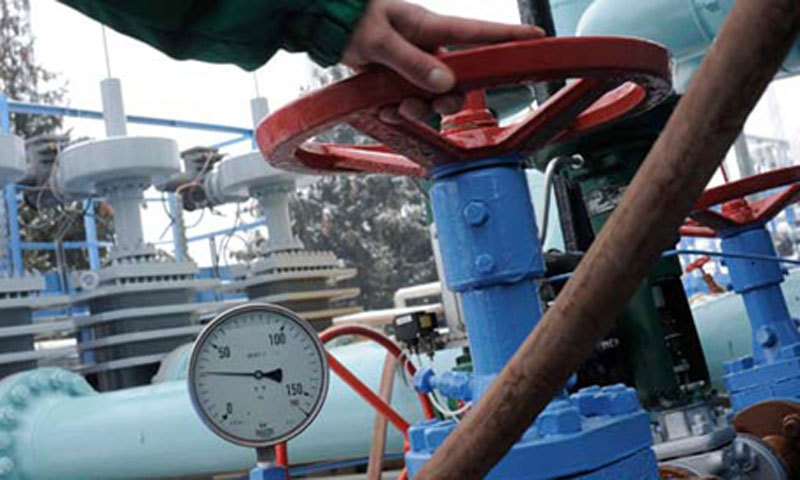
ISLAMABAD: The government is planning to allow gas companies to recover greater amounts from consumers on account of gas lost due to theft and leakages, effectively bailing them out, according to sources.
A government official said that Petroleum Minister Shahid Khaqan Abbasi would soon chair a meeting of top officials of the Oil and Gas Regulatory Authority (Ogra) and the gas companies to finalise recommendations for increase in the limit for unaccounted for gas (UFG), to ensure higher revenues for the Sui Southern Gas Company Ltd (SSGCL) and Sui Northern Gas Pipelines Ltd (SNGPL).
This is being seen by many as recognition by both the government and the regulator of the utilities’ inability to control gas losses and to legitimise a change in performance standards. Such a change in standards when made by former Ogra chairman Tauqir Sadiq landed him in legal trouble.
This is for the first time that the regulator itself has sought intervention of the government to fix benchmarks, a responsibility Ogra has been exercising since its inception in the late 1990s. More importantly, a government officer pleading the case on behalf of the gas companies has now asked the government to take a policy decision.
About a month ago, Ogra requested the government to issue policy guidelines pertaining to thieves and pilferers and the gas lost in areas adversely affected by law and order problems.
Ogra member Amir Naseem, who was working for the SNGPL until a few months ago, has written a letter to secretary of petroleum and natural resources ministry to issue policy guidelines on UFG. He said that factors like diversion of gas from bulk consumers to retail customers due to load curtailment, massive expansion of domestic connections, shortage of gas, and load management policy of the government had served to increase the gas losses of the companies.
He said that bulk consumers were less prone to leakages and because of their high volume could be better monitored by the gas companies but retail consumers to whom gas had been diverted in the recent past were more prone to leakages and theft. “This shift from bulk to retail consumers is not in their (gas companies) control and mainly governed by policies of the government,” he said.
An official said that Ogra had urged the government to increase UFG benchmark by around 3 per cent besides an allowance of about 1.5 per cent on account of gas lost in law and order-hit areas.
Leaders lay stress on protecting minorities
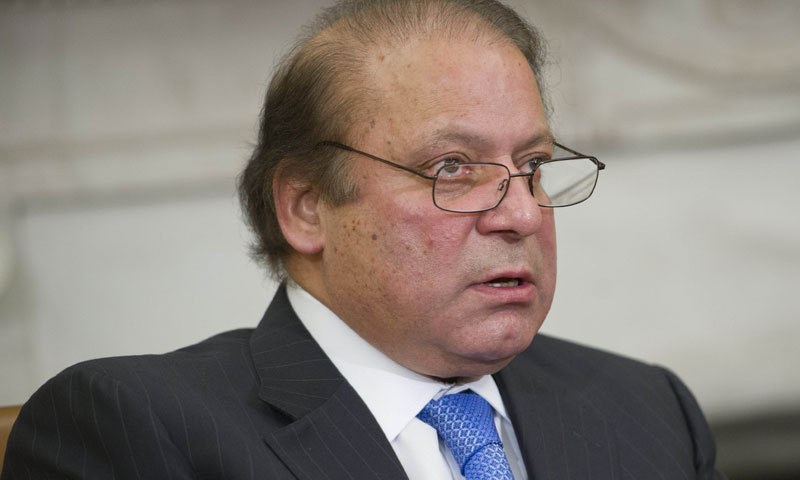
ISLAMABAD: The prime minister and leaders of different political parties have expressed concern over the alleged desecration of the Holy Quran in the Larkana district and a subsequent arson attack on a temple and Dharamshala.
Prime Minister Nawaz Sharif said providing security to the minorities was the responsibility of the government.
He directed provincial governments to take measures to protect the life and property of people belonging to the minority communities and ensure that no one created a law and order situation.—APP
Amir Wasim adds: PPP leader and former president Asif Ali Zardari directed the Sindh government to safeguard life and property of people belonging to the minorities.
He asked the government to investigate the incident and allow no one to disturb peace and harmony among followers of different religions.PPI news agency quoted Muttahida Qaumi Movement leader Altaf Hussain leader as saying the government should take steps to protect the life and property of the Hindus and their places of worship.
In a statement from London, he urged the Sindh government to take action against those responsible for the two incidents.
Gohar Ali Khan adds from Hyderabad: Jamiat Ulema-i-Pakistan chief Sahibzada Abul Khair urged people to protect the life and property of minorities.
If any body committed blasphemy, he said, he should be arrested and punished but a temple should not be attacked for the act of an individual. Meanwhile, leaders of nationalist parties and other organisations condemned the two incidents and called for a judicial inquiry.
They said that arson attack on the temple and harassment of Hindu people was against the teachings of Islam which promoted peace, tolerance, brotherhood and protection of minorities.
Police bosses to tell court about (in)action
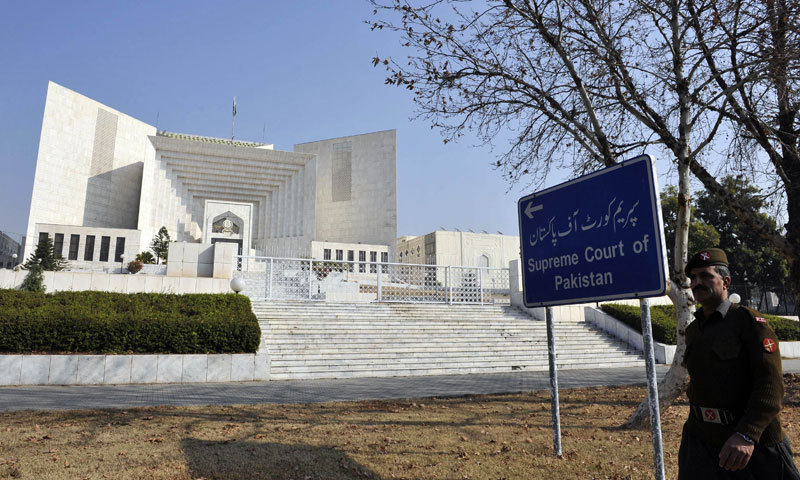
LAHORE: The provincial police officer, the incumbent Muzaffargarh district police officer and the former DPO are appearing before the Supreme Court of Pakistan today (Monday) in connection with the self-immolation of a 19-year-old girl.
Police authorities would present before the Chief Justice of Pakistan the so far police action into the incident, re-arrest of the rape suspect and status of the departmental inquiry.
Sources said the final findings of the fact-finding inquiry would be completed by the additional IG Investigation as of Monday night and would be submitted to the chief minister.
A police source privy to the inquiry told Dawn that incompetence and ‘criminal’ negligence by the investigation officer was initially established in the incident.
He said the IO only focused on one-sided version of the suspect and his seniors failed to look into the case actively by involving the girl and her family.
The girl, who was a college student and a resident of Lundi Pittafi village, and her mother kept visiting different police offices since Jan 5 (the date of attempted rape) till March 13 (the day of suicide attempt), but to no avail.
The source said the suspect, who wanted to marry the girl of his village, tried to assault her after she and her family rejected his marriage proposal. The suspect initially secured interim bail and was later declared innocent by the IO which led to withdrawal of his bail application.
The source said the announcement that the chief minister would visit the ill-fated family forced police to re-arrest the suspect.
But, the arrest of suspect Nadir even could not save police officers from government action as Dera Ghazi Khan Regional Police Officer Abdul Qadir Qayyum and Muzaffargarh DPO Usman Akram Gondal were removed from their posts while two DSPs, two SHOs and the IO were booked in another case.
Mr Qayyum, the source said, was surrendered to the federal government, following the orders of the chief minister and Mr Gondal would likely to be suspended from service after the Establishment Division had been officially approached by the Services & General Administration Department, Punjab. Both DSPs and SHOs are still at large.
Another source close to the investigation said a reporter and cameraman of a leading news channel who recorded the self-immolation scene outside Bet Mir Hazar Khan police station, were present before the girl and her mother came out of the police station where the SHO assured the girl of support.
He said it was strange after watching the footage that when the girl set herself ablaze, no body tried to save her rather acted as silent spectator.
Only the girl’s mother, the SHO and his subordinate, who rushed to the scene from the nearby police station, were seen extinguishing fire.
The source said it was established that the girl reportedly told the SHO that she could set herself ablaze after leaving his office, but he failed to take any preventive measure.
He said usually police took such protesters in protective custody and pursue legal action against them.
D G Khan DPO Dr Muhammad Abid, who has been given the additional charge, has changed the investigation of the case.
Meanwhile, the provincial government is most likely to post DIG Rehmat Niazi as new D G Khan RPO. Sources said Mr Niazi, who was relieved from Balochistan, had already been put at the disposal of the Punjab government.
They, however, said the panel was yet to be formed for appointing new Muzaffaragh DPO.
Authorities have appointed SP Muhammad Omer Saeed as Muzaffargarh SP Investigation against an existing vacancy. The post had been lying vacant for the last few months.
Saudi bans books at fair in wide-ranging crackdown
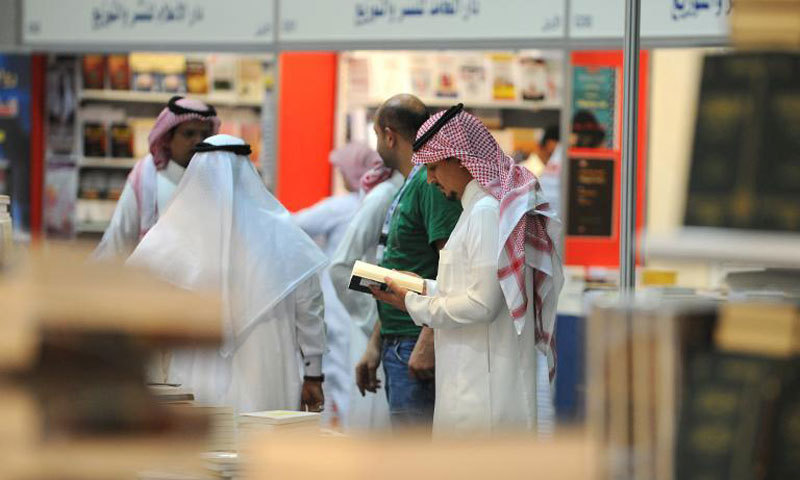
RIYADH: Saudi authorities have banned hundreds of books, including works by renowned Palestinian poet Mahmud Darwish, as part of a crackdown on publications deemed threatening to the kingdom.
Saudi Arabia clamped down on dissent following the Arab Spring uprisings of 2011, from which it has been largely spared, and has adopted an increasingly confrontational stance towards the Muslim Brotherhood and other Islamist groups it has long viewed as a threat to its security.
The local Okaz daily reported Sunday that organisers at the Riyadh International Book Fair had confiscated “more than 10,000 copies of 420 books” during the exhibition.
Local news website Sabq.org reported that members of the kingdom's religious police had protested at “blasphemous passages” in works by the late Darwish, widely considered one of the greatest Arab poets, pressing organisers to withdraw all his books from the fair, which ended Friday.
The religious police frequently intervene to enforce the kingdom's strict conservative values, but the move to ban so many works was seen as unprecedented.
Similar action was taken against works by Iraq's most famous modern poet, Badr Shaker Al Sayyab, and another Iraqi poet, Abdul Wahab Al Bayati, as well as those by Palestinian poet Muin Bseiso.
The fair's organising committee also banned a book entitled “When will the Saudi Woman Drive a Car?” by Abdullah Al Alami, the Saudi Gazette daily reported.
Other banned books include “The History of Hijab” and “Feminism in Islam.”
Activist Aziza Yousef said the crackdown had offered “free advertising to those whose books were banned” as many “rushed to download these works from the Internet.”
Organisers also banned all books by Azmi Bishara, a former Arab Israeli MP who left the Jewish state in 2007 and is now close to authorities in Qatar, where he is based, Sabq.org reported.
The ban comes amid escalating tensions between Qatar and three other Gulf Arab monarchies — Saudi Arabia, the United Arab Emirates, and Bahrain — who pulled their envoys from Doha earlier this month, accusing it of interfering in their internal affairs.
Sunday, March 16, 2014
Families face worst nightmare of mid-air ordeal on MH370
25 countries now involved in plane search: Malaysia
KUALA LUMPUR: Malaysia said on Sunday the number of countries involved in efforts to find a missing passenger jet had nearly doubled to 25 as it began a new push to find the plane across a vast arc of land and ocean.
"The number of countries involved in the search and rescue operation has increased from 14 to 25, which brings new challenges of coordination and diplomacy to the search effort," said Hishammuddin Hussein, Malaysia´s defence and transport minister.
Mother, 3 daughters set at fire by sprinkling petrol at Bhawalnagar
BHAWALNAGAR: Some unknown persons set at fire a mother and her three daughters after sprinkling petrol, but fortunately the condition of the affected ladies are reported to be out of danger on Sunday here, Geo News reported.
Police said that some unidentified persons barging into a house spraying petrol in the room set it at fire that inflicted burn injuries to Rani Bibi and her three daughters Miraj Fatima, Shaista and Samina, while the accused managed to flee away.
The neighbours hearing the burned ladies crying in pain rushed them to the District headquarter Hospital.
Later, Bhawalnagar DPO, Athar Ismail visiting the hospital enquired after the health of the wounded ladies.
Police have registered a case against unknown persons and started investigation into the incident.
Ban on ‘youtube’ to be lifted soon: Rashid
LAHORE: The ban on 'youtube' will be lifted soon, said Federal Information Minister Pervaiz Rashid, while adding that software to block ‘objectionable content’ on the site is ready.
Speaking to senior journalists here Sunday, Rashid said responsibilities of provincial governments have increased for restoration of peace in the country. The minister added that the government is playing its role to deal with those elements wishing to impose their agenda on others.
The Minister called for concerted and collective efforts to tackle the issue of terrorism as the extremist way of thinking is against democracy‚ the government and the media.
He added that the government wants to ensure protection of journalists as they are playing an important role in the war against terrorism.
Pervez Rashid said the media should keep in view Pakistani culture and act with more responsibility by following its own code of ethics when showing foreign programs.
New security plan for Islamabad to come into force Apr 15: Nisar
ISLAMABAD: Interior Minister, Chaudhry Nisar Ali Khan Sunday said a new operational strategy aimed at stepping up security of the capital city of Islamabad would be put into force from April 15.
Addressing a high-level meeting here, the Interior Minister said a joint patrolling by police and Rangers of the city was being introduced while additional security responsibilities were being assigned to the paramilitary force.
He further said that the Islamabad police would be trained under the standards of Elite Force and well-trained retired military officials would be inducted for the purpose.
Chaddhry Nisar directed the Federal Investigation Agency (FIA) to improve performance and initiate stern action against officials and staff involved in the crime of human trafficking.
He also ordered for the identification and arrest of Islamabad police officials and personnel having links with criminal elements.
Thirty Six Pakistan born players playing in World T20
KARACHI: The fifth edition of the ICC World T20 which commenced in Dhaka on Sunday, features at least 36 Pakistan born players playing for various teams including Pakistan.
The Green Shirts’ 15 member squad led by Muhammad Hafeez will launch their campaign on March 21st when they take on arch-rivals India.
The remaining 21 Pakistan born players are representing six teams.
Hong Kong has the most number of Pakistan born players, after Pakistan’s squad. Gujrat born Tanvir Afzal and Munir Dar, Babar Hayyat and Ehsan Nawaz of Attock, Haseeb Amjad and Waqas Barkat of Rawalpindi along with Irfan Ahmed, Nadeem Ahmed and Nizakat Khan – all will be representing Hong Kong in ICC World T20 2014.
The United Arab Emirates has seven Pakistan born players in their squad and they’re Khurram Khan, Amjad Ali, Faizan Asif, Rohan Mustafa, Shaiman Anwar, Sharif Asadullah & Kamran Shahzad.
South Africa, Zimbabwe, Afghanistan and the Netherlands have one Pakistan born player each in their squads.
Pakistan born Imran Tahir will be representing South Africa, Mudassar Bukhari will be playing for the Netherlands, Sikandar Raza is selected in Zimbabwe’s squad while Gulbadin Naib will be wearing Afghanistan’s jersey in the event.
Geo Reports - 16 Mar 2014 - 36 Pakistanis... by GeoNews
Malaysia seeks Pakistan help over missing jet issue
KUALA LUMPUR: Malaysia on Sunday asked nearly a dozen Asian countries including Pakistan to share information that may help finding the missing plane.
The number of countries involved in efforts to find a missing passenger jet had nearly doubled to 25 as it began a new push to find the plane across a vast arc of land and ocean.
"The number of countries involved in the search and rescue operation has increased from 14 to 25, which brings new challenges of coordination and diplomacy to the search effort," said Hishammuddin Hussein, Malaysia's defense and transport minister.
Eggs can deprive you of sleep!
Now, stay ahead of the sleepiness that creeps up to you at unwanted hours of the day, by simply eating an egg! According to a new study, proteins that are found in the egg white can help one stay awake and feel alert.
Researchers at Cambridge University have found that egg proteins are much more effective than carbohydrates found in the chocolates, biscuits and sweets often relied on for a quick energy boost.
The researchers, found that a mixture similar to the protein content of egg whites activated these cells, triggering the release of the stimulant Orexin, the Daily Mail reported.
Sugar, however, blocked the release of Orexin.
The findings were published in the journal Neuron. More recently, researchers at the British Nutrition Foundation found that the type of cholesterol found in eggs has minimal effect on raising the risk of heart disease.
The researchers concluded the type of cholesterol found in eggs has minimal effect on raising heart disease risks.
It is the saturated fat; found in eggs, which is the main culprit in raising cholesterol levels, they said.
So, if you have a choice between jam on toast and egg whites on toast, go for the latter.
PICS: See how Sonia-Rahul Gandhi,Rajnath Singh & other political leaders celebrate Holi
New Delhi: On one side where candidates of various political parties are gearing up for the upcoming Lok Sabha Elections, we bring you some pictures of them on the festival of colors ‘Holi’. Along with common men, political leaders also celebrate Holi with enthusiasm.
Whether it is Bjp’s Rajnath Singh, Lal Krishna Advani, Shivraj Singh Chauhan, Navjot Singh Sidhu, Uma Bharti or Congress President Sonia Gandhi and Vice President Rahul Gandhi or RJD’s Lalu Prasad Yadav, all political leaders celebrate Holi in their own way.
None of them could be recognized once they start playing Holi. The color and water can be seen dripping from their face and clothes in the pictures. It is exciting to see this side of country’s political leaders. So, have a look at these pictures of political ministers in festive mood. The pictures were taken over past few years during the celebration
SHOCKING: Over a quarter of total Muslims in India are behind bars
New Delhi: In a shocking revelation, it has come to light that the number of Muslims and Christians languishing in jails on terror charges is more than double of the share of the two communities in the national population.
According to a report - 'Prison Statics India- 2012' - prepared by the National Crimes Record Bureau (NCRB), in 2012, as many as 28.02 percent of the total detainees in entire country belonged to the Muslim community while the community constitutes only 13.4% of the national population. The year witnessed an increase in the number of Muslim detainees as in 2011 it was 26.5 percent.
According to the report, the proportion of detainees from Christian minority is also very high. As per the census data, Christians are only 2.3 percent in Indian population but at least 6 percent of those who are staying behind the bars in 2012 belonged to the Christian community.
According to NCRB, any person detained in prison on the orders of competent authority under the relevant preventive detention law is called detenue (detainee).
The report says that a total of 1,922 persons were detained in 2012 and 28.2 percent of it (i.e. 543) were from the Muslim community. According to the 2001 Census, Muslims constitute 13.4% of the total population of the country.
Muslims are far more than their national population share not only among detainees but also among undertrials and convicts.
Out of the total 2,54,857 under trial prisoners, 21 percent (53,638) belonged to Muslim community in 2012. Out of the total convicts in the said year, 17.8 percent (22,687) were Muslims. Interestingly, 53.5 percent of convicted Muslims were lodged in four states Madhya Pradesh, Maharashtra, Uttar Pradesh and West Bengal.
Malaysian aircraft mystery: Did Hijackers plan 9/11-type attack in India?
New Delhi: A week after the Malaysian plane MH 370 was thought to have crashed, its disappearance has turned from increasingly mysterious to a possible hijack.
Malaysia turned the search into a criminal investigation on Saturday, after its Prime minister declared that the aircraft had been deliberately diverted from its planned route from Kuala Lumpur to Beijing. The plane then flew as much as seven hours to an unknown destination.
Meanwhile, on Saturday, Strobe Talbott, former deputy secretary of state in the US, tweeted, "Malaysia plane mystery: Direction, fuel load & range now lead some to suspect hijackers planned a 9/11-type attack on an Indian city."
The flight 370 sent its last hourly transmission to a satellite at 8.11am on March 8 over seven hours after it took off from Kuala Lumpur. According to the Malaysian government, the map shows two possible locations of the aircraft.
The Prime Minister Najib Razak said that the communications systems of missing Malaysia Airlines flight MH370 were deliberately disabled.
"Always when you fly, you are in contact with air traffic control in some country but the plane didn't contact Vietnam air traffic control. The transponder signal was turned off, so I think the timing of turning off the signal just after it left Malaysian air traffic control indicates someone did this on purpose," he asserted.
Based on the angle of transmission from the plane, Najib stated that a satellite orbiting 35,800km over the middle of the Indian Ocean received a transmission that came from a location somewhere along one of two arcs. One arc runs near Jakarta, Indonesia, to the Indian Ocean while the other runs from the southern border of Kazakhstan in Central Asia to northern Thailand.
While on Saturday, Malaysian police went to the house of Captain Zaharie Ahmad Shah, the pilot of the missing flight MH370, minutes after Razak announced that investigators would refocus on the crew and passengers of the aircraft that disappeared eight days ago.
"Two police officers went to 53-year-old Capt Zaharie’s house in the suburb of Shah Alam here," officials said, without further elaborating.
The Indian military also spent much of Saturday scanning the Bay of Bengal in a big hunt for the missing plane.
Sonia, Rahul, Advani, Rajnath fail to spend even R 19 cr of MP fund; Sachin, Rekha spent nothing
New Delhi: The term of the 15th Lok Sabha is going to end on May 31, but well-known leaders like Congress President Sonia Gandhi, Congress Vice President Rahul Gandhi, Bjp chief Rajnath Singh and BJP patriarch LK Advani have spent much less than their quota of funds allocated under the Member of Parliament Local Area Development Scheme (MPLADS).
Records available with the Ministry of Statistics and Programme Implementation suggest that Sonia, Rahul, Advani and Rajnath have not collectively spent Rs. 18.95 crores.
While Sonia, who represents Uttar Pradesh's Rae Bareli constituency in Lok Sabha, has emerged as the best performer by spending over 79% of the sanctioned fund under the MPLADS, Advani has secured second position with the utilization of 77.57% of the total fund allocated to him.
Rajnath Singh follows Advani with 76.01% utilization. Advani represents Gujarat's Gandhinagar while Singh represents Ghaziabad in Uttar Pradesh.
Rahul Gandhi, the number 2 in Congress and party’s unannounced prime ministerial candidate, is the poorest performer of the four. Gandhi who is the MP from Amethi in Uttar Pradesh has utilized only 69.80% of the MP fund at his disposal.
According to the data, Sonia Gandhi has Rs. 4.12 crore as unspent amount, Rahul Gandhi has Rs. 5.55 crore to spend while Rajnath Singh has Rs. 4.98 crore and LK Advani Rs. 4.30 crore.
Ironically, former cricket Sachin Tendulkar and Bollywood actress Rekha, who were nominated to Rajya Sabha around two years ago, have spent "zero" rupee on development in their respective adopted areas.
Notably, Rajya Sabha MPs get to adopt a district of their choice for development. Each member of the Upper House is entitled to Rs. 5 crore a year from their MPLAD fund. Sachin Tendulkar adopted district is Mumbai suburban, but Rekha has not bothered to even adopt a district.
Given that the 15th Lok Sabha is in the last year of its term, MPs should have spent about 75% of their total quota, which was Rs. 2 crore per year during the first two years of this Lok Sabha. This was raised to Rs. 5 crore per year in 2011. Thus, MPs could recommend Rs. 19 crore (Rs 2 crore x 2 + Rs. 5 crore x 3) worth of development work during the term of the current Lok Sabha.
During every financial year, each MP has to recommend development works up to the annual entitlement to the concerned district authority. The district authority then sanctions and executes the eligible projects.
Utilization Chart of MPLAD fund for the 15th Lok Sabha
Sonia Gandhi (Rae Bareli)
Entitlement of Constituency: Rs. 19 crore
Amount recommended: Rs. 16.54 crore
Amount sanctioned: Rs. 15.41 crore
Released by the government: Rs. 16.56 crore
Expenditure incurred: Rs. 13.09 crore
Percent of utilisation over released: 79.03%
Amount available with interest: Rs. 17.21 crore
Unspent balance: Rs. 4.12 crore
Rahul Gandhi (Amethi)
Entitlement of Constituency: Rs. 19 crore
Amount recommended: Rs. 19.88 crore
Amount sanctioned: Rs. 14.09 crore
Released by the government: Rs. 16.56 crore
Expenditure incurred: Rs. 11.56 crore
Percent of utilisation over released: 69.80%
Amount available with interest: Rs. 17.11 crore
Unspent balance: Rs. 5.55 crore
Rajnath Singh (Ghaziabad)
Entitlement of Constituency: Rs. 19 crore
Amount recommended: Rs. 19.29 crore
Amount sanctioned: Rs. 16.91 crore
Released by the government: Rs. 19.06 crore
Expenditure incurred: Rs. 14.49 crore
Percent of utilisation over released: 76.01%
Amount available with interest: Rs. 19.47 crore
Unspent balance: Rs. 4.98 crore
LK Advani (Gandhinagar)
Entitlement of Constituency: Rs. 19 crore
Amount recommended: Rs. 17.53 crore
Amount sanctioned: Rs. 13.22 crore
Released by the government: Rs. 14.08 crore
Expenditure incurred: Rs. 10.92 crore
Percent of utilisation over released: 77.57%
Amount available with interest: Rs. 15.22 crore
Unspent balance: Rs. 4.30 crore
(Source: Ministry of Statistics and Programme Implementation)
Nato websites targeted in attack claimed by Ukrainian hackers
PARIS: Nato said several of its websites were targeted in a “significant” cyber attack on Saturday that was claimed by Ukrainian hackers in what appeared to be the latest bout of virtual warfare linked to the country's crisis.
Spokeswoman for the military alliance Oana Lungescu said on Twitter that the websites had been hit by “a significant DDOs (denial of service) attack”, but that it had had “no operational impact”.
Under DDOs attacks, hackers hijack multiple computers to send a flood of data to the target, crippling its computer system.
Lungescu said experts were working to restore normal function but the websites remained down for hours and still could not be accessed at around 0430 GMT on Sunday.
Lungescu did not say who was responsible for the attack, which was claimed by a Ukrainian hacker group called Cyber Berkut, the name given to the feared elite riot police involved in a bloody crackdown on protesters in Kiev.
In a statement on its website www.cyber-berkut.org, the group said it had targeted three Nato websites over what it claimed was the alliance's interference in Ukraine and support of the “Kiev junta”.
“We will not allow the presence of Nato in our homeland,” said the statement, which could not be independently verified.
Ukraine has been shaken by turmoil that saw a bloody street revolt oust pro-Russian president Viktor Yanukovych in February as anger exploded over his rejection of closer ties with the European Union in favour of Moscow.
Moscow sparked anger after it sent its forces to occupy the majority Russian-speaking Black Sea peninsula of Crimea, where regional authorities declared independence and will hold a referendum on Sunday on whether to leave Ukraine and join Russia.
Nato and its members have spoken out strongly against the vote, which has escalated East-West tensions to their worst point since the Cold War.
The electronic attack is the latest of several that have seen Ukraine tensions hit cyberspace.
On March 8, British-based BAE Systems said dozens of computer networks in Ukraine had been infected by an aggressive new cyber weapon called Snake, which experts said was most likely the work of Russian hackers.
India suspends search for missing plane
PORT BLAIR: India on Sunday put on hold its search for missing Malaysia Airlines flight MH370, at the request of the government in Kuala Lumpur, which wants to reassess the week-old hunt for the Boeing 777 that is suspected of being deliberately flown off course.
India had been combing two areas, one around the Andaman and Nicobar Islands, and a second, further west, in the Bay of Bengal. Both operations have been suspended, but may yet resume, defence officials said.
“It's more of a pause,” said Commander Babu, a spokesman for the country's Eastern Naval Command. “The Malaysian authorities are reassessing the situation. They will figure whether they need to shift the area of search.”
The fate of the flight, with 239 passengers and crew aboard, has been shrouded in mystery since it vanished off Malaysia's east coast less than an hour into a March 8 flight from Kuala Lumpur to Beijing.
Malaysian Prime Minister Najib Razak said on Saturday the plane appeared to have been deliberately steered off course after someone on board shut down its communications systems.
A review of search operations involving more than a dozen countries will be held in Kuala Lumpur on Sunday, Indian officials said.
“The search operation is not over, we are on standby and are awaiting instructions from the Malaysians,” said a senior military official in Port Blair, capital of the Andaman and Nicobar Islands, an archipelago west of the Malay Peninsula.
Toll in Syria-linked clashes in Lebanon rises to 11
TRIPOLI: Eleven people have been killed in three days of clashes in the northern Lebanese town of Tripoli linked to the conflict in Syria, security sources and the Lebanese army said Sunday.
Overnight, the army announced the death of a soldier when a military patrol in the city was hit by an anti-tank grenade.
The latest death brought the toll in clashes that began on Thursday to 11, a security source said.
The clashes, which have also injured 50 people, pit the Alawite district of Jabal Mohsen against the neighbouring Sunni quarter of Bab Al Tebbaneh.
The latest fighting broke out on Thursday after a Sunni man was killed by unknown gunmen on a motorbike in central Tripoli.
But tensions between the districts have run high for decades, only increasing with the outbreak of the conflict in Syria, where Alawite President Bashar Al Assad faces a Sunni-dominated uprising.
The Lebanese army has deployed in the city, arresting several people overnight and responding to sources of fire.
The war in Syria has deepened existing sectarian and political tensions in Lebanon, particularly between supporters of the Shia movement Hezbollah, an Assad ally, and Sunni backers of former prime minister Saad Hariri who support the uprising.
Herdsmen kill 100 in attacks on Nigerian villages
KADUNA: Gunmen killed more than 100 people in an attack on three villages in central Nigeria, an area where longstanding disputes over land, religion and ethnicity often erupt into violence, two local government officials said on Sunday.
Police confirmed the raids by Fulani herdsman late on Friday on the villages of Ugwar Sankwai, Ungwan Gata and Chenshyi, in Kaduna state, but declined to give a death toll.
Hundreds have been killed in the past year in clashes pitting the cattle-herding and largely Muslim Fulani people against mostly Christian settled communities like the Berom in Nigeria's volatile “Middle Belt”, where its mostly Christian south and Muslim north meet.
The unrest is not linked to the insurgency in the northeast by Boko Haram, an Al Qaeda-linked group which wants to impose sharia law in northern Nigeria.
However, analysts say there is a risk the insurgents will try to stoke central Nigeria's conflict. Though most of the Islamist sect's attacks are contained further north but it did claim a 2011 Christmas Day bomb attack at a church in Jos.
“Fulani gunmen came across from neighbouring Plateau state and just opened fire on the villagers at around 11 p.m.,” said Daniel Anyip, vice chairman of the Kaura local government authority. “
We are still picking bodies out of the bush but so far there are more than 100 killed.” Andrew Kazah, another local councilor, said at least 96 had been killed, but that the toll was likely to go up.
Human Rights Watch in December said sectarian clashes in the nation's religiously mixed central region had killed 3,000 people since 2010, adding that Nigerian authorities had largely ignored the violence, an accusation they denied.
Though it sometimes takes on a sectarian character, the violence is fundamentally about decades-old land disputes between semi-nomadic, cattle-keeping communities such as the Fulani and settled farming peoples such as the Berom, both often armed with automatic weapons.
Nigeria is Africa's most populous nation with almost 170 million people, split roughly equally between Christians and Muslims and around 250 different ethnic groups who mostly live peacefully side-by-side.
But the central region has been a tinderbox for decades.
Its violence, far from economic centres or oil fields in Africa's second-biggest economy and top oil producer, rarely captures the attention of its elites.
NATO websites hit in cyber attack linked to Crimea tension
BRUSSELS: Hackers brought down several public Nato websites, the alliance said on Sunday, in what appeared to be the latest escalation in cyberspace over growing tensions over Crimea.
The Western military alliance’s spokesperson, Oana Lungescu, said on social networking site Twitter that cyber attacks, which began on Saturday evening, continued on Sunday, although most services had now been restored.
“It doesn’t impede our ability to command and control our forces. At no time was there any risk to our classified networks,” another Nato official said.
Nato’s main public website (www.nato.int), which carried a statement by Secretary-General Anders Fogh Rasmussen saying that Sunday’s referendum on Crimea’s status would violate international law and lack legitimacy, worked intermittently.
The so-called “distributed denial of service” (DDoS) attack, in which hackers bombard websites with requests causing them to slow down or crash, also hit the site of a Nato-affiliated cyber security centre in Estonia. Nato’s unclassified e-mail network was also affected.
A group calling itself “cyber berkut” said the attack had been carried out by patriotic Ukrainians angry over what they saw as NATO interference in their country.
The claim, made at www.cyber-berkut.org, could not be independently verified. “Berkut” is a reference to the feared and since disbanded riot squads used by the government of ousted pro-Russian Ukrainian President Viktor Yanukovich.
Cyber warfare expert Jeffrey Carr, in a blog on the attacks, described cyber berkut as staunch supporters of Yanukovich and a “pro-Russia hacktivist group working against Ukrainian independence”.
Lungescu noted the statement by “a group of hacktivists” but said that, due to the complexities involved in attributing the attacks, Nato would not speculate about who was responsible or their motives.
Kicking sand
John Bumgarner, chief technology officer at the US Cyber Consequences Unit, a non-profit research institute, said initial evidence strongly suggested that these cyber attacks were launched by pro-Russian sympathisers.
“One could equate these cyber attacks against Nato as kicking sand into one’s face,” he said.
Cyber attacks on Nato’s computer systems are common, but a Nato official, speaking on condition of anonymity on Sunday, said this was a serious online assault.
Ian West, director of Nato’s cyber defense nerve center at Mons in southern Belgium, said last year that the alliance’s network intrusion detection systems handled around 147 million “suspicious events” every day and around 2,500 confirmed serious attacks on its computers in the previous year.
Occupied by Russian forces for two weeks, the largely Russian-speaking Crimea holds a referendum on seceding from Ukraine to join Russia on Sunday. Nato states have opposed the move, calling it unconstitutional and effectively an annexation of Ukraine’s sovereign territory.
Tensions between Moscow and the West have been rising steadily since Russia intervened following the ouster of Yanukovich. Ukrainian and Russian websites have both been targets for cyber attacks in recent weeks but this appeared the first major attack on a Western website since the crisis began.
Suspected Russian hackers used DDoS attacks to cripple websites and services in Estonia in 2007 during a dispute over a war memorial, and against Georgia during its brief 2008 war with Russia. Moscow denied orchestrating such attacks, saying they were simply carried out by independent patriots.
Groups calling themselves cyber berkut have attacked several Ukrainian websites in recent weeks, computer security experts say.
Cyber berkut – which some experts believe may be affiliated with Russian intelligence – published its statement in Russian rather than Ukrainian.
Ukraine, Russia agree brief Crimea truce, Kiev says
KIEV: Ukraine’s defence minister said Sunday his forces in Crimea had reached a temporary truce with Russia aimed at easing tensions surrounding the Black Sea peninsula’s high-stakes secession referendum.
Russian troops seized the Ukrainian region at the start of the month with the help of pro-Kremlin militias in response of last month’s fall in Kiev of a Moscow-backed regime.
The Russian forces have encircled Ukraine’s military bases in Crimea and kept its naval ships from going out to sea.
But Defence Minister Igor Tenyukh told a government meeting in Kiev that a temporary agreement had been reached that would help the encircled Ukrainian soldiers replenish their supplies.
“Agreements have already been reached between our commanders… on there being no attempts to blockade our military installations until March 21,” Interfax news agency quoted Tenyukh as saying.
“We have reached this truce, and I think it will remain in place until March 21.”
Tenyukh said that Ukraine’s troops in Crimea remained on full combat alert but that the situation on the ground was calm.
“For now, the situation concerning our military installations… has normalised,” the defence minister said.
Ukrainian officials on Friday accused Russian forces of moving outside Crimea for the first time by seizing a town on a spit off the northeast coast of the peninsula called Strilkove.
Tenyukh did not mention the episode in his reported remarks.
Quelling unrest: ASWJ asks govt to free Baloch missing persons
QUETTA:
The Ahle Sunnat Wal Jamaat (ASWJ) made a direct appeal to the prime minister on Saturday to secure the release of all Baloch missing persons in order to ensure peace in the province.
The appeal was made by the group’s leader Maulana Mohammed Ahmed Ludhianvi. “The prime minister should personally seek apology from Baloch nationalists who have been deprived of their legitimate rights for decades,” the ASWJ leader told a news conference at the Quetta Press Club.
Prime Minister Nawaz Sharif, according to Maulana Ludhianvi, should devise a strategy and try holding talks with the Baloch nationalists just like it is doing with the Tehreek-e-Taliban Pakistan.
Ludhianvi stressed that the people of Balochistan have been denied their legitimate rights, which has forced them to turn to extremism.
He said that the Baloch people have not been paid their due attention and it was time the government played its role. “ASWJ is willing to play its role if the government wants us to do something for the restoration of peace,” Ludhianvi added.
The ASWJ president also condemned the Quetta and Peshawar blasts, while holding foreign countries responsible for the incident.
Published in The Express Tribune, March 16th, 2014.
The venue for peace talks to be decided soon: Prof Ibrahim
PESHAWAR: The venue for peace talks between the government committee and the Tehreek-e-Taliban Pakistan (TTP) will be decided soon, TTP intermediary Professor Ibrahim informed the media Sunday afternoon.
He added that the Taliban are investigating Ahrarul Hind, the splinter group that has said it will not comply with the ceasefire declared by the TTP.
Ahrarul Hind claimed responsibility for the March 14 attacks in Quetta and Peshawar that killed a total of 19 people, and the March 3 Islamabad court attacks that killed 11.
Professor Ibrahim also suggested that the government release captive women and children of the Taliban as a gesture of goodwill, echoing earlier suggestions by another Taliban intermediary Jamiat Ulema-e-Islam-Samiul Haq (JUI-S) chief Maulana Samiul Haq.
The Inter Services Public Relations (ISPR) has denied that the army has any women and children of Taliban members.
“No women or children are in the custody of security forces,” Defence Minister Khawaja Asif said Sunday afternoon.
He assured that if the Taliban committee presents evidence the government will investigate.
Muzaffargarh rape case: Magistrate sends suspect on 3-day physical remand
MULTAN: A magistrate on Sunday sent a suspect in the Muzaffargarh rape case on three-day physical remand, Express News reported.
During the hearing of the case, the suspect identified as Nadir denied all accusations levelled against him.
The magistrate ordered that Nadir should be handed over to the police.
Police said that they have collected evidence from the scene of the crime including the clothes of both the victim and the suspect. DNA samples were collected from the clothing and have been sent to a lab for analysis.
Police have also found a weapon at the scene.
Assault case
The rape victim had set herself on fire on March 13 in front of the Mir Hazar Khan police station after hearing that the suspects who had allegedly raped her were granted bail. With 70% of her body burnt, the girl succumbed to her injuries on March 14 in the hospital.
On March 15, Punjab Chief Minister Shahbaz Sharif had announced Rs0.5 million for the family of the victim. He had also visited the family of the victim in Muzaffargarh and assured them that those responsible for the tragedy will be held accountable.
Shahbaz also ordered the arrest of three policemen and suspension of another for conducting a faulty investigation and making a mockery of justice in the case.
The father of the deceased, while speaking to Shahbaz, had claimed that the investigating officer took Rs70,000 as a bribe and then declared the suspected rapists innocent and released them on bail.
Earlier, the mother of the victim had also threatened to set herself on fire if justice did not prevail.
Alleged desecration of Holy Quran sparks violence in Larkana
LARKANA: Tension gripped Larkana after a group attacked and set on fire a Hindu dharmshala in Jinnah Bag area early Sunday morning, partially damaging the mandir located nearby.
The attack was reportedly in reaction to the alleged desecration of the pages of the Holy Quran by a drug addict, Sangeet Kumar, who belongs to the Hindu community.
Hindus account for around nine percent of Larkana’s population of around 400,000, with many running their own businesses.
A strike was also observed in the city as people protested against the alleged desecration.
Police arrested Kumar after enraged supporters of various religious parties attacked the dharamshala.
Police and Rangers fired tear gas shells to disperse the mob which insisted that the 35-year-old accused be handed over to them.
“The police have managed to take away the drug addict, but the situation is very tense in the area as many people armed with weapons are roaming in Jinnah Bag, Resham Gali and Pakistan Chowk areas,” local journalist Qayoom Chandio told The Express Tribune.
Many shops were damaged and looted during the chaotic situation in the area, forcing owners to shut down their businesses.
PM takes notice of Larkana incident
Prime Minister Nawaz Sharif has taken the notice of the attack on dharmshala in Jinnah Bag area of Larkana, Radio Pakistan reported.
Expressing grief over the incident, the premier said that the protection of the worship places of minorities is the responsibility of the government.
He directed the provincial government to take measures to protect the dharmshala and ensure the safety of the lives and properties of the minorities. He further said that pre-emptive measures should be taken to avoid reoccurrence of such incidents in future.
Chief Minister Sindh Syed Qaim Ali Shah took notice of the issue and directed DIG Larkana to bring the situation under control and probe the incident
Pakistan Peoples Party chairperson Bilawal Bhutto also said that those behind inciting violence will be brought to justice.
Balochistan to receive big slice of Chinese funds
ISLAMABAD:
After taking operational control of the strategically important deep-sea port of Gwadar, China is focusing on poverty and militancy-stricken province of Balochistan, which will get a major chunk of funds worth $31 billion pledged by Beijing for energy and port expansion projects, sources say.
The government is working on a plan to expand Gwadar Port, which is part of an investment programme set by China for boosting economic activities in Balochistan.
“Of the total investment, Lahore-Karachi motorway, Gwadar Port expansion and integrated development of Gwadar will attract an investment of $11 billion,” a source said.
Gwadar Port has given western China access to the Arabian Sea, which has upset India and the US. Many western and Indian analysts believe that China has intentions to build naval bases there.
However, Chinese authorities insist that Gwadar Port will give western China access to oil supplies from the Gulf and will boost economic activities in Pakistan. Under a long-term plan, China is expected to lay oil and gas pipelines through Gwadar Port to meet its energy needs.
According to sources, the government has also handed over to Pakistan Army the task of providing fool-proof security to Chinese officials in Balochistan in a bid to address Beijing’s concerns and execute the investment plan in the province, which will get 38% of the funds.
In a meeting of the federal cabinet on February 25, it was announced that China had agreed to invest $4.5 billion annually over the next seven years in Pakistan. The premier described it as an unprecedented example where only one country, China, would invest $31.5 billion.
“In the energy sector, 10 projects will be launched in Gadani, Balochistan and six coal projects in Thar, Sindh,” he added.
Federal Minister for Planning and Development Ahsan Iqbal told the meeting that China had initially approved projects worth $15-20 billion and working groups had been set up in that regard. However, Beijing was concerned over the security situation and called for making improvements.
PPRA rules
Background discussions with officials reveal that Chinese investment would portray a positive picture of Pakistan and help woo investors from around the world. However, China wanted that it be awarded contracts directly.
The Ministry of Water and Power approached the Public Procurement Regulatory Authority (PPRA) to seek advice on direct award of contracts for mega energy projects to foreign companies, investors and sovereign states. But the PPRA turned down the plea.
However, officials point to the Iran-Pakistan gas pipeline contract, which was being given directly to Iranian company Tadbir Energy. Apart from this, the government was negotiating a liquefied natural gas (LNG) supply deal with Qatar on a state-to-state basis. The officials suggest the government would have to strike such deals with China as well.
“Pakistan has procured nuclear power plants from China without any bidding and the same model could be followed in order to execute the multi-billion-dollar investment plan,” an official said.
Many countries, like China and Russia, and even foreign private investors were interested in undertaking big energy projects with the offer of financing but they wanted contracts without bidding, the official said.
Published in The Express Tribune, March 16th, 2015.
India's supreme court stays execution of two Delhi gang-rapists
NEW DELHI: India’s Supreme Court on Saturday stayed the death sentence for two of the four men who had been convicted of the fatal gang-rape of a student in New Delhi in 2012, an attack that shocked the country and sparked weeks of protests.
The court suspended the execution of the two men, Mukesh Singh and Pawan Gupta, while an appeal is heard and asked authorities to “communicate the order to prison authorities”.
The court held an emergency weekend sitting to hear the motion for the stay of execution. It was not immediately known when the executions had been due to be carried out.
The two, Gupta and Singh, appealed to the Supreme Court after the High Court upheld earlier in the week the death penalty handed to the four men convicted of the gang rape last September.
Last Thursday, the Delhi High Court upheld the four men’s sentences in the death of the 23-year-old physiotherapy student, saying the case fell in the “rarest of rare category” under which India carries out execution.
The Supreme Court was told that the other two men convicted of the crime, Vinay Sharma and Akshay Thakur, had not approached the top court to appeal the High Court ruling.
A fifth suspect had been discovered dead in his jail, in what authorities said was a suspected suicide.
The sixth member of the group, a juvenile at the time of the crime, is serving a three-year sentence.
Social network: Sina Weibo, ‘China’s Twitter,’ files for IPO in US
NEW YORK:
Weibo Corporation, the Chinese micro-blogging service often compared with Twitter, filed for a US stock offering seeking to raise $500 million.
The move will allow the popular Chinese-language social network to spin off from the internet giant Sina, according to documents filed with the US Securities and Exchange Commission.
The filing said that Weibo had 129.1 million monthly active users in December and 61.4 million average daily active users.
The company did not indicate whether Weibo would file its IPO on the Nasdaq or New York Stock Exchange.
The lead underwriters will be Goldman Sachs Asia and Credit Suisse. “A microcosm of the Chinese society, Weibo has attracted a wide range of users, including ordinary people, celebrities and other public figures, as well as organisations such as media outlets, businesses, government agencies and charities,” the SEC filing said. “Weibo has become a cultural phenomenon in China.”
“Weibo allows people to be heard publicly and be exposed to the rich ideas, cultures and experiences of the broader world,” it added.
“Media outlets use Weibo as a source of news and a distribution channel for their headline news. Government agencies and officials use Weibo as an official communication channel for disseminating timely information and gauging public opinion to improve public services.”
The filing said Weibo’s initial public offering (IPO) will be part of a carve-out from Sina, but that Sina would continue to provide us with certain support services after it becomes independent.
Published in The Express Tribune, March 16th, 2015.
Rice market: Exporters fear losing edge over Indian traders
FAISALABAD:
While many have been jubilant to see the dollar depreciate sharply against the rupee, rice exporters, who have achieved a significant increase in exports, are worried that they may lose their competitive edge over Indian exporters in the international market.
They fear that their shipments may plunge immediately if the rupee kept strengthening against the dollar. They had won back the international market from Indian exporters by improving quality standards and due to high rates of Indian rice.
The exporters argue if they increase prices to recoup losses on account of the fall in dollar value, international buyers will again turn to the Indian market.
At the current exchange rate of around Rs100 to a dollar, the exporters will sustain a loss of $100 to $150 per ton. At the old exchange rate, they were selling rice to international buyers in the range of $1,300 to $1,350 per ton against $1,500 for Indian rice.
In the current fiscal year 2013-14, rice exporters have hitherto been enjoying gains in the world market. In the first eight months (July-February), rice exports rose 9% in volume and 15% in value.
Among the exporters, small and medium-sized traders were particularly discouraged by the sudden fluctuation in the dollar-rupee rate. They believe the recent dollar movement will create obstacles to their deliveries, which have been committed in the past couple of months.
Export orders were booked at Rs107 to a dollar, but when receipts arrive, they will be exchanged at the rate of about Rs99 against the dollar.
“All of a sudden 7% depreciation in the dollar has dealt a blow to the exporters,” said Taufeeq Ahmad, a rice exporter, while talking to The Express Tribune.
He said the exporters had temporarily suspended activities until sustainability returned to the currency exchange market. Many have been facing losses of millions of rupees for the past few days.
“We are not interested in depreciation of the rupee, but at the same time we want the government to keep the exchange rate stable,” said Ahmad.
Exporters are not sure where the dollar-rupee rate will settle down. There are so many theories doing the rounds in the market, which have made the exporters jittery.
Ahmed suggested that the government should evolve a strategy in order to shield the exporters and stabilise the rupee at a rational level.
Published in The Express Tribune, March 16th, 2015.
Parched throats: The people of Thar crave for water even though there is none
THARPARKAR:
If you want to know the importance of potable water, just visit Tharparkar and see the people for whom a glass of potable water is worth more than anything else in the world.
These people spend most of their time trying to find water – staling down the bottom of wells or looking hopefully towards the sky in the hope of rain. Balancing water-pots on their heads or holding it to their waist, the women of the desert have to make long journeys everyday in order to get potable water. They know how to use it economically, appreciating its value – not like those who reside in bigger cities and waste more water when they brush their teeth and shave their beards than what a whole family in Thar uses in the entire day.
It is not only the women of Tharparkar but also its men that have to toil in search of water. In villages where water is scarce, the villagers get water after having to endure long journeys.
“The biggest problem for Tharparkar is drinkable water,” commented writer and social activist Khalid Kumbhar. “If the government provides them with water, then half of their issues are resolved. As things stand, Tharis waste most of their time searching for it.”
Except for a few towns, water schemes are missing and villagers have to depend on wells and shallow ponds – locally called tarai. The tarai is filled when there is enough rain – a blessing not often observed in the desert. Those who can afford it have constructed water tanks that can store thousands of gallons of water when it does rain. The stored water is used only for drinking – too precious to be wasted on anything else.
Because of the scarcity of fresh water, the people of Thar bathe once a week and it is not only the Tharis, but also their animals who know the significance of water. “We don’t take all our animals to the wells but have to arrange water for them just like we arrange it for our families,” said Muhammad Saleem of the Rawrari village. After a daily journey of 10 kilometres on foot, Saleem is able to get water, which he then stores at his roadside tea shop.
Tharis are used to going on journeys without having any water, usually relying on roadside wells or the kindness of strangers to help them. “Do you have water?” asked a Gajo village resident, Mohabat Charo, on his way to Mithi.
Charo didn’t bring a bottle of water when he left his village in the scorching heat, about 10 km away from the main road. “Most of the time, people drink water from wells but at the moment, they can’t even be used by animals,” he added.
Donkeys and camels can be seen around wells where the underground water can be up to 100 feet deep. “The people of Tharparkar can get water if the government launches water supply schemes,” claimed former MNA Arbab Zakaullah.
However, as things stand, the only sources of drinkable water in Thar are these wells and rain water. “Every living thing in the desert depends on these sources,” explained Muhammad Soomar, who lives near Chelhar. “Our faces tell stories of dehydration.” Soomar, who spends most of his time in Hyderabad, said that it is not a lack of gas and electricity that is the biggest issue for his people but the scarcity of water.
A woman who was waiting outside a relief camps in Diplo hastily untied a ration bag, fished out a bottle of mineral water and started drinking greedily. “She has been waiting for water for the last four hours. She had to save water at home, hence, she didn’t bring any with her,” explained a bystander.
Published in The Express Tribune, March 16th, 2014.
Scientists expect traces of ocean radiation soon
Scientists have crowdsourced a network of volunteers taking water samples at beaches along the US West Coast in hopes of capturing a detailed look at low levels of radiation drifting across the ocean since the 2011 tsunami that devastated a nuclear power plant in Japan.
With the risk to public health extremely low, the effort is more about perfecting computer models that will better predict chemical and radiation spills in the future than bracing for a threat, researchers say.
Federal agencies are not sampling at the beach. The state of Oregon is sampling, but looking for higher radiation levels closer to federal health standards, said state health physicist Daryl Leon. Washington stopped looking after early testing turned up nothing, said Washington Department of Health spokesman Donn Moyer.
The March 2011 tsunami off Japan flooded the Fukushima Dai-Ichi nuclear plant, causing radiation-contaminated water to spill into the Pacific. Airborne radiation was detected in milk and rainwater in the US soon afterward. But things move much more slowly in the ocean.
"We know there's contaminated water coming out of there, even today," Ken Buesseler, a senior scientist at the Woods Hole Oceanographic Institution in Massachusetts, said in a video appealing for volunteers and contributions.
In fact, it is the biggest pulse of radioactive liquid dropped in the ocean ever, he said.
"What we don't really know is how fast and how much is being transported across the Pacific," he added. "Yes, the models tell us it will be safe. Yes, the levels we expect off the coast of the US and Canada are expected to be low. But we need measurements, especially now as the plume begins to arrive along the West Coast."
In an email from Japan, Buesseler said he hopes the sampling will go on every two or three months for the next two to three years.
Two different models have been published in peer-reviewed scientific journals predicting the spread of radioactive isotopes of cesium and iodine from Fukushima. One, known as Rossi et al, shows the leading edge of the plume hitting the West Coast from southeast Alaska to Southern California by April. The other, known as Behrens et all, shows the plume hitting Southeast Alaska, British Columbia and Washington by March 2016.
The isotopes have been detected at very low levels at a Canadian sampling point far out to sea earlier than the models predicted, but not yet reported at the beach, said Kathryn A. Higley, head of the Department of Nuclear Engineering and Radiation Health Physics at Oregon State University. The Rossi model predicts levels a little higher than the fallout from nuclear weapons testing in the 1960s. The Behrens model predicts lower levels like those seen in the ocean in the 1990s, after the radiation had decayed and dissipated.
The models predict levels of Cesium 137 between 30 and 2 Becquerels per cubic meter of seawater by the time the plume reaches the West Coast, Higley said.
The federal drinking water health standard is 7,400 Becquerels per cubic meter, Leon said.
Becquerels are a measure of radioactivity.
The crowdsourcing raised $29,945 from 225 people, enough to establish about 30 sampling sites in Alaska, British Columbia, Washington and California, according to Woods Hole. The website so far has not reported any radiation.
Sara Gamble of Washington state, the mother of a young child, raised $500 because she thinks it is important to know what is really going on. Woods Hole sent her a bucket, a funnel, a clipboard, a UPS shipping label, instructions and a big red plastic container for her sample. She went to Ocean Shores, Washington, a couple of weeks ago, collected her sample and shipped it off. No results have come back yet. To do another sample, she will have to raise another $500.
"I got lots of strange looks at the beach and the UPS Store, because it's labeled 'Center for Marine and Environmental Radioactivity,' and it's a big red bin," she said. "But it's funny; nobody would ask me anything out on the beach. I was like, 'Aren't you curious? Don't you want to ask?'"
Taking the sample has allayed her initial fears, but she still thinks it is important to know "because it affects our ecosystems, kids love to play in the water at the beach, and I want to know what's there."
Sindh govt has nothing to do with criminals: Memon
KARACHI: Sindh Information Minister Sharjeel Memon Saturday said that the police and Rangers were given free hand to take action against the criminals in the metropolis.
In a statement issued here Saturday, Memon said that no pressure has been asserted on law enforcement agencies and that they can take any action whenever and wherever they want.
The provincial information further said that the provincial government has nothing to do with criminals. The targeted operation against the criminals was not possible without the support of Sindh government, he added.
He said that the provincial government is bearing all the expenses of the operation.
Curtain rises on thrilling ICC World Twenty20
DHAKA: As many as 35 tournament matches will be played across Chittagong, Dhaka and Sylhet in Bangladesh during the 22-day ICC World Twenty20 Bangladesh 2014 tournament, which begins here on Sunday (today) with a match between hosts Bangladesh and Afghanistan.
Hong Kong and Nepal will meet in Chittagong later in the day. The format for the men’s event has been changed following an increase in teams from 12 to 16.
As the teams’ seedings are based on the Reliance ICC T20I Team Rankings Table as of October 8, 2012, the top eight sides following the conclusion of the ICC World Twenty20 Sri Lanka 2012 will play directly in the Super 10 stage, while Bangladesh and Zimbabwe, who finished outside the top eight, will participate in the first round that will be held from March 16-21.
The first round of the event will include eight sides that will be divided into two groups of four teams each, with the table-toppers progressing to the Super 10 stage.
The Super 10 stage will start with an evening match between former champions India and Pakistan in Dhaka on March 21.
The Group 1 of Super Ten will comprise Sri Lanka, England, South Africa, New Zealand and Group B Qualifier 1 (Q1B), while Group 2 will be constituted by West Indies, India, Pakistan, Australia and Group A Qualifier 1 (Q1A).
Reigning champions West Indies will launch their title defense against India in an evening match on March 23.
If Bangladesh reach the Super 10 stage, they will play all their matches in Dhaka, facing the West Indies on March 25, India on 28, Pakistan on 30 and Australia on April 1.
Sri Lanka will start the ICC World Twenty20 as the No 1 ranked side on the ICC T20I Team Rankings Table.
Sri Lanka, runners-up in 2009 and 2012, are at the top of the table with 129 ratings points, leading number-two ranked and 2007 champions India by six ratings points.
Eight ratings points separate the top three sides with 2009 winners Pakistan in the third position with 121 ratings points.
Sri Lanka launch their campaign on March 22 against South Africa in the Super 10 stage of the tournament at the Zahur Ahmed Chowdhury Stadium, Chittagong.
Defending champions West Indies will start off in sixth place with 110 ratings points. West Indies slipped to sixth spot despite winning the three-match series against England 2-1, while 2010 champions England will enter the tournament in the eighth position.
West Indies will launch their title defence against India on March 23 at the Sher-e-Bangla National Stadium, Mirpur.
Larkana: Hindu worship place set ablaze over ‘burning of holy pages’
LARKANA: Rangers and Police fired warning shots and resorted to tear gas as a frenzied mob set a Hindu Dharamshala on fire over alleged desecration of holy pages.
Furious protesters attacked a Mandir and set the Dharmashala on fire while few of them surrounded the house of the Hindu man who was accused of burning the pages.
Police and Rangers reached on the spot to protect the Mandir and imposed a curfew in different areas to bring the situation under control.The police claimed to have arrested the accused.
Muttahida Qaumi Movement (MQM) Chief Altaf Hussain has said that attacks on the Mandir and properties of Hindu community were against Islam.
Expressing sorrow over alleged burning of holy pages and ensuing violence in Larkana, he demanded of the government to arrest the accused and those involved in attacking Hindu temple.
He called on the government to provide protection of life and property to Hindu community.
Taking notice of the situation, Sindh governor Ishratul Eabad Kahan has asked the authorities concerned to ensure safety of the people and arrest the culprit involved in violent protests.
Billions lost in bogus sales tax refunds
ISLAMABAD: In connivance with tax officials, bogus companies owned by influential fraudsters have received more than Rs9 billion in sales tax refunds against bogus documents in the current fiscal year.
These fraudsters are facilitated by tax officials who tamper with sales tax records.
Although the Federal Board of Revenue (FBR) intelligence has identified one of the men in the refund mafia who allegedly secured billions in fraudulent refunds, it is hesitant to take him on because of his political clout.
So difficult is the task that intelligence personnel were taken hostage by staffers of the Regional Tax Office (RTO) in Karachi when they went there in pursuit of the wanted man.
But for the chairman of the FBR, Tariq Bajwa, this is a routine matter. “I receive several letters every day and it is not possible to remember all the cases,” he remarked. However, he knew about the case because Mr Bajwa said that one of the inspectors of the Inland Revenue Service had already been suspended.
“We are investigating the issue,” he said.
The FBR has already lowered its annual revenue collection target to Rs2,345bn from the budgetary target of Rs2,475bn, a straight shortfall of Rs130bn. However, FBR officials believe there will be further shortfalls of Rs45bn.
A well-placed source in the Karachi RTO told Dawn that the main suspect in the scam had been identified but he could not be arrested because of his political connections.
The FBR chairman said he did not believe in such associations, but he ignored the fact that three months had lapsed but the man had not been arrested.
Tax officials concede that the settlement of refund claims against fake invoices has been rampant for many years. Some estimates project losses as high as Rs20bn a month on this count incurred by the government.
Official documents available with Dawn show that a comprehensive investigation report was submitted to the FBR in 2009, which established the involvement of the suspended inspector in fake refund claims.
The probe into the fraud was conducted by a former member of the taxpayers’ audit, the late Hafiz Muhammad Hafiz. The same inspector, who was suspended on Nov 5 last year, was found involved in the issuance of bogus refunds in the earlier report.
Instead of the FBR initiating disciplinary action against the officer, it has initiated a fresh inquiry to prolong the issue. The report of the earlier committee is already rusting on the racks.
It is not understandable why, in the wake of such a comprehensive report, no concrete measures have been taken to prevent the identified person from causing further dents to the national exchequer.
Conversely, on Dec 17 last year, the Inland Revenue intelligence deputed a team comprising four officials to arrest one of the main identified persons with respect to bogus refunds/cheques unearthed in FIR ST/AD-A/2013, which was lodged on Sept 2, 2013.
The investigating team was assaulted and abused by more than a dozen tax officials of the RTO, Karachi, to prevent it from entering the premises to arrest the accused, who was reportedly present there at the time.
The document further reveals that the intelligence officials were locked up in the premises of the RTO and their release could only be secured after police assistance was sought.
Six officials involved in the attack were identified and their names were sent to the FBR but it has yet to take action against them.
The intelligence directorate has sent several letters to the FBR for taking action against the accused, but the board has yet to do this.
How it’s done is quite simple. Bogus companies, which exist only on paper, issue fake invoices. They then claim a refund from the sales tax department on raw material that was never purchased. Flying invoices are used by registered taxpayers for claiming refunds.
The only option the FBR has tried so far is the installation of various computer programs in the tax system for tracing and thwarting the illegal payment of refunds. These were successfully circumvented by the unscrupulous people involved in the scam.
The claims for refund were made in connivance with tax officials who charged 40 per cent to 50pc of the value of the refunds in Karachi, a tax official told Dawn.
Another senior official, who also requested remaining named, said one of the reasons behind the illegal refunds was the expeditious electronic clearance of refund claims. The current system for the clearance of sales tax refunds does not have any inbuilt mechanism to determine whether the applicant is a genuine taxpayer.
There are two areas where fake invoices are issued and for claiming undue refunds. Some fraudsters operating in the zero-rating sector (no duty, no refunds) claim refunds on raw material used in export proceeds on paper only.
In most of the cases, tax officials have not fixed a ratio between input (raw material) and output (finished products), which also provides a sufficient cushion to taxpayers for claiming undue refunds.
As a result, the consumption of raw material used in the same product by different taxpayers varies, which shows that some of the taxpayers are drawing undue refunds from the tax department.
Tax officials believe that the only option the government has is for parliament to enact a law seeking the enforcement of value-added tax from retailers to manufacturers.
For the detection of fake invoices, the government would have to revive the audit of taxpayers and fix the input-output ratio which would automatically discourage the practice.
Subscribe to:
Posts (Atom)
Blog Archive
- Jun 21 - Jun 28 (1)
- Jun 14 - Jun 21 (3)
- Jun 7 - Jun 14 (3)
- Mar 15 - Mar 22 (8)
- Mar 8 - Mar 15 (53)
- Mar 1 - Mar 8 (20)
- Feb 23 - Mar 1 (10)
- Feb 16 - Feb 23 (19)
- Feb 9 - Feb 16 (17)
- Feb 2 - Feb 9 (38)
- Jan 26 - Feb 2 (9)
- Jan 19 - Jan 26 (9)
- Jan 12 - Jan 19 (23)
- Jan 5 - Jan 12 (14)
- Dec 29 - Jan 5 (10)
- Dec 22 - Dec 29 (14)
- Dec 15 - Dec 22 (9)
- Dec 8 - Dec 15 (6)
- Dec 1 - Dec 8 (14)
- Nov 24 - Dec 1 (30)
- Nov 17 - Nov 24 (36)
- Nov 10 - Nov 17 (6)
- Nov 3 - Nov 10 (16)
- Oct 27 - Nov 3 (36)
- Oct 20 - Oct 27 (21)
- Oct 13 - Oct 20 (44)
- Oct 6 - Oct 13 (17)
- Sep 29 - Oct 6 (14)
- Sep 22 - Sep 29 (30)
- Sep 15 - Sep 22 (17)
- Sep 8 - Sep 15 (24)
- Sep 1 - Sep 8 (41)
- Aug 25 - Sep 1 (24)
- Aug 18 - Aug 25 (28)
- Aug 11 - Aug 18 (15)
- Aug 4 - Aug 11 (13)
- Jul 28 - Aug 4 (8)
- Jul 21 - Jul 28 (2)
- Jul 14 - Jul 21 (7)
- Jul 7 - Jul 14 (3)
- Jun 30 - Jul 7 (8)
- Jun 2 - Jun 9 (7)
- May 26 - Jun 2 (1)
- May 19 - May 26 (14)
- May 12 - May 19 (12)
- May 5 - May 12 (21)
- Apr 28 - May 5 (41)
- Apr 21 - Apr 28 (25)
- Apr 14 - Apr 21 (38)
- Apr 7 - Apr 14 (38)
- Mar 31 - Apr 7 (17)
- Mar 24 - Mar 31 (26)
- Mar 17 - Mar 24 (12)
- Mar 10 - Mar 17 (26)
- Mar 3 - Mar 10 (10)
- Feb 24 - Mar 3 (39)
- Feb 17 - Feb 24 (19)
- Feb 10 - Feb 17 (23)
- Feb 3 - Feb 10 (44)
- Jan 27 - Feb 3 (15)
- Jan 20 - Jan 27 (25)
- Jan 13 - Jan 20 (26)
- Jan 6 - Jan 13 (4)
- Dec 30 - Jan 6 (12)
- Dec 23 - Dec 30 (22)
- Dec 16 - Dec 23 (1)
- Dec 9 - Dec 16 (12)
- Dec 2 - Dec 9 (32)
- Nov 25 - Dec 2 (40)
- Nov 18 - Nov 25 (24)
- Nov 11 - Nov 18 (48)
- Nov 4 - Nov 11 (20)
- Oct 28 - Nov 4 (29)
- Oct 21 - Oct 28 (39)
- Oct 14 - Oct 21 (32)
- Oct 7 - Oct 14 (41)
- Sep 30 - Oct 7 (25)
- Sep 23 - Sep 30 (26)
- Sep 16 - Sep 23 (34)
- Sep 9 - Sep 16 (29)
- Sep 2 - Sep 9 (40)
- Aug 26 - Sep 2 (20)
- Aug 19 - Aug 26 (10)
- Aug 12 - Aug 19 (21)
- Aug 5 - Aug 12 (46)
- Jul 29 - Aug 5 (10)
- Jul 22 - Jul 29 (2)
- Jul 15 - Jul 22 (8)
- Jul 8 - Jul 15 (13)
- Jul 1 - Jul 8 (16)
- Jun 24 - Jul 1 (24)
- Jun 17 - Jun 24 (6)
- Jun 10 - Jun 17 (38)
- Jun 3 - Jun 10 (46)
- May 27 - Jun 3 (30)
- May 20 - May 27 (17)
- May 13 - May 20 (29)
- May 6 - May 13 (10)
- Apr 29 - May 6 (31)
- Apr 22 - Apr 29 (50)
- Apr 15 - Apr 22 (16)
- Apr 8 - Apr 15 (37)
- Apr 1 - Apr 8 (48)
- Mar 25 - Apr 1 (36)
- Mar 18 - Mar 25 (40)
- Mar 11 - Mar 18 (38)
- Mar 4 - Mar 11 (14)
- Feb 25 - Mar 4 (34)
- Feb 18 - Feb 25 (34)
- Feb 11 - Feb 18 (15)
- Feb 4 - Feb 11 (46)
- Jan 28 - Feb 4 (16)
- Jan 21 - Jan 28 (10)
- Jan 14 - Jan 21 (11)
- Jan 7 - Jan 14 (24)
- Dec 31 - Jan 7 (10)
- Dec 24 - Dec 31 (11)
- Dec 17 - Dec 24 (21)
- Dec 10 - Dec 17 (27)
- Dec 3 - Dec 10 (19)
- Nov 26 - Dec 3 (22)
- Nov 19 - Nov 26 (18)
- Nov 12 - Nov 19 (30)
- Nov 5 - Nov 12 (54)
- Oct 29 - Nov 5 (47)
- Oct 22 - Oct 29 (28)
- Oct 15 - Oct 22 (45)
- Oct 8 - Oct 15 (41)
- Oct 1 - Oct 8 (38)
- Sep 24 - Oct 1 (40)
- Sep 17 - Sep 24 (99)
- Sep 10 - Sep 17 (18)
- Sep 3 - Sep 10 (9)
- Aug 27 - Sep 3 (26)
- Aug 20 - Aug 27 (28)
- Aug 13 - Aug 20 (19)
- Aug 6 - Aug 13 (41)
- Jul 30 - Aug 6 (4)
- Jul 16 - Jul 23 (22)
- Jul 9 - Jul 16 (23)
- Jul 2 - Jul 9 (9)
- Jun 25 - Jul 2 (4)
- Jun 18 - Jun 25 (10)
- Jun 11 - Jun 18 (13)
- Jun 4 - Jun 11 (40)
- May 21 - May 28 (31)
- May 14 - May 21 (41)
- May 7 - May 14 (34)
- Apr 30 - May 7 (33)
- Apr 23 - Apr 30 (32)
- Apr 16 - Apr 23 (38)
- Apr 9 - Apr 16 (47)
- Apr 2 - Apr 9 (19)
- Mar 26 - Apr 2 (37)
- Mar 19 - Mar 26 (20)
- Mar 12 - Mar 19 (32)
- Mar 5 - Mar 12 (32)
- Feb 26 - Mar 5 (26)
- Feb 19 - Feb 26 (63)
- Feb 12 - Feb 19 (20)
- Feb 5 - Feb 12 (2)
- Jan 29 - Feb 5 (16)
- Jan 22 - Jan 29 (24)
- Jan 15 - Jan 22 (31)
- Jan 8 - Jan 15 (20)
- Jan 1 - Jan 8 (11)
- Dec 25 - Jan 1 (30)
- Dec 18 - Dec 25 (48)
- Dec 11 - Dec 18 (44)
- Dec 4 - Dec 11 (74)
- Nov 27 - Dec 4 (50)
- Nov 20 - Nov 27 (39)
- Nov 13 - Nov 20 (73)
- Nov 6 - Nov 13 (51)
- Oct 30 - Nov 6 (56)
- Oct 23 - Oct 30 (33)
- Oct 16 - Oct 23 (52)
- Oct 9 - Oct 16 (70)
- Oct 2 - Oct 9 (56)
- Sep 25 - Oct 2 (66)
- Sep 18 - Sep 25 (52)
- Sep 11 - Sep 18 (21)
- Sep 4 - Sep 11 (44)
- Aug 28 - Sep 4 (25)
- Aug 21 - Aug 28 (27)
- Aug 14 - Aug 21 (27)
- Aug 7 - Aug 14 (43)
- Jul 31 - Aug 7 (24)
- Jul 24 - Jul 31 (24)
- Jul 17 - Jul 24 (2)
- Jul 10 - Jul 17 (6)
- Jul 3 - Jul 10 (23)
- Jun 26 - Jul 3 (38)
- Jun 19 - Jun 26 (14)
- Jun 12 - Jun 19 (14)
- Jun 5 - Jun 12 (24)
- May 29 - Jun 5 (29)
- May 22 - May 29 (69)
- May 15 - May 22 (81)
- May 8 - May 15 (35)
- May 1 - May 8 (21)
- Apr 24 - May 1 (31)
- Apr 17 - Apr 24 (25)
- Apr 10 - Apr 17 (23)
- Apr 3 - Apr 10 (38)
- Mar 27 - Apr 3 (50)
- Mar 20 - Mar 27 (7)
- Mar 13 - Mar 20 (41)
- Mar 6 - Mar 13 (24)
- Feb 28 - Mar 6 (18)
- Feb 21 - Feb 28 (20)
- Feb 14 - Feb 21 (1)
- Feb 7 - Feb 14 (51)
- Jan 31 - Feb 7 (30)
- Jan 24 - Jan 31 (24)
- Jan 17 - Jan 24 (5)
- Jan 10 - Jan 17 (17)
- Jan 3 - Jan 10 (36)
- Dec 27 - Jan 3 (23)
- Dec 20 - Dec 27 (16)
- Dec 13 - Dec 20 (39)
- Dec 6 - Dec 13 (37)
- Nov 29 - Dec 6 (48)
- Nov 22 - Nov 29 (42)
- Nov 15 - Nov 22 (29)
- Nov 8 - Nov 15 (17)
- Nov 1 - Nov 8 (11)
- Oct 25 - Nov 1 (27)
- Oct 18 - Oct 25 (7)
- Oct 11 - Oct 18 (26)
- Oct 4 - Oct 11 (54)
- Sep 27 - Oct 4 (21)
- Sep 20 - Sep 27 (63)
- Sep 13 - Sep 20 (25)
- Sep 6 - Sep 13 (16)
- Aug 30 - Sep 6 (11)
- Aug 23 - Aug 30 (12)
- Aug 16 - Aug 23 (11)
- Aug 9 - Aug 16 (17)
- Aug 2 - Aug 9 (37)
- Jul 26 - Aug 2 (16)
- Jul 19 - Jul 26 (10)
- Jul 5 - Jul 12 (38)
- Jun 28 - Jul 5 (20)
- Jun 21 - Jun 28 (9)
- Jun 14 - Jun 21 (24)
- Jun 7 - Jun 14 (60)
- May 31 - Jun 7 (69)
- May 24 - May 31 (97)
- May 17 - May 24 (35)
- May 10 - May 17 (28)
- May 3 - May 10 (42)
- Apr 26 - May 3 (24)
- Apr 19 - Apr 26 (2)
- Apr 12 - Apr 19 (16)
- Apr 5 - Apr 12 (31)
- Mar 29 - Apr 5 (1)
- Sep 21 - Sep 28 (1)
- Aug 17 - Aug 24 (2)
- Aug 10 - Aug 17 (130)
- Aug 3 - Aug 10 (220)
- Jul 27 - Aug 3 (170)
- Jul 13 - Jul 20 (5)
- Jul 6 - Jul 13 (149)
- Jun 29 - Jul 6 (171)
- Jun 22 - Jun 29 (231)
- Jun 15 - Jun 22 (153)
- Jun 8 - Jun 15 (133)
- Jun 1 - Jun 8 (102)
- May 25 - Jun 1 (140)
- May 18 - May 25 (171)
- May 11 - May 18 (155)
- May 4 - May 11 (205)
- Apr 27 - May 4 (220)
- Apr 20 - Apr 27 (155)
- Apr 13 - Apr 20 (201)
- Apr 6 - Apr 13 (218)
- Mar 30 - Apr 6 (209)
- Mar 23 - Mar 30 (248)
- Mar 16 - Mar 23 (255)
- Mar 9 - Mar 16 (272)
- Mar 2 - Mar 9 (340)
- Feb 23 - Mar 2 (311)
- Feb 16 - Feb 23 (237)
- Feb 9 - Feb 16 (229)
- Feb 2 - Feb 9 (98)
- Jan 26 - Feb 2 (91)
- Jan 19 - Jan 26 (14)
- Jan 12 - Jan 19 (82)
- Jan 5 - Jan 12 (46)
- Dec 22 - Dec 29 (95)
- Dec 15 - Dec 22 (7)
- Dec 8 - Dec 15 (78)
- Dec 1 - Dec 8 (33)
- Nov 24 - Dec 1 (40)
- Nov 17 - Nov 24 (61)
- Nov 10 - Nov 17 (14)
- Oct 27 - Nov 3 (42)
- Oct 20 - Oct 27 (238)
- Oct 13 - Oct 20 (269)
- Oct 6 - Oct 13 (284)
- Sep 29 - Oct 6 (204)
- Sep 22 - Sep 29 (220)
- Sep 15 - Sep 22 (257)
- Sep 8 - Sep 15 (164)