Find me on facebook www.facebook.com/shamshad.haider https://www.youtube.com/shamshad14
Wednesday, May 7, 2014
Woman killed, 15 injured as Karakoram Express derails near Nawabshah
NAWABSHAH: A woman was killed and 15 other passengers were injured when an engine and two bogies of the Karakoram Express train derailed near Bandi, Nawabshah on Wednesday morning, Express News reported .
The train – travelling from Lahore to Karachi – derailed when the driver hit the brakes suddenly after he felt something had collided with the locomotive.
Rescue workers arrived at the scene and shifted injured to a local hospital. The injured are said to be in stable condition.
Railway officials said the track will be reopened soon after the maintenance work is completed.
In February, a blast had derailed ten wagons of the Night Coach Express near Dhabeji area.
A six-year-old girl was killed and at least 27 others were injured in the incident.
Tuesday, May 6, 2014
Rs44b land scam: Ex-EOBI chairman Zafar Gondal in hiding again
ISLAMABAD:
After the lapse of his one-month protective bail, Zafar Gondal – the main accused in the Rs44 billion Employees Old-Age Benefits Institution (EOBI) land scam and the body’s former chairman – has gone into hiding again, the Express Investigation Cell (EIC) has learnt.
Instead of appearing before the Multan bench of the Lahore High Court, he preferred to go into hiding, according to officials. The EOBI former chairman, who was supposed to appear before the court after his 30-day bail expired, did not show up to get the confirmation of his bail.
Soon after PPP government completed its term in 2013, Gondal had gone into hiding to avoid arrest.
But Gondal turned himself in to the FIA in March this year. However, it seems as if he has changed his mind.
Inam Ghani, the Federal investigation Agency’s (FIA) Islamabad director, confirmed to EIC that the former EOBI chairman has gone missing. FIA has conducted raids at Gondal’s residence in Islamabad and more raids will follow in his hometown of Mandi Bahauddin and possible locations, he added.
Gondal was last seen in Karachi during the third week of April and then he switched off his cell phone before dropping off the radar.
According to officials, residence of a top Pakistan Peoples Party (PPP) leader in Sukkur could be a most probable shelter for Gondal. A close relative of this PPP leader is also a co-accused in the EOBI corruption case.
The FIA had initiated investigations against him over two years ago for causing a Rs44 billion loss to the national exchequer through underhand land deals, but they hardly made any effort to arrest him.
Gondal allegedly violated the investment rules of EOBI to buy lands in Lahore, Islamabad and Karachi at exorbitant prices. The official record, a copy made available to the EIC, suggested that the EOBI board vehemently opposed controversial land deals with select sellers and property tycoons, but that made no difference to Gondal who enjoyed the strong backing of the PPP government due to the political clout of his elder brother, Nazar Gondal, a former minister of the party.
One of the many underhand deals led by Gondal included EOBI purchasing a plaza in Islamabad from a man named Abdul Qayyum at an extremely high price without a third-party evaluation. Qayyum had later told FIA investigators that he paid a kickback to Gondal and other senior officials of EOBI.
Published in The Express Tribune, May 6th, 2014.
Reopening YouTube: NA resolutions have little impact, says Senator
ISLAMABAD: Though a resolution calling for restoration of YouTube in the country was passed with unanimous vote in the National Assembly on Tuesday, some lawmakers believe this will not achieve anything on the ground.
“A resolution is not binding on the government,” said former law minister Senator S M Zafar while talking to The Express Tribune.
Zafar added that resolutions do not have legal or constitutional value but they are important in the parliament since they are passed by elected representatives.
“Our track record is that resolutions are passed and then are thrown to dustbin.”
MNA Shazia Marri from the opposition Pakistan Peoples Party (PPP) had moved a resolution saying “This House is of the opinion that the Government should take steps to lift [the] ban on YouTube.”
As the subject was related to every member, there was no vote against it and was passed unanimously.
YouTube had been blocked on September 17, 2012 after a sacrilegious clip grew in prominence. The clip drew sharp reaction from much of the Muslim world. Pakistan along with Afghanistan, Bangladesh and Sudan had blocked the site. While threats of blocking it forced YouTube to censor the video in Indonesia and Saudi Arabia. It took a court order in Brazil to block the video.
Earlier, a Senate committee on Human Rights had also approved a similar resolution seeking removal of ban from the videos sharing website.
The record of the National Assembly resolution for lifting ban on YouTube was 47th. The first resolution was passed on 16 June 2013 that condemned terrorist attack that targeting of Quaid e Azam’s Residency in Ziarat.
How is a resolution introduced in the House
The Rules of Procedure and Conduct of Business in the National Assembly 2007 define the entire process for introducing resolutions into the house.
“A resolution should be in the form of a declaration of opinion or a recommendation, or convey a message, or command, urge or request action, or call attention to a matter or situation for consideration by the government, or in such other form as the Speaker may consider appropriate.”
There are guidelines about the content of a resolution too. “It shall not (a) contain arguments, inferences, ironical expressions or defamatory statements (b) refer to the conduct or character of a person except in his official and public capacity (c) raise discussion which is detrimental to public interest (d) contain reflection on a judge of the supreme court or a high court or any subordinate court or (e) relate to any matter which is pending before the court.”
A private member, who submits resolution in his personal capacity, has to give seven days’ notice and the resolution. After going through the scanners and set procedures, is presented before the house for approval.
Rule 169 reads as “(1) ON the conclusion of the discussion, the speaker shall put the resolution or, as the case may be, the resolution amended, to the vote of the House and if Passed by the House, a copy thereof shall be forwarded to the Division concerned. (2) The Division concerned shall apprise the Assembly the action taken on the resolution within a period of six months from the date of communication by the Assembly Secretariat.”
Six wounded in knife attack at Chinese train station: police
BEIJING: Six people were wounded in a knife attack at a Chinese train station Tuesday, police said, after a string of violent episodes at transport hubs authorities blame on “terrorists” from the restive region of Xinjiang.
Police shot one of the attackers at the train station in the southern metropolis of Guangzhou, the city's public security bureau said in a statement on its microblog, adding all six injured had been hospitalised.
Four attackers were involved, the People's Daily newspaper reported on its verified microblog, adding they were wearing white caps and police opened fire on them after they ignored warnings.
One of the men died, one was arrested, and two escaped, said the newspaper, the official mouthpiece of the Communist Party.
The incident comes less than a week after a deadly explosion left two attackers and a civilian dead, and 79 people wounded, at a railway station in Urumqi, the capital of Xinjiang, home to the mostly Muslim Uighur minority.
It also follows a March attack at a railway station in the southwestern city of Kunming, in which machete-wielding attackers killed 29 people and wounded 143 in what many in China have dubbed the country's “9/11”.
Photos of the aftermath of Tuesday's attack in Guangzhou circulated widely on Chinese social media sites, with many users expressing shock and outrage.
One image on Sina Weibo, a Chinese equivalent of Twitter, showed a man, his shirt stained with blood, being carried from the station by three men as passers-by watched.
Another showed a crowd of hundreds gathered outside the station's main square, which was cordoned off by police as emergency personnel loaded people into an ambulance.
“Guangzhou has become really unsafe!” one Weibo user wrote. “Next time I see someone wearing a white hat, I'm heading the other way.”According to the Voice of China radio station, one of the attackers chopped a victim in the neck. At least two of the victims were women, it added.
Mass violent incidents in China are rare but have been on the rise in recent months, with authorities pointing the finger at religious extremists from Xinjiang.
Last week's attack in Urumqi came as Chinese President Xi Jinping was wrapping up an “inspection tour” of the volatile region, during which he had called for a “strike-first” strategy to fight terrorism.
Pakistan to maintain policy of non-interference in ME, says PM
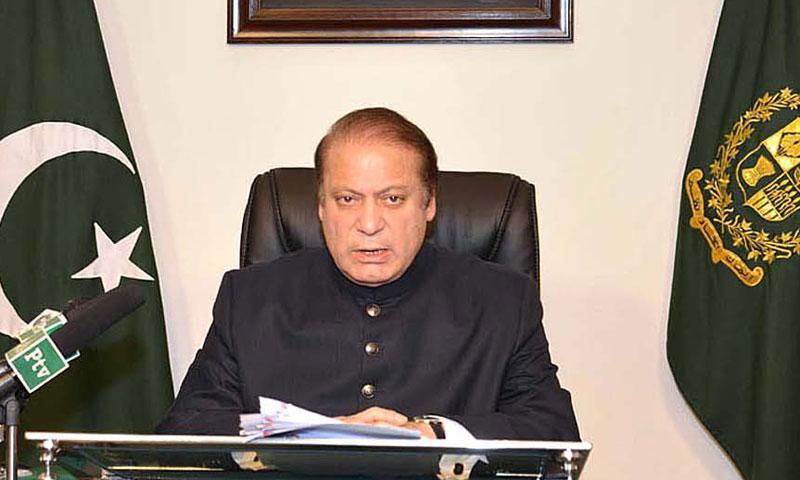
ISLAMABAD: Prime Minister Nawaz Sharif on Tuesday categorically stated that Pakistan desired peace and tranquility in the Middle East and would maintain the policy of non-interference in the internal affairs of states.
Addressing the concluding session of the Envoys Conference which focused on the Middle East, at the Foreign Office in the federal capital, Sharif said Pakistan had an equal aspiration to forge closer bilateral ties with all countries in the region.
“Our efforts to develop bilateral ties with one country are not, and will not be, at the expense of another,” the Prime Minister said and added Pakistan remains ready to take two steps to greet a hand extended in friendship “Our approach to the transition in the Arab world, would continue to be guided by the principles, enshrined in the United Nations Charter.”
He added that Pakistan was also paying particular attention to the promotion of its special relationships with fraternal countries in the Gulf and Middle East and in this regard mentioned the recent exchanges at the highest level that were reflective of these endeavours.
The conference apart from Pakistan's envoys was attended by Advisor on National Security and Foreign Affairs Sartaj Aziz, Special Assistant for Foreign Affairs Tariq Fatimi, Secretary Foreign Affairs Iizaz Chaudhry and members of the Cabinet.
Terming diplomacy as the country's first line of defence, the Prime Minister said it was an excellent initiative to bring Pakistan's envoys home periodically, for intensive debate and discussion amongst themselves, as well as with the concerned stake-holders.
He advised the Foreign Office to make it a regular feature of country's diplomatic interaction as its envoys play a vital role in the implementation of Pakistan's foreign policy.
Their invaluable assessments and recommendations, based on their wide experience, expertise and in-depth knowledge, serve as crucial inputs for the Government, in formulating and calibrating policies.
NA unanimously approves resolution for lifting YouTube ban
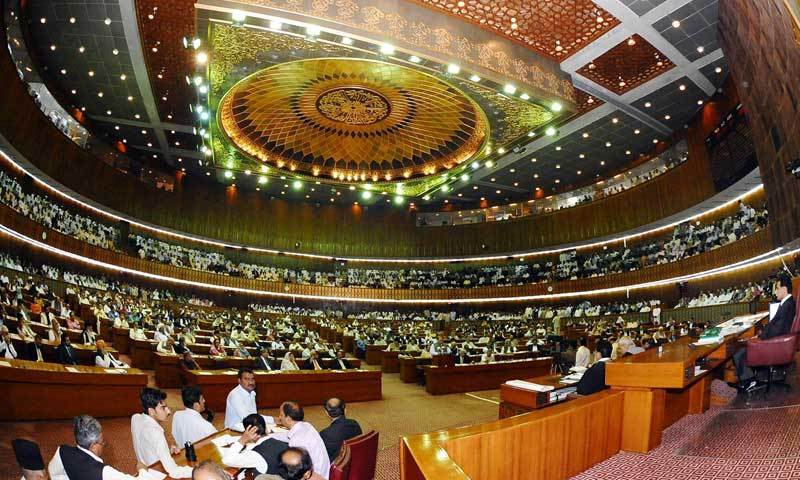
ISLAMABAD: The National Assembly on Tuesday unanimously adopted a resolution to lift the ban on video-sharing website YouTube, DawnNews reported.
During today's National Assembly session, chaired by Deputy Speaker Murtaza Javed Abbasi, MNA Shazia Marri belonging to the Pakistan People Party (PPP) submitted a resolution demanding the lifting of the ban on YouTube which was unanimously accepted by the lower house of parliament.
Ms Marri had said that the government should lift ban on YouTube as soon as possible.
She added that people were using proxy servers to watch YouTube while the government should not adopt any double standards in this regard.
In response to the resolution, Minister of State for Health Services, Regulations and Coordination, Saira Afzal Tarar, assured the house that the government would lift the ban on YouTube soon.
Tarar said that it was the collective responsibility of all the parties to discuss the matter in detail and requested that the leaders of the parliamentary parties should suggest the names of the members from their parties to take part in the discussions in this regard.
The video-sharing website has been blocked in Pakistan since September 2012 when the then prime minister belonging to the PPP ordered its shutdown over its failure to take down the “Innocence of Muslims” movie that sparked furious protests around the world.
Despite the removal of the contentious video and claims by the government, the video-sharing remains banned in the country.
Young India: The mood of the First Time Voter
Age often plays a vital role in almost everything in the subcontinent. Many a times arguing elders in this part of the world shrug the young’s viewpoint on account of being … well, young.
This also used be the attitude of traditional politics in India, where the youth and their needs were rarely important. So, while politicians would harp about development, infrastructure, job opportunities, and growth they never saw it from the young’s point of view but with half India’s population being under 25 this mindset is undergoing a transition.
One of the factors that truly separate the ongoing 2014 General Elections in India than the ones before is the sheer volume of first-time voters. With a whopping 47 per cent of the voting population under the age of 35, it is young electorate that could very well be the element that influences the 16th Lok Sabha’s mandate.
It’s not surprising then that with millions of voters exercising their franchise for the first-time every single party, national or regional, is vying for their attention.
So, do the ones who decide the future of this young India understand what they really want?
On the face of it, almost every young person that this writer spoke to was plagued by corruption and rising prices.
For Ravi Dubey, a 25-year old street hawker, the rampant corruption under the present government is the root cause of everything that is wrong in India today.
Dubey sells shirts in Nehru Place, arguably Asia’s biggest computer market, and believes that politicians have eaten the money meant for the development of people. Dubey, who voted for the BJP in the hope of better days says,
They rob from us, while we are left without facilities and on top of it have to deal with rising prices.
Most young are looking for a change and want to hold on to any glimmer that they see.
For 22-year Salman Khan, Arvind Kejriwal and the Aam Admi Party (AAP) seem to be that change. Salman works in Public Relations and doesn’t consider himself to be politically aware but chose to look beyond the usual suspects while casting his vote.
For him it was the humanitarian aspect of the AAP and its concern for the common man that prompted him to vote for the party. Salman wants the new government to do something about poverty, which according to him is a bigger divisive factor than others. He says,
Our country could have been better off… some blame the Congress and some BJP.
Perhaps it’s the likes of Alam Khan, a 20-year fruit vendor from Mehrauli that AAP supporters have in mind while pressing the button on the Electronic Voting Machine.
Alam voted for AAP in the Delhi Assembly elections and swears that in the 49-days that Kejriwal was Chief Minister no cop or Municipal official troubled them.
Standing in Delhi’s sweltering heat for hours at end, wading through haggling customers and irritant cops, Alam knows that value of being able to conduct business without trouble.
‘Now cops are back to taking bribes and just today one walked off with my balance…’ says Alam and even though his voice trails off, his eyes say it all.
It doesn’t matter to him that Kejriwal chucked the faith of such people midway and the joy of those 49-days was enough to win his vote, again.
Most young voters believe that they don’t possess any real knowledge about the political scenario of India. While some go with the flow, some give in to populist sentiments, some opt for familial influence and yet, there seems to be an extremely studied approach in their preference.
Although she believes that she voted for the BJP based on what her parents were thinking, Nandini Bansal, final-year English student in Delhi University, consciously chose to be an ‘active citizen than a passive citizen.’
Poised to graduate this year, Nandini believes that Modi’s development model is something that would ensure jobs for the youth but doesn’t miss a beat in confessing that she might have made a mistake. In spite of Modi being the strong leader that she thinks India needs, she can’t help but muse ‘kahin bahut communal na ho jaye…’ (What if he’s too communal?).
She momentarily goes back to thinking that her fears may be unfounded not because the Supreme Court of India has exonerated the BJP leader but when she learns that the Congress’ manifesto proposes community based reservation in the private sector.
Like her Pankaj Saini, a 24-year old chef in a suburban café, is more worried about job security more than anything else. Saini experienced the success of the Gujarat model while he worked in that state for a few years and roots for Modi’s development model that doesn’t compel people to leave their states in search of work.
‘Private sector jobs have no security but if the general environment of the country is fine, then entrepreneurs won’t shut business as readily as they do now’, says Saini and wants the new government to help industry prosper.
I couldn’t help but prod Saini to address the alleged communal bias, the so-called elephant in the room that props up whenever the name Modi is mentioned. Saini agrees that no one’s perfect but says that the biggest issue that plagued Ahmedabad, Gujarat’s financial capital, during his stay there was the water shortage.
Some might argue otherwise but Ravi Dubey is certain that Muslims wouldn’t suffer if Modi were to become PM. The street hawker says that at the end of the day it’s hunger and employment that occupies more space than religion in the minds of Indians like him and adds,
Modi or no Modi, if things were to get bad they would get bad for every single citizen of India and not any particular community.
The 24x7 media coverage and the general access to information largely due to the exponential growth of social media platforms has given the average voter a sense of ownership to the elections.
Siddharth (name changed on request) hails from a business family in Gurgaon, a satellite town of New Delhi and one of the fastest growing urban areas in India, where political ignorance, as well as non-participation is a family trait.
His parents are in their mid-50s and had never voted before this election but watching debates on TV news channels, such as those conducted by Arnab Gosawmi, for whom he even misses his movies, made him want to do something to change how things were.
The 25-year old financial consultant doesn’t mention whom he voted for as it was ‘a very personal thing’ but his decision to vote for a change in a system that allowed things to go from bad to worse in the last 10 years more than reveals his choice.
Apart from inspiring the younger generation, the media coverage has also compelled many middle-aged and even elder Indians to exercise their right perhaps for the very first time.
Akhil Chabra is a 39-year in-house legal counsel for a renowned multinational corporation who never bothered to even get his Voter’s card made till recently.
Honestly, I believed that most Indians voted in elections as someone needed to be chosen and we never really had a choice.
But watching how last year’s Delhi Assembly elections played out he was convinced that every single vote mattered. Even though he voted for the BJP, Chabra is very clear that it is Narendra Modi that he has voted and not the party.
‘I think [Modi] will contribute to the overall development because of his experience’, says Chabra and adds that he would like to give Modi a chance, based on what he heard from the leader on his campaign trail.
For Kavita Chintamani, a 58-year kindergarten teacher, being married to an Army officer meant not being able to vote as they were constantly moving from one cantonment to another.
Additionally, she never valued her vote believing ‘one vote more or one vote less’ wouldn’t make any difference but having heard the possible PM options from both Congress and the BJP, she decided to finally vote for the first time in her life.
For her, it wasn’t only about voting for Modi, a clear choice in her mind, but more importantly, voting against the incumbent government and she adds,
I was scared that if I didn’t vote then the chances of what I don’t to happen could be higher.
She would like the new government to concentrate on offering stability for all-round betterment rather than wasting time on exposing the skeletons of the previous government and, of course, less scams.
Many post-poll studies indicate an overall increase in polling across states due to a surge of first-time voters. It also suggests that the younger voter, and to some degree the urban voter, could influence the verdict.
Perhaps the presence of a young leader in the form of Rahul Gandhi assures the Congress party of its ability to bridge the wide gap existing between the grand old party and the new electorate.
On the other hand this also somewhere guides the BJP and Modi to regularly address the young’s aspirations throughout their campaign while prompting the AAP to give tickets to individuals such as Gul Panag, a former Miss India and actress who, uncharacteristically for celebrities, is socially very conscious.
It’s not just the political parties that are aware of the emergence of this section of the electorate or else how does one explain the principal of St. Xavier’s College, Mumbai, sending an email to students criticising the famous Gujarat Model and even warning students against ‘communal forces.’
The first time voter was always going to play a very important role in the 2014 general elections and this isn’t a generation that can get easily swayed on things that it doesn’t care much for. The younger India whether rich, middle-class or marginalised simply wants a change from the scams, the corruption and a future where politicians don’t underestimate their power.
If nothing else then the 2013 Delhi Assembly polls gave a glimpse of what an evoked electorate could achieve.
Banned Lalit Modi wins poll for provincial cricket post
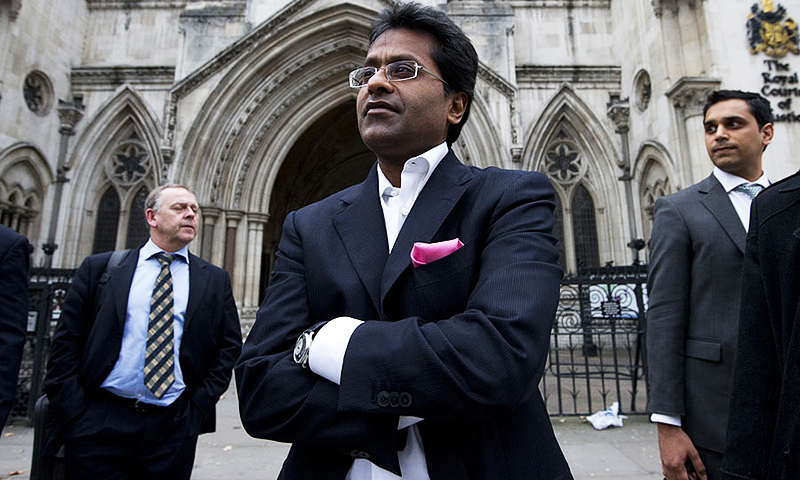
MUMBAI: Former Indian Premier League chief Lalit Modi was named president of the Rajasthan Cricket Association on Tuesday but his hopes of defying a life ban on holding any position with an administrative body in India were challenged immediately.
The flamboyant 50-year-old was banned by an Indian Cricket Board (BCCI) disciplinary committee last year over financial and administrative irregularities during his stint as chairman of the Twenty20 league's first three editions.
His latest appointment is unlikely to last, however, after the BCCI wasted little time in suspending the Rajasthan authority, pending disciplinary proceedings against it on charges of misconduct.
“Keeping in mind the interests of the sport of cricket and in order to safeguard the best interests and welfare of the cricketers playing the game in different age-groups and their future, an ad-hoc committee will be constituted shortly by the BCCI,” the board said in a statement.
Modi, who has denied any wrongdoing, stood for election as the head of the Rajasthan Cricket Association in a poll conducted in December and the result was announced by a court-appointed observer on Tuesday.
The Rajasthan body is expected to challenge the BCCI sanction in court.
The combative billionaire was vice president of the BCCI from 2005 until September 2010, soon after he had been removed from his position in charge of the IPL.
Modi has long been the most vocal critic of Narayanaswami Srinivasan, the industrialist who has run the BCCI since 2011 and will become chairman of the International Cricket Council (ICC) in July.
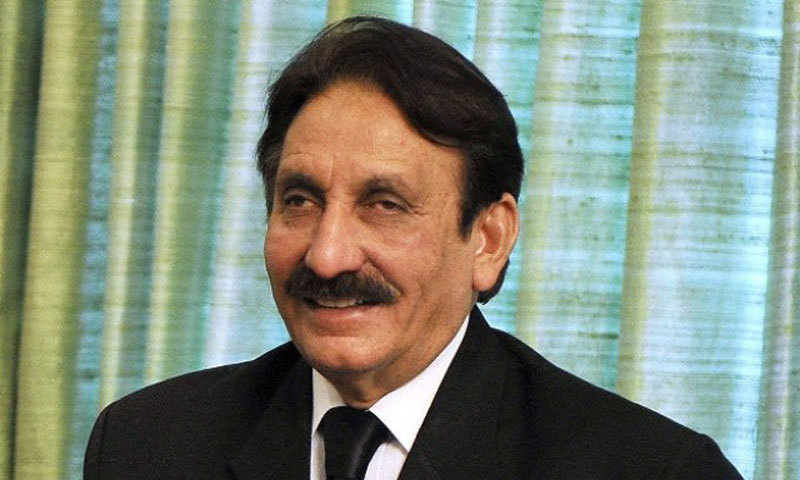
Ex-CJ rubbishes Imran's 'absurd' rigging allegations
ISLAMABAD: Former chief justice of Pakistan Iftikhar Muhammad Chaudhry on Tuesday rejected the rigging accusations made against him by Pakistan Tehreeak-i-Insaf (PTI) chief Imran Khan, terming them as 'baseless', DawnNews reported.
The former chief justice said that Returning Officers (ROs) for the 2013 elections were appointed by the Election Commission of Pakistan and not by him. He added that the 'absurd' allegations hurled by the PTI chief did not warrant a response.
Earlier in May, PTI chief Imran Khan had openly criticised the former chief justice and the Jang/Geo group for their alleged involvement in the rigging during the 2013 polls. Khan had asked the current chief justice to take notice of how, with the support of former chief justice Iftikhar Muhammad Chaudhry, this powerful media house had ‘stolen’ the general elections in favour of one party.
He alleged that when the now-retired chief justice made an unprecedented appearance at a lecture for returning officers before the general elections, it sent a signal to the TV channel that declared the PML-N victorious when only 20 per cent of votes had been counted.
Speaking to the media after addressing the Islamabad Bar, Chaudhry said the judiciary had been serving justice and would continue to do so.
He added that the constitution had defined the roles of the judiciary and the armed forces of Pakistan and he was sure there would not be a clash between different state institutions.
Ex-Justice Iftikhar Chaudhry said both the judiciary and armed forces were not debatable topics.
He also demanded the payment of compensation to the victims of the Islamabad court attack on March 3, in accordance with Justice Shaukat Siddiqui's report on the matter.
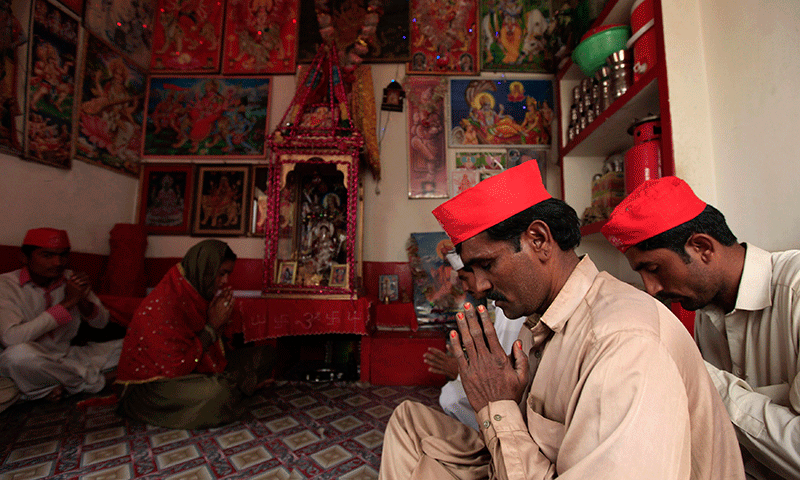
Hindus, other minorities face surge of violence in Pakistan
The mob arrived at around midnight, brandishing clubs. They smashed statues, looted gold artifacts and then set the Hindu temple in Pakistan ablaze.
An accusation of blasphemy sparked the attack in the town of Larkana, human rights activists said, part of a spike in violence against Hindus in predominately Muslim Pakistan.
March was the worst month for attacks on Hindus in 20 years with five temples attacked, up from nine during the whole of 2013, said Life for All, a Pakistani rights group. But it's not just Hindus who feel victimised.
All of Pakistan's minorities — Hindus, Christians, Ahmadis and even Shia Muslims — feel that the state fails to protect them, and even tolerates violence against them.
Many complain the problem has become worse since Prime Minister Nawaz Sharif came to power last year.
Non-Muslims make up a small fraction of the 180 million people in Pakistan. Muhammad Ali Jinnah, the founder of the country's creation as a haven for the sub-continent's Muslims, ushered in independence in 1947 with a promise to minorities that they would enjoy freedom of worship and equality without discrimination.
But for many members of Pakistan's minorities those words ring hollow.
The US Commission on Religious Freedom said in a recent report that conditions in Pakistan had "hit an all-time low" and governments had failed to adequately protect minorities and arrest perpetrators of crimes against them.
"Pakistan is increasingly failing to protect its minorities for two broad reasons: principally, rising religious intolerance and the space ceded to violent ideologies," said Sherry Rehman, who was a government minister and ambassador to the United States under the previous Pakistani administration.
The government launched peace talks with the Taliban in February and rights activists fear that they and other militants have been emboldened by the talks to step up attacks on minority groups.
Activists also say the tolerance of militancy provides cover for opportunist attacks by those who just want to grab land, homes or businesses of minority neighbors under the guise of religion.
Hindus and members of other minorities say the situation has worsened since Sharif won an election last year. Sharif has close ties with Saudi Arabia, whose brand of conservative Islam is preached by many of the people who denounce minorities. Saudi Arabia, the center of Sunni Islam, has long supported hardliners in Pakistan. It recently gave the country a gift of $1.5 billion.
Impunity
Whatever the cause of the surge of violence and abuse, many Pakistani Hindus in the richest province of Punjab are feeling beleaguered and increasingly looking to get out. More than 100 families are leaving for India each month, rights groups say.
Among those who have gone were Munawar Jee's brothers and their families after his married sister was kidnapped last year. Her abductors got her certified as a Muslim convert and re-married her off the next day.
Recanting Islam would mean she could legally be put to death.
"Losing my sister is the biggest regret of my life," Jee told Reuters at his shoe shop in Punjab's Rahim Yar Khan district. He said he would soon join his family in India.
Hindus say their women are easy targets for rape or forced marriage. Temples are attacked and looted. Accusations of blasphemy, punishable by death, are increasingly being used to drive Hindus from their homes, they say.
Punjab, the prime minister's heartland, had until recently been a refuge for Hindus compared with some other areas.
But the province has also become a power base for militant groups.
Federal Information Minister Pervaiz Rashid did not return calls seeking comment on policy towards minorities. A Punjab government spokesman rejected the suggestion that authorities were not doing enough to help Hindus.
"The government is committed to protect its religious minorities," said Shoaib Bin Aziz, adding he was not aware of an increase of Hindus leaving. He denied that the provincial government was soft on militancy.
"Terrorists are not friends of anyone," he said. "The Punjab government does not have soft corner for any terrorist organisation."
Hindu activist Kirshan Sharma said such reassurances meant little. The government was talking to the Taliban but refused to protect Hindus, he said.
"Pakistan has kneeled before the Taliban by holding talks," Sharma said. "What hope can Hindus see in the country's future?"
Monday, May 5, 2014
Kautilya Pandit, famous as 'Google boy', reveals the secret behind his sharp memory
Karnal: Kautilya Pandit, also known as 'Google Boy' has become famous around the country for his sharp memory. From chief minister of Haryana Bhupinder Singh Hooda to Bollywood's shehanshah Amitabh Bachchan, he has impressed everyone.
Born in a middle class family of Haryana, Kautilya is no ordinary boy. He has a very sharp memory which has made him famous as 'Google boy.' He is called so because all the information is stored in his brain and he has the answers for all the questions asked from him.
The IQ level of Kautilya is around 130. There are merely 1 or 2 children among 100 who ought to have such IQ level at his age. He was born in Kohand village of Karnal district in Haryana. Google boy has done many marvelous deeds at such young age.
At a program, when he was asked about how he is able to remember the names of all the countries in the world, Kautilya revealed that he remembered the flags of all nations first, then their names along with the flags & thereafter understood them on the map.
Kautilya's grandfather Jaikishan Pandit said that he still needs to learn about geography and he wants to make him an expert in every field.
Kautilya has become a celebrity in today's date. He has the answers to all the questions on tips. He revealed the secret of his sharp memory to everyone.
Google Boy has a photographic memory which makes it easy for him to remember things. He remembers things on the basis of an image.
He also appeared on 'Kaun Banega Corepati' hosted by Amitabh Bachchan and stunned him by answering all the questions. The audience applauded for his brilliance.
Was the 'missing' MH370 HIJACKED by Al-Qaeda?
Kuala Lumpur: At least 11 suspected Al-Qaeda terrorists were arrested in connection with Malaysia Airlines flight MH 370 on Saturday night.
The alleged terrorists aged between 22 years and 55 years were held in Kuala Lumpur and are being interrogated in link to the missing jet.
According to reports, the interrogation is being conducted with the militants after investigation agencies including FBI and MI6 asked for it.
As per an officer from the counter-terrorism division of Malaysia Special Branch said 'The possibility that the plane was diverted by militants is still high on the list. International investigators have asked for a comprehensive report on this new terror group.'
He further added 'Some of the suspects including students, a young widow and business professionals, had admitted to planning terror attacks in Malaysia.'
The arrested suspects are said to be the members of a news terrorist group. The group linked to Al-Qaeda does not have a name so far. Also, they have not admitted any sort of involvement in connection to the disappearance of Malaysian jet.
The Malaysian Airlines flight MH 370 went missing on March 8 after take-off from Kuala Lumpur. Flying to Beijing, it was carrying 239 people on boards including the crew member.
All the angles including fuel leakage, engine failure, terror attack, technical fault were probed by the authorities.
The investigation teams have been looking for the jet in the southern Indian Ocean for past several days now.
Khalid Abu Bakar, the Malaysian police chief has denied that the 11 suspects held were being interrogated about the plane. He said 'The arrests had nothing to do with the missing flight.'
A few days back, a Russian newspaper claimed that the Boeing was hijacked and taken to Afghanistan. Currently, the interrogation with 11 Al-Qaeda suspects is on.
Quit greasy, high-fat diet to live longer, claims study
"Western-style" diet - high in fat and sugar - leads to earlier cognitive and physical decline, a long-term study of 5,350 men and women has claimed.
Adherence to diet such as fried and sweet food, processed and red meat, refined grains, and high-fat dairy products, reduces a person's likelihood of achieving older ages in good health and with higher functionality, according to the study published in the The American Journal of Medicine.
The impact of diet on specific age-related diseases has been studied extensively, but few investigations have adopted a more holistic approach to determine the association of diet with overall health at older ages.
The AHEI is a validated index of diet quality, originally designed to provide dietary guidelines with the specific intention to combat major chronic conditions such as cardiovascular diseases and diabetes.
Investigators analysed findings from the British Whitehall II cohort study, which suggests that following the AHEI can double the odds of reversing metabolic syndrome, a condition known to be a strong predictor of heart disease and mortality.
The research team sought to identify dietary factors that can not only prevent premature death, but also promote ideal ageing. Researchers followed 3,775 men and 1,575 women from 1985-2009 with a mean age of 51 years from the Whitehall II study.
Using a combination of hospital data, results of screenings conducted every five years, and registry data, investigators identified mortality and chronic diseases among participants. The study determined that participants with low adherence to the AHEI increased their risk of cardiovascular and non-cardiovascular death.
Those who followed a "Western-type diet" lowered their chances for ideal ageing. Avoidance of the "Western-type foods" might actually improve the possibility of achieving older ages free of chronic diseases and remaining highly functional.
CAUGHT ON CAMERA: Attempt to abduct student who reported cheating in AIPMT in Jind district
Rohtak: Students were caught cheating in All India pre medical test in Jind district in Haryana on Sunday. A student, Ravi Ranga caught another student copying from an answer guide, he reported the incident to the invigilator but the matter was curbed. After the examination ended an attempt was made to abduct Ravi, who had reported the incident. Ravi registered an FIR with the police and a video and photographic evidence of the incident is available with the media.
The incident took place in Indus world school in Jind District. All India pre medical test began at 10 am. In room no 18 at 12.30 pm, Ravi Ranga noticed a student cheating from an answer booklet. Ravi walked up to him and pulled out a sheet of paper from underneath his seat, the sheet too had answers and answer codes written on it. Ravi reported the incident to the invigilator and in no time the entire school staff converged to the room. The teachers asked for the answer sheet that Ravi had secured from the student who was cheating. Ravi refused to do so and asked to register his formal complaint first. Ravi was then summoned to the principal’s office.
The staff of the school threatened to lodge a complaint against him as the answer sheet was now in Ravi’s possession. A petrified Ravi handed over the answer sheet to the superintendent . The superintendent then walked up to the student who was cheating and slapped him and subsequent to which he returned him the answer sheet that Ravi had confiscated. Police officials were present at the spot when the incident happened.
After the examination ended Ravi made his way to the bus stand and took an auto, as soon as he sat in the auto, the student who Ravi caught cheating came there along with his two friends and tried to abduct Ravi. The three of them thrashed Ravi and said that they had invested Rs. 40 lakh to get away without being caught. When media reached the spot and took pictures to document the event the three men hurriedly left in their car.
SHOCKING: Shoe hurled at Narendra Modi; security officials fail to identify the culprit
Lucknow/Allahabad: BJP PM candidate Narendra Modi faced a huge embarrassment on Monday when an unidentified man, sitting in the group next to security barriers, hurled a shoe at him and raised slogan "Na, Na, Modi."
The incident happened when Modi came to the dais to address a gathering at Parade ground here. The man threw his shoe towards the dais.
However, the shoe landed at a distance from the stage but the incident led to chaos on the ground. The security officials crossed the barriers and tried to identify the person responsible for the act but to no avail.
Modi's supporters went angry over the incident. While, the security personnel calmed them down.
Modi addressed back to back rallies in Faizabad, Ambedkar Nagar and Allahabad.
Earlier in the day, in Faizabad, Modi's stage also had a huge poster of Lord Rama behind the stage. The events are significant as Faizabad is just five kilometres away from Ayodhya, which is the birthplace of the Hindu diety.
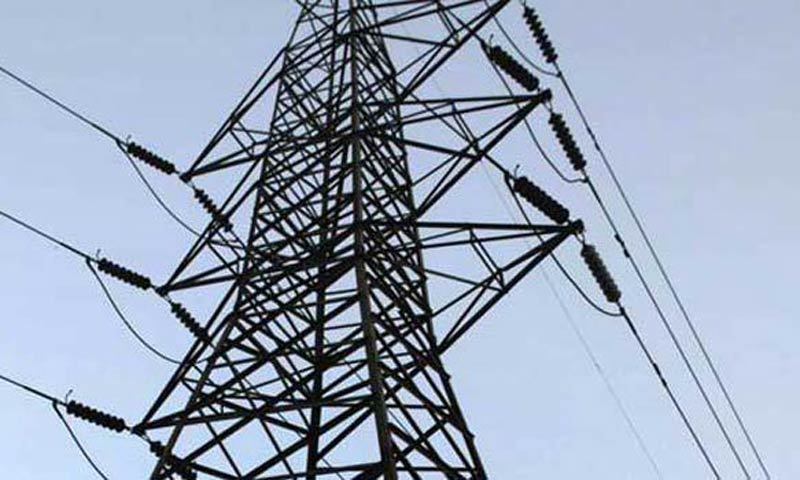
Militants blow up 500 kv transmission line in Badbher
PESHAWAR: Unknown suspected militants on Monday blew up a 500 kv Tarbela Sheikh Mohammadi transmission line in the Badbher area situated on the outskirts of Peshawar.
In charge Inqalab checkpost, Fazle Sher Khan told that the suspected militants had planted explosives on the tower and blew it up late night, however, no loss of life was reported.
National Transmission And Dispatch Company Limited (NTDCL) said that five towers were destroyed in the area, including three towers of Sheikh Muhammdi transmission line which created a short fall of 150 megawatts to the national grid.
The company said that alternate means of transmission of electricity are being used to compensate the loss to the affected areas.
HEC faces turbulence yet again
ISLAMABAD: The Higher Education Commission (HEC), which has been at the centre of different for nearly an year now, is in the limelight again for appointing two new members on deputation, without following due procedure. Not only this, the new acting executive director (ED) has been appointed in violation of orders given by the Supreme Court, Dawn has learnt.
However, HEC Spokesperson Ayesha Ikram says that the appointments have been done on deputation and the decisions with be endorsed in the meeting of the commission, to be held soon.
Since the retirement of former HEC Chairperson Dr Javaid Laghari in August last year, a race had begun for the appointment of the new chief. Not only the was the decision of the search committee rejected multiple times by the prime minister, he had also rejected the name of the current chairman of HEC, Dr Mukhtar Ahmed, for the post. However, the high court was informed about the rejection and on April 15, without completing the interview process, a surprise announcement was made appointing Dr Mukhtar as the new head of the commission.
According to an Establishment Division notification, dated June 6, 2002, a list of three candidates was to be sent to the concerned authorities for the appointment of any officer on deputation. However, the HEC management has appointment two members without following this specified process.
An HEC official said that the commission did not prepare any list, nor did anyone bother to get the approval from HEC’s appointing authority.
“Mansoor Akbar Kundi from University of Balochistan has been appointed as member academics HEC and G. Raza Bhatti from Shah Abdul Latif University Khairpur has been appointed as member for human resource development, on deputation. Both of the seats are for grade 22 officers and the members have been appointed for one year,” he said.
“Section 11 of the HEC Act clearly states that only an 18 member HEC commission can appoint officers of grade 19 and above, while the chairman can only appoint officers of grades 17 and 18,” he said.
The Supreme Court, in its decision dated December 17, 2012, ordered that the appointments have to be according to the prescribed procedure and even the acting ED has to be appointed by the HEC commission.
It is important to note that in November 2012, tension arose between HEC and the ministry of education. The then minister, Sheikh Waqas Akram, gave the acting charge of ED HEC to federal secretary of the ministry. Due to this, the matter was taken to the Supreme Court.
An official of HEC, requesting anonymity, said that after the decision of the Supreme Court, a meeting of the HEC commission was held and the current charge of ED HEC was given to Engr Syed Imtiaz Hussain Gillani.
“It is clear that even the temporary appointment of ED cannot be done without the discretion of HEC commission, which is the appointing authority,” he said.
HEC Spokesperson Ayesha Ikram told Dawn the body has been facing issues regarding human resources, at the moment. Most of the seats in HEC are vacant, so it has been decided to make the appointment on deputation to run HEC’s affairs smoothly.
“Services of both of the members have been borrowed for a year to fill the vacuum and Mr Kundi has been appointed as the acting ED HEC. A meeting of the HEC commission will be held soon and the appointments will be endorsed during the meeting,” she said.
Key official’s arrest may leave govt red-faced
ISLAMABAD: In what seems like a move tailored to embarrass the government of Prime Minister Nawaz Sharif, the National Accountability Bureau (NAB) has picked up the head of a government-run power board — who is supposed to be a key part of the ground-breaking ceremony for a 1,320 megawatt power project scheduled to be held in Karachi on Tuesday.
According to NAB spokesperson Ramzan Sajid, the bureau arrested on Sunday three people in connection with a Rs22 billion rental power project (RPP) scam. The three men picked up are Private Power and Infrastructure Board (PPIB) Managing Director N.A. Zuberi and two former chief executive officers of Lakhra Power Generation Company Limited (LPGCL-Genco) Anwar Brohi and Muhammad Jamil. The former was taken into custody from Islamabad while the other two were picked up from Karachi.
The NAB spokesperson said the bureau was investigating the allegedly illegal award of contract to M/s Karkey Karadenize Electric Uretium, a Turkish company, for the commissioning of a rental power project in Karachi. An agreement to this effect was signed between Karkey and LPGCL, he added.
“The three men in custody are accused of causing massive losses to the national exchequer by extending undue favours to the Turkish firm,” he said.
He said the estimated losses recoverable from Karkey amounted to nearly $128.14 million, in addition to a mark-up of about Rs120m. Nearly Rs672.70m is to be recovered from the public office holders responsible, he said, adding: “The accused will be produced before an accountability court so we can obtain their physical remand.”
Prime Minister Nawaz Sharif is expected to be the chief guest at the ground-breaking ceremony of the coal-fired Port Qasim Power Plant on May 6, a project supervised by the PPIB. The ceremony is likely to be attended by foreign delegates and investors, invited by the PPIB to invest in the power sector.
In this context, the PPIB chief’s arrest could undermine the confidence of foreign investors and may embarrass the prime minister when he meets these foreign delegates at the ceremony.
According to the Prime Minister Office, on Aug 29 last year, M/s QINVEST LLC, Doha, Qatar, M/s Power Construction Corporation of China (Power China), M/s SEPCOIII Electric Power Construction Corp, the government of Punjab and PPIB signed an MoU for the development of 10x660MW (2x660MW in phase-I and 8x660MW in phase-II) coal-fired power project for the coastal areas of Gadani in Balochistan.
The project to be commissioned on Tuesday is a joint venture of Sinohydro Resources Limited, China, (a wholly owned subsidiary of M/s Power Construction Corporation of China) and M/s Al-Mirqab Capital, Qatar. They will undertake the development of two 660MW coal-based power projects at Port Qasim. A ‘Notice to Proceed’ was issued by the PPIB to sponsors on March 6 this year.
Despite repeated attempts, a PPIB spokesperson was not available for comment.
Separately, a source in the water and power ministry told Dawn that most of the major players in the Rs22bn RPP scam were roaming free, while those who were not behind the corruption were being grilled. Some of the main accused who are still not in NAB custody include former prime ministers Yousuf Raza Gilani and Raja Pervez Ashraf, former federal minister Shaukat Tareen, former water and power secretary Shahid Rafi and Fayyaz Elahi, former managing director of PPIB.
At least 10 suspected militants killed in Balochistan
QUETTA: Frontier Corps (FC) personnel on Monday claimed to have killed 10 militants in Balochistan's troubled Panjgur district.
Khan Wasey, a spokesman for the para-military force, said that the FC launched an operation against miscreants involved in targeted killings and bomb explosions in Panjgur district's mountainous areas.
He said ten suspected militants were killed whereas three FC soldiers were seriously wounded during the operation.
"Both sides used heavy weapons during exchange of fire", Wasey said.
The injured personnel were rushed to Panjgur for medical treatment.
Moreover, the FC personnel also claimed to have destroyed three suspected militant hideouts and two vehicles.
He said the forces initially faced resistance from the militants who were hiding in the mountains adding that the exchange of fire netween the security forces and militants continued for more than two hours.
"The dead militants belong to a banned Baloch militant group", he said.
Panjgur is considered to be one of the troubled districts of Balochistan.
Baloch separatists groups have been operating and targeting security forces and pro-government personalities in the area.
At least three militants were killed in Tusp area of Panjgur district on April 20 and another three in January this year.
At least nine people, including three security personnel were killed in a gunbattle in Paroom area of Balochistan's troubled district in September last year.
Bringing Roohi Bano back
“Nowadays, no one works for the ‘art’ part of the performing arts,” says Mazhar Moin in an interview to Images on Sunday. This new wave television director is known for focusing on lower-middle class themes, sans artifice, in his plays. His critically acclaimed works include Burns road ki Nilofer, Saraye Ghat ki Farzana, Qudoosi Sahib ki Bewa, Raunaq Jahan ka Nafsiyati Gharana, Taare Ankaboot, Mithoo Aur Apa and many more.
“There is too much commercialism in productions these days,” he continues, while lamenting the dearth of creativity, “We are losing the true essence of drama. Audiences think that drama is just about beautiful frames while the creators make good money on producing package-line plays. Why is there such a lack of stories? I make plays for myself, not for the ratings.”
Which is why he ventured into what others thought was a ‘risky project’ after he saw Roohi Bano as a guest in a morning show. “I’ve always wanted to work with certain senior actors,” said Moin, “As I did Taare Ankaboot with Uzma Gilani, I also wanted to work with Roohi Bano. She is an icon. We all admire her work. Because she’s so popular she gets invited onto morning shows, and channels get their high ratings, but no one actually gives her any work to do.”
Moin decided that the veteran actor still had a lot of potential. “I felt that that there is still a lot of actor in her, despite all the fuss about her being unwell,” he said.
He discussed the idea of casting Bano in a play with Fasih Bari, the writer who he has teamed up with for nearly all of his hit plays. That play turned out to be Aik Aur Aurat. Bano was to be the lead.
Whoever the director discussed the project with tried to dissuade him from doing it. He was even told that working with Bano was like throwing money away and that donating funds was a better way of helping her. “I felt that we hadn’t lost the person in Roohi Bano. We’d lost the actor,” said Moin caringly, “To make her feel good as an actor, she needs to work again. She already has her own house and my objective wasn’t to replenish her bank account. If you give a person the right kind of work and environment, there is much they can revive of their old self.”
With the script in hand and preparation for production complete, the director was ready to fly to Lahore to begin filming. The night before he was to set out, however, the producer got cold feet. “He called me in the middle of the night and said we should drop the idea: why throw money away, she can’t act anymore,” related Moin, “I told him if he had any reservations, he could opt out. Fasih had written a beautiful script, her co-actors were gung-ho about the drama, and I was ready to finance it myself.”
Once in Lahore, the director and writer met with one of their dear friends, Asma Abbass, who was also close to Bano. She introduced the veteran actor to the duo. Meanwhile, discouraging calls from ‘well-meaning’ people in the industry continued coming through. And the ‘advice’ contained in them was dutifully ignored.
The first time Moin met Bano, he ended up spending the entire day with her. Needless to say, the actor left quite an impression on the director. “She is very interesting company,” he said adding that sometimes she appears lost and experiences abrupt mood swings. “She will be talking to you and suddenly she will say that she is tired and would like to go,” he said, “With her you never know what she will say next.”
“I don’t find it weird at all because I see that kind of demeanor in other artistes too,” he said thoughtfully, “Some people are very intelligent, high-strung and ultra-sensitive. They may have gone through some disturbing times in their lives or may have been in environments that are not suited to their sensitivities. They become vulnerable and it gets noticed and easily branded as some ‘disorder’.”
“Apparently 18 years ago, she got up and left the set quite suddenly, where she was filming, and never returned to that project,” he said.
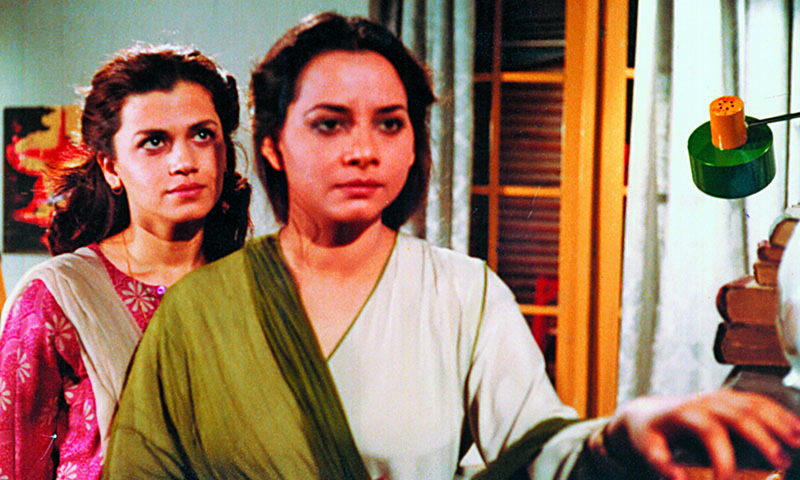
Despite having been away from the camera for over two decades, Roohi Bano gave a stellar performance in Aik Aur Aurat. She starred opposite Salman Shahid and Asma Abbass. The director described how Bano was completely involved in her character and they would often discuss her lines and overall look.
“She would watch her scenes on the monitor right after we’d take the shot,” said Moin, “We kept the make-up light and I didn’t get into the technique of it so much because if I did, Roohi Bano would’ve gotten lost in it.” He therefore kept the production as organic as possible.
On the first day of the shoot, the director found himself locked outside of Roohi Bano’s house for two hours. “I stood ringing the bell,” he related, “I didn’t know whether to raise an alarm because when a person lives alone and doesn’t answer the door for sometime … you start getting all sorts of ideas.”
The door did open eventually. As it turned out the veteran actor had forgotten all about the shoot! “She was very apologetic. She wasn’t ready and hadn’t had breakfast. I wasn’t irritated. I was just glad to see her well. I mean, c’mon, stars take that long to appear on sets!” he laughed.
After a healthy (albeit heavy) breakfast of halwa puri, filming began. “After that little jolt, she was fantastic at communicating with me,” said Moin excitedly, “She would take little notes on a sheet of paper. When she read her lines, including poetry, it sent shivers down my spine because she put so much feeling in it. It was a complicated role and only she could have done it with such honesty.”
In fact they worked so well together that the director is planning to do another play with her this year. “Working with Roohi Bano means that you need time,” he said, “And you should not be under any pressure.”
Aik Aur Aurat was aired on Hum TV recently but to a rather quiet and unceremonious reception. “It was disappointing that no hype was created,” said Moin, “I didn’t expect any accolades for myself, but Roohi Bano deserved more attention for making a comeback.
“She has been dismissed as someone who can’t function anymore. Hell, she can act!” he said forcefully.
“With ratings-driven, package-line drama being produced, audiences are given no variation, no art and no creativity,” he added, concluding with a very important question, “Shouldn’t we value our senior actors while they are there are among us?”
The actress who set the benchmark
— Peerzada Salman
It is difficult to pigeonhole Roohi Bano’s body of work. At times her acting seems visceral and uninhibited, as is the case with most of the roles she has played in television plays. On the other hand, she has also done roles in which her work is methodical and measured. This can be seen in some of the characters she has portrayed on celluloid. So it would be hard, for even someone like Constantin Stanislavski, to categorise Bano’s tremendous acting talent.
Roohi Bano shot to fame in the 1970s with her remarkable performances in television drama serials. It was Kiran Kahani, penned by Hasina Moin, which turned her from a budding actress into a household name. Her portrayal of a seemingly confident girl at odds with societal norms was very well received. Owing to the success of the drama, she was inundated with offers from the film industry, because at the time graduating from television to the silver screen was thought to be the natural upward trajectory for actors. In Kiran Kahani she acted alongside seasoned performers like Manzoor Qureshi, Qazi Wajid and Begum Khursheed Mirza and she was never for a moment eclipsed by any of them.
In mid-70s Bano worked in quite a few films — Palki, Kainat, Goonj Uthi Shehnai etc. However, the ‘loudness’ that had begun to creep into Pakistani films in the late 1970s culminating in the gandasa-wielding hoopla of the 1980s was against her grain. After all, she had a master’s degree in psychology. Therefore, she saved the best of her work for the contextually rich TV long plays (tele-films in today’s parlance) of the 1980s.
In that regard, her performances in Zard Gulab, directed by Mohammad Nisar Husain, and Kala Diara, helmed by Iqbal Ansari, immediately come to mind. Kala Diara pivoted around a woman whose husband is unfaithful to her and she can’t figure out or resolve the situation. It’s a portrayal that required subtlety, and that’s exactly what Bano brought to the table.
Those who have followed the actress’s career with a keen eye suggest that it’s the play Darwazah, written by Munno Bhai, in which she outdid herself. Her depiction of a girl troubled by a life-threatening disease was as close to reality as they come. It’s a note-perfect piece of acting that certified her position as one of the finest thespians the country ever produced. Some are of the opinion that the character in Darwazah had a prophetic air about it, because what she went through in real life years later was similar to her tormented role in the drama — a classic example of life imitating art.
It wouldn’t be too wrong to say that ever since Khalida Riyasat passed away and Roohi Bano disappeared from the showbiz radar, the quality of acting in Pakistan, with reference to female performers, has left much to be desired.
Today, when Bano languishes in her home in Lahore all by herself, probably can’t even reminisce about her glorious past, life awaits her return from the clutches of art.
Polio cases: WHO slaps travel restrictions on Pakistan
KARACHI: The World Health on Monday slapped strict travel restrictions on Pakistan due to the rising number of polio cases in the country.
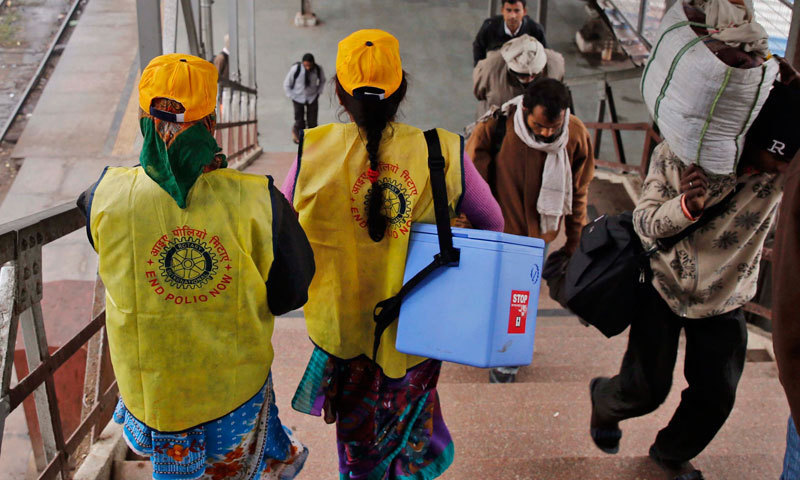
The public health arm of the United Nations, issuing its new guidelines to fight the disease, has now made it mandatory for Pakistanis to travel with a polio vaccination certificate.
Pakistani citizens will not be allowed to travel abroad without the document certifying that they have been vaccinated for the virus.
Pakistan is one of only three countries where the crippling virus is endemic. The other two countries are Nigeria and Afghanistan.
Experts discussed various measures to curtail the spread of the virus in a four-day long convention in Geneva organised by the WHO.
According to a report issued at the convention, the virus is now seen to be spreading even in countries where it was previously said to have been eradicated.
The virus, which spreads by attacking and permanently crippling infants and children, can only be controlled through vaccination.
Young blood: elixir of youth?
PARIS: Young blood may hold the long-sought cure for the decline of the ageing brain, according to research which showed injections of juvenile mouse blood boosting learning and memory in older rodents, scientists said Sunday.
Multiple blood transfusions from three-month-old mice, the equivalent age of 20 to 30 years old in humans, yielded improvements in the brain structure and function of 18-month-old rodents — about 56 to 69 in human years, a team wrote in the journal Nature Medicine.
“I think there is definitely something special within young blood that can improve many aspects of ageing,” study co-author Saul Villeda of the University of California School of Medicine in San Francisco told AFP.
“I think it is most warranted to now extend studies to ageing humans.”
Villeda and a team tested the older mice before and after the injections to compare their results in tests of learning and memory, governed by the hippocampus region of the brain.
One test measured their ability to remember cues indicating the position of hidden platforms in water, similar to having to recall physical landmarks to remember where you left your car in a parking lot — a function that declines with age.
“Old mice administered young plasma could locate the hidden platform easier,” Villeda told AFP by email.
The team also found changes in the structure of the brain — an increase in the number of sites where neurons make connections.
“Our data demonstrate that exposure to young blood counteracts ageing at the molecular, structural, functional and cognitive levels in the aged hippocampus,” the study said.
It was not clear how long the benefits last.
The team claimed to be the first to show an effect of young blood on cognition, though other studies have demonstrated rejuvenating effects on adult stem cells.
For anyone tempted to experiment on their own, Villeda stressed the studies should be extended to humans in “a controlled” way.
“We still don’t know what doses or regimens might be needed,” he said.
“Studies to look for any potential risks are still under way and will be a consideration in moving forward in humans.”
Ageing is associated with a progressive decline in cognitive function and physical changes in the brain.
In humans and in mice, the hippocampus is particularly vulnerable to ageing.
“Considering the increase in the proportion of elderly humans, it is important to identify a means for maintaining cognitive integrity by protecting against, or even counteracting, the ageing process,” said the study.
Narcotics trafficking: Massive hashish haul in Balochistan
ISLAMABAD:
Anti-Narcotics Force (ANF) agents claim to have seized nearly six tons (5,892 kilogrammes) of hashish – their biggest haul till date – from the Manguchar in Kalat district.
The drugs were concealed in a deserted hut located in an uninhabited area and were destined for Karachi via Hub, according to a statement released by ANF. The area was being used as a transit spot between two gangs.
Authorities claim that besides this mega operation, the ANF carried out 16 operations over one week in Rawalpindi, Lahore, Peshawar, Kohat, Kalat, Karachi, recovering 6.2 kgs of heroin, 5,965 kgs of hashish and 500 grammes of opium.
The seized drugs were destined for different countries mainly the United States, Thailand, England, Saudi Arabia, the UAE, the Philippines and Hong Kong, an official requesting anonymity told The Express Tribune.
This is just the tip of the iceberg, claimed a high official of the ANF’s composite forces military wing. “The 2,430 km-long porous border that Pakistan shares with Afghanistan is the hub of this destruction to the world and the quantity of narcoses-causing drugs being prepared there with the help of acetic anhydride is just beyond anyone’s imagination,” he explained.
Pakistan, instead of producing and processing, is mainly used for transit purposes for narcotics produced and processed in Afghanistan. Almost all of Afghanistan is involved in making Pakistan geographically vulnerable to illicit drug trafficking, he added.
Relying on ANF solely is not the perfect solution to capture narco gangs, the official declared, explaining that it is a major challenge to curb the trafficking in the absence of state-of-the-art equipment along a lengthiest border, with only 2,500 personnel and 25 police stations.
Published in The Express Tribune, May 4th, 2014.
3G and 4G: Twin Technologies
Long after India, Bangladesh, Nepal and even Afghanistan introduced the third and fourth generation (3G and 4G) of mobile telecommunications technology, Pakistan has finally followed suit.
The higher transfer rates of 3G and 4G networks trumps the widely used 2G GSM networks by allowing users to have significantly faster internet access, making video phone calls and mobile TV possible. The technology will ensure that browsing YouTube on mobile phones will no longer be akin to viewing a slideshow and this is certainly something to cheer for in a nation of nearly 130 million mobile service subscribers, as revealed by the Pakistan Telecommunication Authority.
The benefits don’t end with entertainment uses. 3G could launch socially useful applications such as e-education, e-medicine and electronic governance which will provide key services to both urban Pakistanis and those living in inaccessible parts of the country. Apart from smart phones, 3G internet can also be used on computers and tablets where broadband isn’t easy available. The benefits are immense, especially for those seeking development in rural locations. It will hopefully have a small snowball effect on the economy as well, where new investment, businesses and jobs will be created as a result. Pakistanis could have had highspeed mobile internet as far back as 2008 which is when the country had 3G capable networks. Perhaps the government wanted to cash in on the upgraded technology by asking mobile network companies such as Warid, Zong, Ufone, Telenor, and Mobilink to bid on licenses that would allow them the right to offer 3G to their respective customers. Despite the many delays over the years the recently concluded 3G/4G auction yielded $1.1 billion. The biggest spender at the auction was Zong, which took home a 1800 MHz 4G license and a 10 MHz 3G license. Following Zong was Mobilink with a 10 MHz 3G, meanwhile Ufone and Telenor both settled for 5 Mhz 3G.
This means that most Pakistani mobile phone users with 3G capable phones should have some form of 3G available to them on their respective networks. While the high-end phones in the country are capable of using both 3G and 4G and medium-ranged phones can handle 3G, most lowend devices are incapable of taking advantage of 3G networks.
Currently the cheapest 3G phone available in Pakistan is priced at around Rs5,000, leaving plenty of room for the introduction of more economical 3G phones. For any customer interested in 3G or 4G, the cost does not end with the device. Mobile network companies are expected to follow similar business models to that of the UAE or Nepal, where they will offer high-speed mobile internet packages at increased prices to their customers in order to recoup their investments.
But according to statistics quoted in a PEW report earlier this year, in a country where only 53% of the population owns a mobile phone, out of which a minuscule 3% comprise of smartphone users, it is hard to comment on the extent of the impact the twin technologies will have.
Noman Ansari is a freelance writer and a regular contributor to several publications. He tweets@Pugnate
Published in The Express Tribune, Sunday Magazine, May 4th, 2014.
Land dispute: Former MPA Bilal Khar, uncle accused of murder
LAHORE: Former Punjab governor Ghulam Mustafa Khar’s son, former MPA Bilal, has been accused of murdering a young man, Muhammad Amjad aged 22, in Muzaffargarh over a land dispute.
The alleged crime took place at 9.30 am on Sunday in the precincts of Kot Addu police station. Bilal has previously been accused of torture, murder and an acid attack on his ex-wife, Fakhra Yunus, in 2000; in October 2002, he was arrested with reference to this case, but released in 2003.
The Sindh High Court (SHC) issued summons in April for Khar to appear in court on Monday (today), to file his reply to the petition seeking re-trial of the case as human rights groups challenged the suspect’s acquittal by the sessions judge, saying four eyewitnesses refused to identify Bilal in the trial court due to his ‘influence’. On April 15, Chief Justice Maqbool Baqar, who headed the bench, ordered the respondent to file a response either personally or through his lawyer by May 5.
An FIR was lodged at Kot Addu police station by Haji Dildar Hussain Ludhani, the deceased’s father and a member of the Ludhani tribe, on Sunday. Hussain stated that on the day of the crime, he was present on his lands with his son and three members of the Ludhani tribe, Saif Ullah, Qaim Din and Ashiq, all residents of Mauza Bait Angrah, as Hussain’s wheat crop was being threshed.
The lands Mauza Bait Angrah, borders the Khar family’s land in Mauza Khar Gharbi and the threshing machinery was reportedly close to Khar’s land.
Hussain says Bilal and his uncle Malik Ghulam Murtaza Khar, accompanied by armed men, reached the spot on a jeep and accused Dildar Hussain of stealing wheat from Khar land. Hussain claims that Malik Murtaza shouted, “We will teach you a lesson” before Bilal opened fire at them.
A bullet hit Hussain’s son Amjad in the head. The FIR states that Malik Murtaza opened fire and as Amjad fell to the ground, threatening, “If any of you try to resist, you will be treated like Amjad.” Hussain says the Khar men then left the scene of the crime.
Subsequently, a large group of members of the Ludhani tribe, residents of Mauza Bait Angrah, reached the tehsil headquarters and blocked the road in front of the hospital by placing Amjad’s body on the road. The protestors then reached Kot Addu station and blocked the main GT Road and two other link roads. MNA Jamshed Dasti reportedly joined the protestors.
The group dispersed after eight hours of protest only when police assured them that those accused of the crime would be arrested within 48 hours. FIR No258/14 was registered under Section 302/34 of the Pakistan Penal Code (PPC) against former MNA Malik Murtaza Khar, former MPA Bilal Khar and an unidentified accused.
The FIR states that the two parties were engaged in a dispute over land in Mauza Bait Kalu Wala and a case of Haq Shufa – a term connoting dispute over land ownership – is ongoing.
Speaking with The Express Tribune, Amjad’s father Dildar Hussain said that a dispute regarding land-grabbing by Murtaza Khar was resolved last year through a jirga called by Mustafa Khar; the jirga reportedly judged in Dildar ’s favour.
Hussain says ‘there is no single marla of land of the Khars in Mauza Bait Anghrah’, saying the clan owns land in Mauza Khar Gharbi.
He said that Murtaza Khar had tried to stop the harvest of wheat on the disputed land and previously accused Hussain’s family of stealing honey from his property. Hussain alleges that Murtaza Khar beat his nephew, Saifullah, and son Amjad at the time.
DSP Haji Ashiq Hussain Khosa told The Express Tribune that initial investigations pointed to Murtaza and Bilal Khar as the main suspects.
Published in The Express Tribune, May 5th, 2014.
Taliban commander killed in Waziristan blitz
DI KHAN:
A local Taliban commander is said to have been killed in fresh fighting in the Ladha sub-division of South Waziristan Agency, an intelligence official told The Express Tribune on Saturday.
The official claimed that Irfan Mehsud, a local Taliban commander, was among the seven militants who were killed in an operation by the security forces in the Babor mountains of Ladha on Friday – the news of his death, however, surfaced on Saturday.
Irfan Mehsud is said to be the son of Azam Tariq Mehsud, a key member of the Political Shura of the Tehreek-e-Taliban Pakistan (TTP).
He is also said to be the spokesperson of TTP’s South Waziristan chapter. Neither the TTP nor any Taliban source immediately confirmed the death of Irfan Mehsud.
Published in The Express Tribune, May 4th, 2014.
Overseas Indians travel home to support Modi
NEW DELHI: Adapa V Prasad, a 60-year-old entrepreneur from Washington DC, has been risking Maoist violence in central India for the sake of the man he wants to see become the next prime minister, Narendra Modi.
Travelling door-to-door in tribal areas of Chhattisgarh state, he has been asking people to vote for the Hindu nationalist Bharatiya Janata Party (BJP).
“India is going down the drain under the present Congress government. I cannot see that happen,” said Prasad, an American of Indian origin who left his homeland 25 years ago and has spent about $2,000 to travel back for polling.
Echoing others who are fired up by Modi’s strident nationalism and development agenda, he sees the controversial 63-year-old as a means to create pride in the poverty-wracked country.
“The impetus to come here (India) is to bring Modi as the prime minister. We don’t want our country to be seen as a weak country,” said Prasad, who spent his younger days in Chhattisgarh but has never campaigned there before.
He serves as a vice-president with the international network of the Hindu nationalist party, Overseas Friends of BJP (OFBJP) in the United States.
A Delhi-based BJP leader coordinating international outreach efforts estimated that more than 4,000 non-resident Indians from over 30 countries have travelled to India to work for the party since January.
“I received calls from many young people living abroad,” said Vijay Jolly, global convenor for BJP’s overseas affairs.
“I have not seen such a phenomenon before,” said Jolly, a former legislator who has been with the party for more than three decades.
He explained that despite living abroad, overseas Indians yearned for progress in their motherland after allegations of corruption and weak leadership marred Prime Minister Manmohan Singh’s two terms in office.
The high-octane social media campaign of the BJP coupled with regular online interactions with its overseas members and the charisma of Modi has drawn these supporters to India, Jolly said.
As well as organising events locally in their home countries, returning BJP supporters have helped with a formidable grassroots campaign by the party, which can also count on right-wing Hindu groups to provide volunteers.
By contrast, at the headquarters of the Congress party in New Delhi, members were reluctant to share any details of help from the diaspora.
Emails to different chapters of the party’s international arm, Indian National Overseas Congress (INOC), yielded just one response.
“Unfortunately the person appointed by AICC (All India Congress Committee) to head INOC has totally failed in organising support for the party in US at this critical election,” read the email from an anonymous party member.
“We are all disappointed! This is the problem with our party leaders and they are out of touch with the grassroots!” it added.
Following legislation passed in 2010, Indian passport-holders who are living abroad are able to vote as long they sign up and register.
However, they have to return home to cast their ballot and only 13,000 have registered among some 10 million non-resident Indians – a tiny percentage of the overall total of 814 million voters.
The staggered election, which began on April 7, will finish with results on May 16 with the BJP forecast to emerge as the biggest party in parliament.
The party, which was born in 1980, has run the federal government only once, between 1998 and 2004, unlike Congress, which has ruled the country for more than five decades since India’s independence from Britain in 1947.
Sanjay Srivastava, who left India eight years ago to work as a manager with a telecom company in Nigeria, sees Modi as a harbinger of change.
He cast his ballot in his hometown of Ranchi, capital of mineral-rich eastern Jharkhand state, which has among the worst human development indicators in India.
“I feel there is no hope here. There is no development here,” said 37-year-old Srivastava.
But he is confident that Modi, chief minister of the thriving western state of Gujarat since 2001, could transform his home state.
“Jharkhand has poor amenities, bad roads, poor electricity. The success model of Gujarat should be replicated here,” he said.
Iran may seal border with Pakistan
QUETTA:
Iran’s police chief has hinted that his country would seal its border with Pakistan any time. “It is very important to ensure security on the eastern border,” Brigadier General Ahmadi Moqaddam was quoted as saying by state-run IRNA news agency on Sunday.
Iran’s southeastern Sistan-Baluchestan province borders Pakistan’s southwestern Balochistan province. Tehran has already put in place extra security along the border following the kidnapping of five border guards last month.
“Sealing the eastern borders will soon result in major changes in Sistan-Baluchestan province. We will witness major changes and developments in this region by sealing the borders,” Moqaddam told journalists in Tehran.
He vowed a ‘crushing response to any terrorist who dares to threaten’ the country’s border security. “We pursue any assassination and murder until resolving the problem,” he said while pointing to terrorist acts in Sistan-Baluchestan.
Moqaddam referred to the emergence of Jeish al Adl terrorist group after Jundollah ringleader Abdel Malik Rigi was arrested and executed in Iran.
“A new terrorist group has started operation to continue Rigi’s work since last year and it has committed murders in the southern parts of the country and they attack people under the cover of defending the Sunnis, while everyone knows that we are not practicing religious segregation and discrimination,” he said.
“The people of that region are not happy” with the group’s operations either “because insecurity halts progress and advancement”, he added.
Five Iranian border guards were abducted by Jeish al Adl in early February. Four of them were freed after two months, while the fate of the fifth one is not clear yet.
Last month, President Hassan Rouhani in a meeting with Pakistani Prime Minister’s Special Envoy Sartaj Aziz in Tehran underlined the need for the removal of security concerns at the two countries’ common border.
“The Islamic Republic of Iran believes that security and tranquility in Pakistan is interrelated with its own security and tranquility,” Rouhani said during the meeting.
Published in The Express Tribune, May 5th, 2014.
Ties with Saudi Arabia, Iran: Envoys to push for a balancing act
ISLAMABAD:
Top Pakistani diplomats posted in Middle Eastern states are expected to recommend a ‘balanced approach’ vis-Ã -vis ties with Saudi Arabia and Iran, officials said on Sunday.
Ensuring a delicate balance in relations with Tehran and Riyadh is one of the key issues being debated during the three-day envoys’ conference, which kicked off at the Foreign Office on Sunday.
The conference is being attended by Pakistan’s ambassadors to Saudi Arabia, Iran, Qatar, the UAE, Turkey, Egypt, Syria and Yemen.
The conference was inaugurated by Prime Minister’s Adviser on National Security and Foreign Affairs Sartaj Aziz, who underlined the government’s priorities in terms of its foreign policy for the Middle East.
Sources told The Express Tribune that Aziz also talked about the recent developments, including increased cooperation with Saudi Arabia. However, he, according to sources, dispelled the impression that Pakistan had changed its foreign policy.
He told the envoys about the government’s efforts to strike the right balance in its ties with both Saudi Arabia and Iran.
Aziz informed the conference about his recent trip to Tehran where he delivered a letter to Iran’s president on behalf of Prime Minister Nawaz Sharif.
Tehran is believed to have been upset over the warming up of ties between Pakistan and Saudi Arabia in recent months. It feared that increased cooperation between Islamabad and Riyadh could have a negative fallout on the situation in Syria.
Saudi Arabia, which is apparently upset over the United States’ refusal to remove President Bashar al Assad from power through force, is reportedly looking up to Pakistan to help advance its agenda in the key Middle Eastern county.
Insiders disclosed that the envoys are expected to formulate a set of recommendations on how to proceed with foreign policy at a time when the Middle East is passing through a critical phase.
They are also likely to suggest maintaining a ‘neutral posture’ on Syria in a bid to preempt any repercussions for its ties with Saudi Arabia and Iran.
Foreign Office spokesperson Tasnim Aslam said the conference was part of ‘periodic consultations’ with the envoys posted in the Middle East to review the whole gamut of Pakistan’s relations with countries in the region.
She said the conference would hold special consultations on Pakistan’s cooperation with Iran and Turkey.
According to Radio Pakistan, the envoys would also deliberate on avenues to further strengthen Pakistan’s ties with the Middle East, especially in trade, investment and energy sectors.
A large Pakistani community lives in the Gulf states and the conference would discuss measures to facilitate them in light of the government policy of supporting overseas Pakistanis.
Published in The Express Tribune, May 5th, 2014.
Causing divide: Modi rails against illegal immigrants after Muslim killings
KOLKATA:
Hindu nationalist Narendra Modi, the prime ministerial front-runner in India’s mammoth general election, on Sunday reiterated his strong stance against illegal immigrants, just days after a wave of sectarian killings in the north-eastern state of Assam.
India is in the home stretch of a five-week election in which Modi’s opposition Bharatiya Janata Party (BJP) looks set to emerge as the biggest group and which has heightened ethnic and religious tensions in many parts of the country.
India deployed troops in Assam on Saturday after more than 30 Muslims were gunned down in three days of what police said were attacks by Bodo tribal militants, who resent the presence of settlers they claim are illegal immigrants from Bangladesh.
Modi has repeatedly called for tighter immigration controls and recently said illegal immigrants from Bangladesh in the state of West Bengal should have their ‘bags packed’ in case he came to power, accusing the state government of being too soft.
At a rally on Sunday in West Bengal he accused the state government of looking to secure votes from ethnic and religious minorities.
“You are concerned about infiltrators and not your own people … they must go back, they are robbing the youths of India of their livelihood,” Modi told the rally in West Bengal, which borders Assam. Prime Minister Manmohan Singh has condemned the attacks in Assam and his ruling Congress party accused Modi of making divisive comments.
“Modi is a model of dividing India,” said Law Minister Kapil Sibal on Saturday. Critics have long accused the BJP of deep-seated prejudice against India’s Muslims, who make up more than 12 per cent of the country’s 1.2 billion population. The BJP says it only opposes preferential treatment for any community.
“This violence has a long history,” said BJP spokesperson MJ Akbar, referring to the Assam attacks. “This knee-jerk reaction of blaming Narendra Modi for everything is absurd.”
Bangladesh’s Information Ministry did not immediately respond to request for comments on Modi’s latest speech.
Poll rigging
The BJP leader also accused the Election Commission of being biased and failing to prevent booth rigging in West Bengal, Bihar and western Uttar Pradesh.
“Why are you not acting? What is your intention? If you feel wrong about what I am saying now, then you are free to lodge another case against me,” The Times of India quoted Modi as saying.
“It is your responsibility to ensure impartial polls. I am making very serious allegations,” he said accusing the Election Commission of having failed to take action.
Accusing the EC of being biased, he said, “I am putting serious allegations against you. You have failed to stop rigging and violence in these areas. False cases have been filed against our candidate Babul Supriyo. Election Commission’s work is to protect people. I request you to fulfill your responsibilities in the right way.”
Published in The Express Tribune, May 5th, 2014.
Resolution against illegal SIMs passed in Sindh Assembly
KARACHI: A resolution against illegal Subscriber Identity Modules (SIMs) in the country was unanimously passed in the Sindh Assembly on Monday, Express News reported.
It was presented by Pakistan Tehreek-e-Insaf’s MPA Dr Seema Zia and was supported by Muttahida Qaumi Movement as well as Pakistan Peoples Party.
The resolution said that the government should take steps to stop the usage of illegal SIMs in the country.
The PTI MPA stated that 90% of the crimes took place because of these illegal SIMs, adding that illegal SIMs from Afghanistan and South Africa were being used in Pakistan which were being used for various crimes including extortion.
Subscribe to:
Posts (Atom)
Blog Archive
- Jun 21 - Jun 28 (1)
- Jun 14 - Jun 21 (3)
- Jun 7 - Jun 14 (3)
- Mar 15 - Mar 22 (8)
- Mar 8 - Mar 15 (53)
- Mar 1 - Mar 8 (20)
- Feb 23 - Mar 1 (10)
- Feb 16 - Feb 23 (19)
- Feb 9 - Feb 16 (17)
- Feb 2 - Feb 9 (38)
- Jan 26 - Feb 2 (9)
- Jan 19 - Jan 26 (9)
- Jan 12 - Jan 19 (23)
- Jan 5 - Jan 12 (14)
- Dec 29 - Jan 5 (10)
- Dec 22 - Dec 29 (14)
- Dec 15 - Dec 22 (9)
- Dec 8 - Dec 15 (6)
- Dec 1 - Dec 8 (14)
- Nov 24 - Dec 1 (30)
- Nov 17 - Nov 24 (36)
- Nov 10 - Nov 17 (6)
- Nov 3 - Nov 10 (16)
- Oct 27 - Nov 3 (36)
- Oct 20 - Oct 27 (21)
- Oct 13 - Oct 20 (44)
- Oct 6 - Oct 13 (17)
- Sep 29 - Oct 6 (14)
- Sep 22 - Sep 29 (30)
- Sep 15 - Sep 22 (17)
- Sep 8 - Sep 15 (24)
- Sep 1 - Sep 8 (41)
- Aug 25 - Sep 1 (24)
- Aug 18 - Aug 25 (28)
- Aug 11 - Aug 18 (15)
- Aug 4 - Aug 11 (13)
- Jul 28 - Aug 4 (8)
- Jul 21 - Jul 28 (2)
- Jul 14 - Jul 21 (7)
- Jul 7 - Jul 14 (3)
- Jun 30 - Jul 7 (8)
- Jun 2 - Jun 9 (7)
- May 26 - Jun 2 (1)
- May 19 - May 26 (14)
- May 12 - May 19 (12)
- May 5 - May 12 (21)
- Apr 28 - May 5 (41)
- Apr 21 - Apr 28 (25)
- Apr 14 - Apr 21 (38)
- Apr 7 - Apr 14 (38)
- Mar 31 - Apr 7 (17)
- Mar 24 - Mar 31 (26)
- Mar 17 - Mar 24 (12)
- Mar 10 - Mar 17 (26)
- Mar 3 - Mar 10 (10)
- Feb 24 - Mar 3 (39)
- Feb 17 - Feb 24 (19)
- Feb 10 - Feb 17 (23)
- Feb 3 - Feb 10 (44)
- Jan 27 - Feb 3 (15)
- Jan 20 - Jan 27 (25)
- Jan 13 - Jan 20 (26)
- Jan 6 - Jan 13 (4)
- Dec 30 - Jan 6 (12)
- Dec 23 - Dec 30 (22)
- Dec 16 - Dec 23 (1)
- Dec 9 - Dec 16 (12)
- Dec 2 - Dec 9 (32)
- Nov 25 - Dec 2 (40)
- Nov 18 - Nov 25 (24)
- Nov 11 - Nov 18 (48)
- Nov 4 - Nov 11 (20)
- Oct 28 - Nov 4 (29)
- Oct 21 - Oct 28 (39)
- Oct 14 - Oct 21 (32)
- Oct 7 - Oct 14 (41)
- Sep 30 - Oct 7 (25)
- Sep 23 - Sep 30 (26)
- Sep 16 - Sep 23 (34)
- Sep 9 - Sep 16 (29)
- Sep 2 - Sep 9 (40)
- Aug 26 - Sep 2 (20)
- Aug 19 - Aug 26 (10)
- Aug 12 - Aug 19 (21)
- Aug 5 - Aug 12 (46)
- Jul 29 - Aug 5 (10)
- Jul 22 - Jul 29 (2)
- Jul 15 - Jul 22 (8)
- Jul 8 - Jul 15 (13)
- Jul 1 - Jul 8 (16)
- Jun 24 - Jul 1 (24)
- Jun 17 - Jun 24 (6)
- Jun 10 - Jun 17 (38)
- Jun 3 - Jun 10 (46)
- May 27 - Jun 3 (30)
- May 20 - May 27 (17)
- May 13 - May 20 (29)
- May 6 - May 13 (10)
- Apr 29 - May 6 (31)
- Apr 22 - Apr 29 (50)
- Apr 15 - Apr 22 (16)
- Apr 8 - Apr 15 (37)
- Apr 1 - Apr 8 (48)
- Mar 25 - Apr 1 (36)
- Mar 18 - Mar 25 (40)
- Mar 11 - Mar 18 (38)
- Mar 4 - Mar 11 (14)
- Feb 25 - Mar 4 (34)
- Feb 18 - Feb 25 (34)
- Feb 11 - Feb 18 (15)
- Feb 4 - Feb 11 (46)
- Jan 28 - Feb 4 (16)
- Jan 21 - Jan 28 (10)
- Jan 14 - Jan 21 (11)
- Jan 7 - Jan 14 (24)
- Dec 31 - Jan 7 (10)
- Dec 24 - Dec 31 (11)
- Dec 17 - Dec 24 (21)
- Dec 10 - Dec 17 (27)
- Dec 3 - Dec 10 (19)
- Nov 26 - Dec 3 (22)
- Nov 19 - Nov 26 (18)
- Nov 12 - Nov 19 (30)
- Nov 5 - Nov 12 (54)
- Oct 29 - Nov 5 (47)
- Oct 22 - Oct 29 (28)
- Oct 15 - Oct 22 (45)
- Oct 8 - Oct 15 (41)
- Oct 1 - Oct 8 (38)
- Sep 24 - Oct 1 (40)
- Sep 17 - Sep 24 (99)
- Sep 10 - Sep 17 (18)
- Sep 3 - Sep 10 (9)
- Aug 27 - Sep 3 (26)
- Aug 20 - Aug 27 (28)
- Aug 13 - Aug 20 (19)
- Aug 6 - Aug 13 (41)
- Jul 30 - Aug 6 (4)
- Jul 16 - Jul 23 (22)
- Jul 9 - Jul 16 (23)
- Jul 2 - Jul 9 (9)
- Jun 25 - Jul 2 (4)
- Jun 18 - Jun 25 (10)
- Jun 11 - Jun 18 (13)
- Jun 4 - Jun 11 (40)
- May 21 - May 28 (31)
- May 14 - May 21 (41)
- May 7 - May 14 (34)
- Apr 30 - May 7 (33)
- Apr 23 - Apr 30 (32)
- Apr 16 - Apr 23 (38)
- Apr 9 - Apr 16 (47)
- Apr 2 - Apr 9 (19)
- Mar 26 - Apr 2 (37)
- Mar 19 - Mar 26 (20)
- Mar 12 - Mar 19 (32)
- Mar 5 - Mar 12 (32)
- Feb 26 - Mar 5 (26)
- Feb 19 - Feb 26 (63)
- Feb 12 - Feb 19 (20)
- Feb 5 - Feb 12 (2)
- Jan 29 - Feb 5 (16)
- Jan 22 - Jan 29 (24)
- Jan 15 - Jan 22 (31)
- Jan 8 - Jan 15 (20)
- Jan 1 - Jan 8 (11)
- Dec 25 - Jan 1 (30)
- Dec 18 - Dec 25 (48)
- Dec 11 - Dec 18 (44)
- Dec 4 - Dec 11 (74)
- Nov 27 - Dec 4 (50)
- Nov 20 - Nov 27 (39)
- Nov 13 - Nov 20 (73)
- Nov 6 - Nov 13 (51)
- Oct 30 - Nov 6 (56)
- Oct 23 - Oct 30 (33)
- Oct 16 - Oct 23 (52)
- Oct 9 - Oct 16 (70)
- Oct 2 - Oct 9 (56)
- Sep 25 - Oct 2 (66)
- Sep 18 - Sep 25 (52)
- Sep 11 - Sep 18 (21)
- Sep 4 - Sep 11 (44)
- Aug 28 - Sep 4 (25)
- Aug 21 - Aug 28 (27)
- Aug 14 - Aug 21 (27)
- Aug 7 - Aug 14 (43)
- Jul 31 - Aug 7 (24)
- Jul 24 - Jul 31 (24)
- Jul 17 - Jul 24 (2)
- Jul 10 - Jul 17 (6)
- Jul 3 - Jul 10 (23)
- Jun 26 - Jul 3 (38)
- Jun 19 - Jun 26 (14)
- Jun 12 - Jun 19 (14)
- Jun 5 - Jun 12 (24)
- May 29 - Jun 5 (29)
- May 22 - May 29 (69)
- May 15 - May 22 (81)
- May 8 - May 15 (35)
- May 1 - May 8 (21)
- Apr 24 - May 1 (31)
- Apr 17 - Apr 24 (25)
- Apr 10 - Apr 17 (23)
- Apr 3 - Apr 10 (38)
- Mar 27 - Apr 3 (50)
- Mar 20 - Mar 27 (7)
- Mar 13 - Mar 20 (41)
- Mar 6 - Mar 13 (24)
- Feb 28 - Mar 6 (18)
- Feb 21 - Feb 28 (20)
- Feb 14 - Feb 21 (1)
- Feb 7 - Feb 14 (51)
- Jan 31 - Feb 7 (30)
- Jan 24 - Jan 31 (24)
- Jan 17 - Jan 24 (5)
- Jan 10 - Jan 17 (17)
- Jan 3 - Jan 10 (36)
- Dec 27 - Jan 3 (23)
- Dec 20 - Dec 27 (16)
- Dec 13 - Dec 20 (39)
- Dec 6 - Dec 13 (37)
- Nov 29 - Dec 6 (48)
- Nov 22 - Nov 29 (42)
- Nov 15 - Nov 22 (29)
- Nov 8 - Nov 15 (17)
- Nov 1 - Nov 8 (11)
- Oct 25 - Nov 1 (27)
- Oct 18 - Oct 25 (7)
- Oct 11 - Oct 18 (26)
- Oct 4 - Oct 11 (54)
- Sep 27 - Oct 4 (21)
- Sep 20 - Sep 27 (63)
- Sep 13 - Sep 20 (25)
- Sep 6 - Sep 13 (16)
- Aug 30 - Sep 6 (11)
- Aug 23 - Aug 30 (12)
- Aug 16 - Aug 23 (11)
- Aug 9 - Aug 16 (17)
- Aug 2 - Aug 9 (37)
- Jul 26 - Aug 2 (16)
- Jul 19 - Jul 26 (10)
- Jul 5 - Jul 12 (38)
- Jun 28 - Jul 5 (20)
- Jun 21 - Jun 28 (9)
- Jun 14 - Jun 21 (24)
- Jun 7 - Jun 14 (60)
- May 31 - Jun 7 (69)
- May 24 - May 31 (97)
- May 17 - May 24 (35)
- May 10 - May 17 (28)
- May 3 - May 10 (42)
- Apr 26 - May 3 (24)
- Apr 19 - Apr 26 (2)
- Apr 12 - Apr 19 (16)
- Apr 5 - Apr 12 (31)
- Mar 29 - Apr 5 (1)
- Sep 21 - Sep 28 (1)
- Aug 17 - Aug 24 (2)
- Aug 10 - Aug 17 (130)
- Aug 3 - Aug 10 (220)
- Jul 27 - Aug 3 (170)
- Jul 13 - Jul 20 (5)
- Jul 6 - Jul 13 (149)
- Jun 29 - Jul 6 (171)
- Jun 22 - Jun 29 (231)
- Jun 15 - Jun 22 (153)
- Jun 8 - Jun 15 (133)
- Jun 1 - Jun 8 (102)
- May 25 - Jun 1 (140)
- May 18 - May 25 (171)
- May 11 - May 18 (155)
- May 4 - May 11 (205)
- Apr 27 - May 4 (220)
- Apr 20 - Apr 27 (155)
- Apr 13 - Apr 20 (201)
- Apr 6 - Apr 13 (218)
- Mar 30 - Apr 6 (209)
- Mar 23 - Mar 30 (248)
- Mar 16 - Mar 23 (255)
- Mar 9 - Mar 16 (272)
- Mar 2 - Mar 9 (340)
- Feb 23 - Mar 2 (311)
- Feb 16 - Feb 23 (237)
- Feb 9 - Feb 16 (229)
- Feb 2 - Feb 9 (98)
- Jan 26 - Feb 2 (91)
- Jan 19 - Jan 26 (14)
- Jan 12 - Jan 19 (82)
- Jan 5 - Jan 12 (46)
- Dec 22 - Dec 29 (95)
- Dec 15 - Dec 22 (7)
- Dec 8 - Dec 15 (78)
- Dec 1 - Dec 8 (33)
- Nov 24 - Dec 1 (40)
- Nov 17 - Nov 24 (61)
- Nov 10 - Nov 17 (14)
- Oct 27 - Nov 3 (42)
- Oct 20 - Oct 27 (238)
- Oct 13 - Oct 20 (269)
- Oct 6 - Oct 13 (284)
- Sep 29 - Oct 6 (204)
- Sep 22 - Sep 29 (220)
- Sep 15 - Sep 22 (257)
- Sep 8 - Sep 15 (164)