Tuesday, May 13, 2014

Pope ordains new priests, including one from Pakistan

VATICAN CITY: Pope Francis on Sunday ordained new priests in the Vatican, including one from Pakistan, telling them they were not “masters of doctrine” and should be more forgiving of their parishioners. According to the Vatican Radio, Javed Raza Gill is a ‘Discalced Augustinian’ from Khanewal, Pakistan, and is one of 13 new priests to be ordained. The 13 priests, who lay face down in front of the altar as part of the ordination ritual, included six from Italy and one each from Pakistan, Brazil, Chile, Ecuador, South Korea, Venezuela and Vietnam. “It really pains me when I come across people who no longer go to confession because they get harangued, badly treated, told off,” Francis said in his homily at the ordination mass in St Peter's Basilica. “They feel the doors of the church are being shut in their faces. Please don't do this. Have mercy,” the Argentine pontiff said, adding: “It is not you who are the masters of doctrine, it's the Lord's doctrine”. Pope Francis has put forward a more tolerant and pastoral approach than his predecessors, insisting for example that priests should baptise the children of unmarried Catholic couples and single mothers. He has also said the Catholic Church should not be “obsessed” with topics like abortion, contraception and gay marriage although he has not called for any changes to Catholic doctrine on these hot-button issues.

Boko Haram offers to swap kidnapped Nigerian girls for prisoners

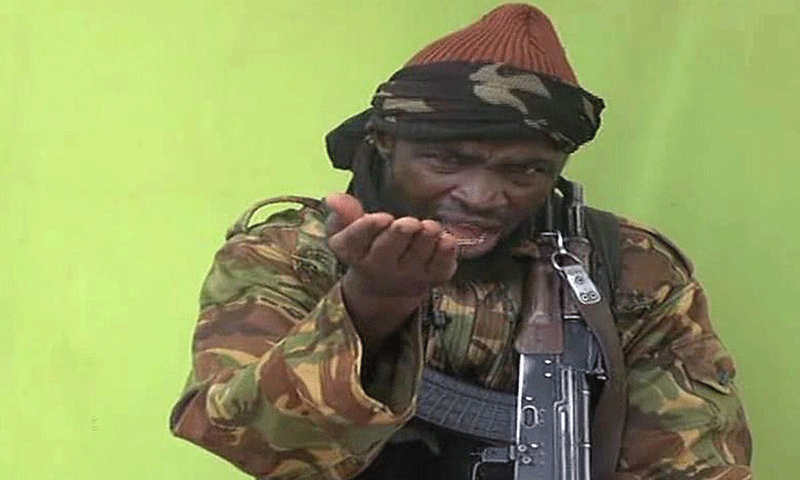
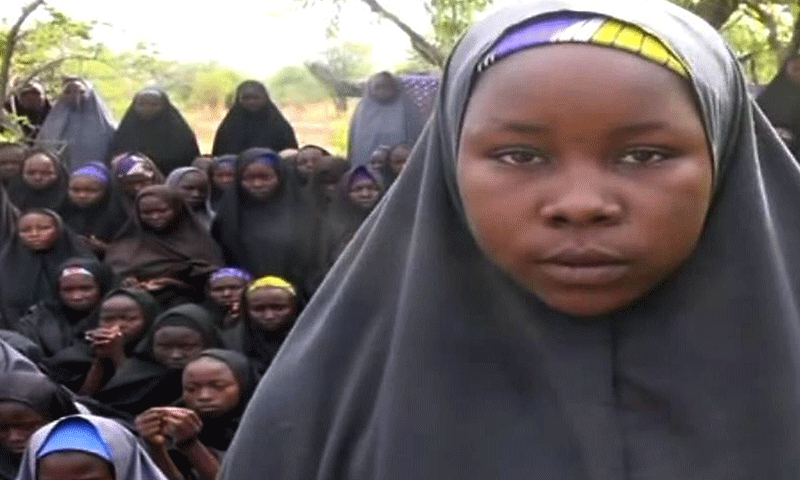
LAGOS: Boko Haram released a new video on Monday claiming to show the missing Nigerian schoolgirls, alleging the teenagers had converted to Islam and would not be released until all militant prisoners were freed. The group's leader, Abubakar Shekau, speaks on the video obtained by AFP for 17 minutes before showing what he said were the girls, in Muslim dress and praying in an undisclosed rural location. A total of 276 girls were abducted on April 14 from the northeastern town of Chibok, in Borno state, which has a sizeable Christian community. Some 223 are still missing. The footage shows about 130 girls in black and grey full-length hijabs sitting on scrubland near trees, reciting the first chapter of the Muslim holy book, the Koran, and holding their palms upwards in prayer. Three of the girls are interviewed. Two say they were Christian and had converted while one said she was Muslim. Most of the group were seated. The girls appeared calm and one said that they had not been harmed. There was no indication of when the video was taken, although the quality is better than on previous occasions and at one point an armed man is seen in shot with a hand-held video camera. Boko Haram has been waging an increasingly deadly insurgency in Nigeria's mainly Muslim north since 2009, attacking schools teaching a “Western”curriculum, churches and government targets. Civilians, though, have borne the brunt of recent violence, with more than 1,500 killed this year alone while tens of thousands have been displaced after their homes and businesses were razed. Nigeria's government has been criticised for its lack of immediate response to the kidnapping but has been forced to act after Shekau threatened to sell the girls as slaves. President Goodluck Jonathan has now accepted help from the United States, Britain, France, China and Israel, which have sent specialist teams to help in the search effort. In the video, Shekau appears in front of a lime green canvas backdrop wearing combat fatigues and carrying an automatic weapon. Shekau does not appear in the same shot as the girls at any point during the 27-minute video. Speaking in Hausa and Arabic, he restates his claim of responsibility made in a video released last Monday and said the girls had converted to Islam. “These girls, these girls you occupy yourselves with... we have indeed liberated them. We have indeed liberated them. Do you know we have liberated them? These girls have become Muslims,” he said. The militant leader said that Boko Haram's brothers in arms had been held in prison for up to five years and suggested that the girls would be released if the fighters were freed. “We will never release them (the girls) until after you release our brethren. Here I mean those girls who have not submitted (converted to Islam),”he added. Boko Haram has used kidnapping of women and young girls in the past and Shekau indicated that more were being held. Eleven girls were abducted from the Gwoza area of Borno state on May 4.

Report cites Afghan villagers eating grass under Taliban siege

KABUL: Residents of an Afghan village blockaded by Taliban fighters have resorted to eating grass due to food shortages, according to a report released on Monday revealing the country's worsening insurgency. The International Crisis Group (ICG) said that the withdrawal of US-led troops had coincided with renewed ethnic and tribal feuds, government forces fighting each other and mistreatment of locals by Afghan soldiers and police. It added that neighbouring Pakistan had failed to crack down on safe havens from where Taliban leaders are able to direct the insurgency that erupted after the militants were ousted from power in 2001. The ICG report detailed how Ghorak village in the southern province of Kandahar has been under seige by the Taliban for months, leading to a severe lack of food. “Ghorak's district centre remains under government control today, but Taliban roadblocks restrict the food supply,” it said. “People in the besieged pro-government enclave say they have resorted to boiling and eating grass.” The ICG cited an unnamed resident in Ghorak who was interviewed by telephone last month. “We have been speaking to these residents for some years,” Graeme Smith, ICG's Kabul-based analyst, told AFP. “They were already starting to have trouble keeping grocery stores stocked with food last year. Eating grass is one detail that illustrates the problems with supply lines and the isolation of outlying districts.” The ICG report concluded that “the overall trend is one of escalating violence and insurgent attacks” in Afghanistan, where Nato combat troops have pulled out of many areas where they had been fighting the Taliban for years. The insurgents “are blocking roads, capturing rural territory and trying to overwhelm district administration centres,” it said. “With less risk of attack from international forces, they are massing bigger groups of fighters and getting into an increasing number of face-to-face ground engagements with Afghan security personnel.” All remaining 51,000 Nato combat troops will depart Afghanistan by December, but several thousand US soldiers may remain on a training and counter-terrorism mission if a deal is struck between Kabul and Washington. “While retaining a contingent of foreign soldiers would not be sufficient on its own to keep the insurgency at bay, its absence could prove extremely problematic,” the ICG report said.

5,000 Hindus migrating to India every year, NA told

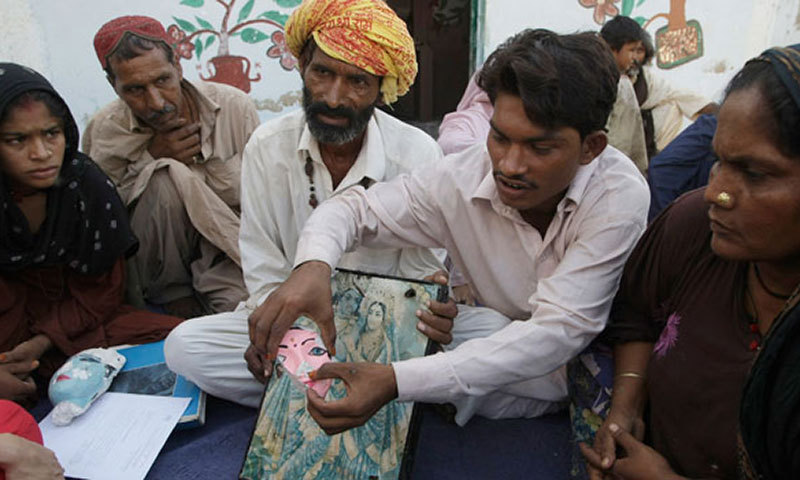
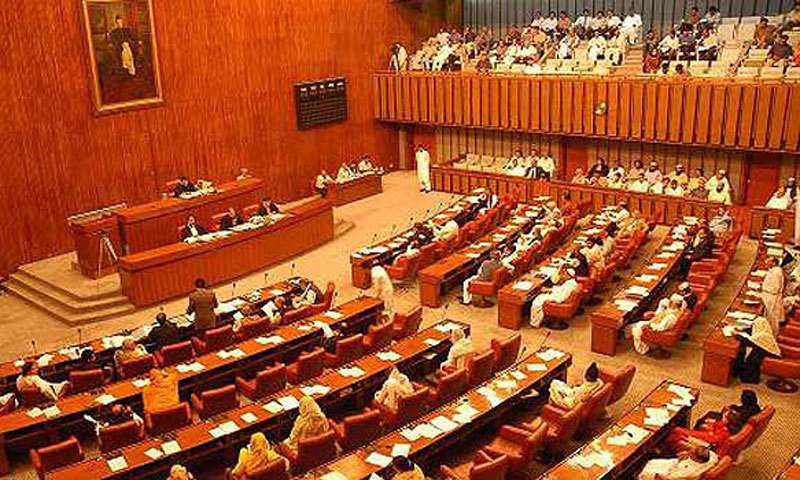
ISLAMABAD: A member of the ruling Pakistan Muslim League-Nawaz (PML-N), Dr Ramesh Kumar Vankwani revealed in the National Assembly on Monday that around 5,000 Hindus are migrating from Pakistan to India every year. Commenting on law and order situation in the country, the PML-N MNA said that six incidents of religious desecration happened within last two months in Sindh, majority of the incidents were regarding burning the religious books of Hindu minority in the province. Vankwani said that it was the constitutional rights of the people, belonging to different minorities, to practice their religion freely in Pakistan. “Are we not part of Pakistan?” he questioned. He said that influential people were forcefully converting religion of Hindu girls in interior Sindh, urging the government to take steps to counter such attempts from Muslim majority in the country. The PML-N lawmaker also said that it was the teaching of all the religions to respect other faiths but the minorities had failed to get equal rights in Pakistan. He suggested that the government should set up a parliamentary committee to discuss the issues related to minorities in this regard. Later, State Minister for Parliamentary Affairs Sheikh Aftab Ahmed said the government will ensure the protection of minorities at all cost as it is mentioned in the Constitution of Pakistan. Earlier, Pakistan Peoples Party (PPP) MNA Shazia Marri said that sympathies of the militans were present within the political parties’ ranks otherwise it was not difficult to stop terrorist activities in the country. Marri said that some political leaders called the Pakistani Taliban as their “angry brothers.” “I pray to God to please protect us from such brothers,” she added. The PPP leader said that it was the government’s responsibility to focus on the law and order situation for the progress of Pakistan otherwise tourists and investors from foreign countries will not come to the country. She also urged the government to protect the rights of religious minorities in the country.

MQM warns of Karachi lockdown if Altaf not issued NICOP, passport

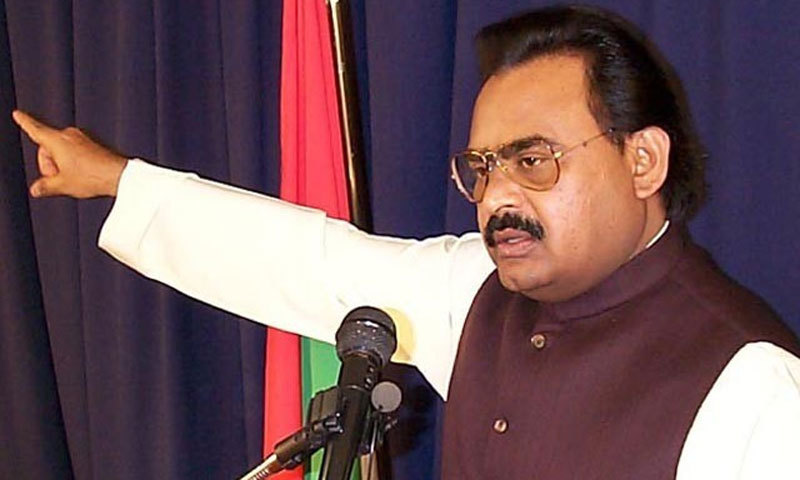
KARACHI: The Muttahida Qaumi Movement (MQM) warned on Monday to lockdown the port city if the National Identity Card for Overseas Pakistanis (NICOP) and passport were not issued to party Chief Altaf Hussain, DawnNews reported. MQM’s Rabita (coordination) Committee, in an official statement issued here, condemned the National Database and Registration Authority (Nadra) for using delay tactics in the issuance of NICOP to Altaf Hussain. The statement said the party and its workers would stage a countrywide protest if the NICOP was not issued to the MQM chief, who is living in a self-imposed exile in London for over 20 years. The committee termed the denial of card to Hussain by the authorities as “unconstitutional and unjustified in light of the fundamental rights guaranteed.” Senator Tahir Mashhadi of MQM also warned of closing down Karachi for a year if the government failed to issue passport and identity card to Altaf Hussain. The party has demanded that the president, prime minister and federal interior minister should take notice of the matter and take action against those creating hurdles in issuance of relevant documents to the MQM leader. Altaf expresses concerns over officials’ statements In a statement issued from London, the MQM chief said that statements of the additional interior secretary and the DG passports in the Senate have caused him shock and distress. The officials asserted that the ministry of interior had not received any application for passport or identity card in a meeting of Senate’s committee on interior held earlier today. “I would like to tell high officials of Interior ministry and federal government that I had applied for a Pakistani passport on April 4 in the presence of members of Rabita Committee, MQM’s office bearers and workers,” said Hussain. “I was told by the passport officials at the embassy that I would have to get a NICOP for this purpose. I went to Nadra office with Pakistan’s Ambassador Wajid Shamsul Hasan, MQM’s office bearers and other supporters.” The MQM chief said that Federal Interior Minister Chaudhry Nisar Ali Khan can confirm this Ambassador Hasan. He also said that he has receipt and tracking id. Hussain said that despite fulfilling all the requirements of Nadra, he had not received his NICOP card yet. “How can I apply for a passport when I don’t have the NICOP card,” he said. The MQM chief urged the government and the concerned department to stop their discriminatory attitude towards him. “Otherwise, my millions of supporters across the globe can stage protest over this injustice and biased attitude,” he warned in the statement. “Interior Ministry and its officials should not try to make the matter worse. They must show sagacity and investigate into the matter and try to find out the people who have displayed strong bias against a popular leader of the million people. What are their motives and why are they putting loyal Pakistanis in distress?” “If I am not Pakistani then no one can claim that he is a Pakistani,” said the MQM chief.

Gas reserves found in Sujawal

ISLAMABAD: The Mari Petroleum Company, a joint venture of the government and the Fauji Foundation, announced on Monday a ‘significant’ gas and condensate discovery with estimated reserves of about 20 billion cubic feet (BCF) in Sujawal district of Sindh. “We have been blessed with a significant gas and condensate discovery in Sujawal Block’s Sujjal-1 well,” said the announcement. The company termed the discovery significant because it was the first hydrocarbon discovery in Lower Goru Upper C-Sand in the southernmost part of the country. It said the discovery would result in expansion of the hydrocarbon potentials for other exploration and production companies operating in the area, thus opening up the country’s prospects of tapping into new reservoirs in the region. The work on Sujjal-1 well, the second exploratory well in Sujawal Block, was taken up on Jan 26 and drilled down to a depth of 2535m in Lower Goru Formation. As a result of testing, the well flowed gas and condensate at a rate of 13.1 MMCFD (million cubic feet per day) and 75 barrels per day (BPD), respectively, with wellhead pressure of 2477 PSI at 32/64” choke size, the company said. It said the gas was of a good heating value of 1045 British thermal unit per cubic feet and its condensate API of 53 at 60 degree Fahrenheit. The Sujjal well was also successfully tested at Lower Goru Upper A-Sand, which recorded a gas flow rate of 2.1mmcfd and condensate of 3.5 BPD with wellhead flowing pressure of 163 PSI at 48/64” choke size. The company put preliminary reserves potential of about 20BCF of gas and condensate (equivalent) within C-Sand interval whose value, based on currently applicable gas price translated into rupee, was estimated at Rs11.70 billion. The Sujjal discovery will be a new source of indigenous energy supply and is expected to significantly add to the nation’s hydrocarbon reserve base, consequently contributing to a reduction in gap between the energy demand and supply. The Sujawal Block was awarded to the company as operator with 100 per cent working interest in June 2006. The company drilled its first exploration well, Sujawal X-1, in 2010, which led to a gas and condensate discovery. The discovery has since been brought on stream supplying gas to the Sui Southern Gas Company and condensate to the Pakistan Refinery and Pak-Arab Refinery. It said the Sujjal-1 discovery further improved its high success rate. At present the company operates two development and production leases and nine exploration blocks and also has joint venture interest in six other exploration blocks.

Khalid acting emir of SWA Taliban

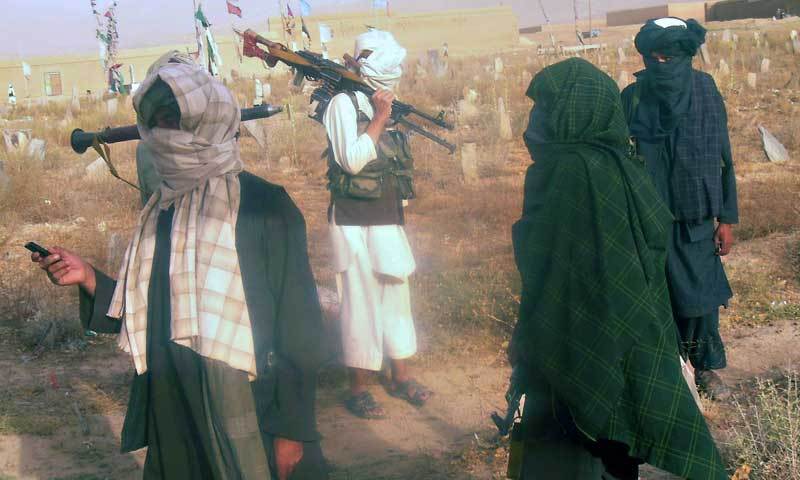
MIRAMSHAH/LADHA: The infighting between two factions of the outlawed Tehreek-i-Taliban Pakistan has prompted intervention by the TTP shura which is reported to have appointed Sheikh Khalid Haqqani as acting emir of the TTP’s Mehsud circle of South Waziristan Agency (SWA). The report, however, has been dismissed by another influential Taliban leader. According to the report, the shura announced a two-month ceasefire between the warring factions.

Baghdad car bombs against Shias kill 21

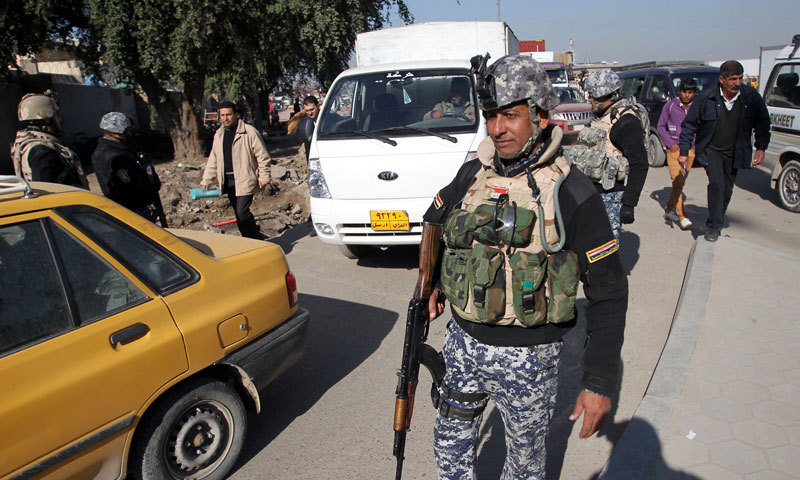
BAGHDAD: A spate of rush hour car bombs rocked Shia-majority areas of Baghdad Tuesday, killing 21 people in the first major series of attacks to hit the Iraqi capital since elections last month. The violence, which also wounded more than 60 people, came as officials are tallying votes from April 30 parliamentary polls amid a protracted surge in bloodshed that has left more than 3,300 people dead already this year. The government has blamed external factors, such as the civil war raging in neighbouring Syria, for the escalating unrest this year. But analysts and diplomats say the Shia-led authorities must also do more to reach out to the disaffected Sunni minority and undermine support for militancy. At least eight car bombs went off in predominantly Shia Muslim areas of Baghdad throughout the morning, when the city is typically gridlocked. Twin car bombs exploded near a traffic police headquarters in the Baladiyat neighbourhood of eastern Baghdad, and blasts also hit Sadr City, Urr, Jamila, Maamal and the central commercial district of Karrada. No group immediately claimed responsibility for the attacks. But Sunni militant groups have in the past set off coordinated bombings in the capital and often target the country's Shia majority. Iraq is suffering its worst violence since the bloody Sunni-Shia sectarian conflict that killed tens of thousands of people in 2006-2007. Security officials have expressed worry that militants could seek to exploit the vote-counting process and what is expected to be a long period of post-election government formation to set off attacks which could deepen already fragile ties between Iraq's communities. The authorities have trumpeted wide-ranging operations targeting militants in Iraq's north and west, insisting they are making progress against a variety of militant groups including the powerful Islamic State of Iraq and the Levant. But anti-government fighters have continued to hold on to Fallujah, a city a short drive from Baghdad, as well as other pockets of territory in western Iraq.

Local ANP leader killed in Peshawar firing

PESHAWAR: A local Awami National Party (ANP) leader was killed by unknown persons in Peshawar's Kohati area on Tuesday, DawnNnews reported According to the police, former Union counsellor Anwarul Haq was present at his shop when unknown persons opened fire on him. He died on the spot. The slain ANP leader was a member of ANP's district organising committee in Peshawar. Police started investigation of the incident. Following the incident, ANP workers blocked Peshawar’s G.T road for all forms of traffic. ANP leader Mian Iftikhar Hussain, including other party members, also participated in the demonstration. The protesters carried black flags and shouted slogans against the provincial government while demanding the immediate arrest of Haq's assailants.

US presence in Afghanistan to remain significant: envoy

TOKYO: The US-led military presence in Afghanistan will remain “significant” despite this year's drawdown, Washington's special envoy for the country said Tuesday, as he predicted that outgoing president Hamid Karzai would continue to wield influence. James Dobbins, the US special representative for Pakistan and Afghanistan, told reporters in Tokyo that Washington was “still considering” the details of the withdrawal plan. “I hope we will decide sometime in the next month or two on the exact size of (the remaining) contingent,” Dobbins told journalists in the Japanese capital, where he is attending talks on supporting Afghanistan. “We and our allies, I think, will be prepared for a continuing advisory mission, much smaller numbers than we have there today but still significant in terms of its ability to continue to improve the quality of the Afghan security forces,” he said. About 51,000 US-led Nato troops still deployed in Afghanistan are set to withdraw by December, ending a long and costly battle against the Taliban, who launched a fierce insurgency after being ousted from power in 2001. The US is thought to be looking at a small number of US troops staying on in a training and counter-terrorism role, but is waiting on a long-delayed deal being struck with Kabul after Karzai raised a series of objections. The White House says US President Barack Obama has so far made no decisions about how many American troops will remain behind to advise the still fledgling Afghan armed forces. Dobbins refrained from predicting the results of the ongoing elections to pick a successor to Karzai, saying only: “It could be a close race.”Afghanistan is due to announce the results of its first-round presidential elections on Wednesday, with former foreign minister Abdullah Abdullah and ex-World Bank economist Ashraf Ghani set to go through to a run-off vote. Dobbins said the elections are crucial for the country's survival in the post-Karzai era. “The first hurdle is the elections,” he said. “So far so good, but can't take anything for granted.” Whoever wins Afghanistan's election will lead the country into a new era after Karzai's 13 years in power and as US-led troops end their war against Taliban insurgents. But despite his departure, Karzai will maintain political influence even after he steps down, Dobbins predicted. “He will be an influential figure after the elections and I don't think that's necessarily a bad thing,” the envoy said. “I think that the new president will respect him,” he added. “We believe he views a peaceful transfer as a part of his legacy.”

US chief of naval operations arrives in Pakistan, meets COAS, CNS

**ISLAMABAD: Admiral Jonathan Greenert, US chief of naval operations, arrived in the federal capital city on Tuesday on an important visit aimed at enhancing professional cooperation between the navies of the two countries. Admiral Jonathan also held a meeting with Chief of Army Staff General Raheel Sharif at the army's General Headquarters (GHQ) in Rawalpindi, according to an Inter Services Public Relations spokesperson. Admiral Jonathan held a meeting with Chief of Naval staff Admiral Asif Sandila at Naval Headquarters in Islamabad, a spokesman for Pakistan Navy told Dawn. During the meetings both sides agreed to enhance professional cooperation between two navies. The US official appreciated the role of Pakistan Navy in anti-piracy operation in gulf of Aden. Earlier, the top Navy commander of the US also visited Karachi where he had addressed Navy cadets at Pakistan Navy Academy, PNS Rahbar in Manora. He also inspected Pakistani submarine "Khalid" and ship PNS Alamgir, which is a guided-missile frigate and lauded the professional standards maintained by sailors and officers of Pakistan Navy. The Pakistan Navy spokesman added Admiral Jonathan would also meet Prime Minister Nawaz Sharif and Defence Minister Khawaja Asif during his stay in Islamabad.

Khurshid demands immediate resignation of all ECP members

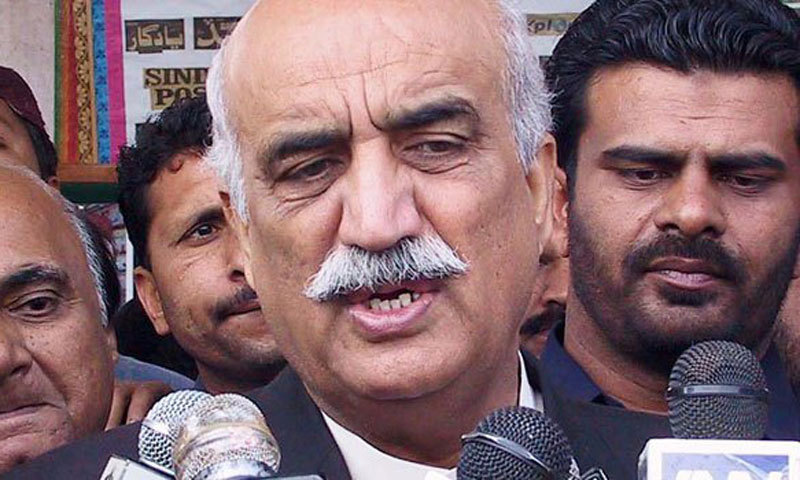
ISLAMABAD: Following serious allegations of rigging in the 2013 general elections, the leader of the opposition in the National Assembly on Tuesday endorsed Pakistan Tehreek-i-Insaf (PTI) chief Imran Khan's call for the resignation of all members of the Election Commission. In an informal conversation with reporters at the Parliament House, opposition leader Khurshid Shah said that members should immediately step down after the accusations of rigging by the PTI. Shah said that he still did not doubt the intentions of Fakhruddin G Ebrahim, but he claimed that the former Chief Election Commissioner failed to conduct the election in a transparent manner.The senior Pakistan People's Party (PPP) leader said that the government still had time to bring about reforms in the electoral system, which he said would take almost three years to be implemented. Shah said that a joint session of the PTI, Jamaat-i-Islami (JI) and PPP has been called for Wednesday. Opposition parties will meet tomorrow to work together on proposals for electoral reforms and forward them to the government, he said. He claimed that the entire nation was demanding electoral reforms and not just the PTI.

Monday, May 12, 2014

From India to Iran: A close look at severe punishments for rape across the world!

New Delhi: There are certain rules and regulations in every society and all the people living in that society must abide them, this is how, many people live in a community. There are however some people who do not persist these rules and we address whose people as the criminals. In recent times, rape has become a crime of major concern across the world especially India. The history of rape is dated back to Greek mythology and the Roman civilization. Rape or sexual assault is not only limited to the forced sexual intercourse but also brutality. After many rape incidents including the horrific Nirbhaya rape case of December 16 in Delhi, the entire world was shocked to see the brutality of the rapists. Every country has different ways for punishing the rapists and here is a comparison of punishments for rape in India and other countries.
In India, before 2013, rape was not considered as major a crime to have stringent punishments. The maximum punishment was up to seven years of rigorous imprisonment. But, in April 2013, after the Anti Rape Bill was passed by Parliament, an act of rape is now liable to life imprisonment, imprisonment for the whole of life, and even death sentence for rarest of rare cases. Moreover, stringent punishments are there for convicts of acid attacks, rape, stalking and voyeurism.
In Saudi Arabia, public beheading is the capital punishment for murder, rape, drug trafficking, sodomy, armed robbery, apostasy and other offences. The punishment remains the same for both men and women if they commit any crime mentioned above. The condemned is usually taken to a public area by the police and forced to kneel facing Mecca. His name is then called so that he looks up and then his head his removed with a single stroke. The body and head is then picked and is handed over to a doctor who then sews both the parts together. The deceased's body is wrapped in the plastic sheet and taken away for burial in an unmarked grave at the prison
China is quite strict with the rapists too. The punishment of rape can be death penalty for aggravated rape incidents. In China, death sentence is given by a single bullet fired at the spinal cord joining the neck. Castration is also used for punishing rapists in most cases.
In most countries, the practice of death by firing squad has been stopped. However, North Korea feels no mercy regarding its criminals who have committed rapes. Therefore, the practicing of shooting squad, and firing bullet in head of a person, is still prevalent and in used till now in few states of North Korea.
Afghanistan has provision for capital punishment for rape. Since Afghanistan is a Muslim country and its laws are based on Islam, convict is shot with a bullet in the head within the four days.
Iran provides complete justice to the people who become a victim of sexual assault; Iran has execution for the rape culprits. Iran offers capital punishment for many crimes and among them 10 to 15% executions are of rape cases. The women sometimes settle down the cases by compensating; however the rappers are punished by 100 lashes and sometime of imprisonment in some cases.
In France, the punishment for rape is imprisonment. If a person is found to be guilty of rape, he is sentenced to an imprisonment of 15 years’. It extends to 20 years if the victim is under 15 years of age or other aggravating factors. If the sexual assault becomes the cause of the victim’s death, the convict will be imprisoned for a maximum period of 30 years. If the rape is followed by torture or any other physical harm, the felon is sent to the prison for the life time.
Many few countries offer death penalties for rapes; Egypt being one of them hangs the culprit to death. Few days ago, 10 men gang raped a woman and all of them got the death penalty.
In Israel, the rapist is liable to 16 years imprisonment.
USA There is no nationally accepted definition of rape in the United States; instead each state has its own laws. Though these definitions can vary considerably and most of them do not use the term rape any more, it is always referred to as "sexual assault", "criminal sexual conduct", "sexual abuse", "sexual battery", etc. Under federal law, the punishment for rape can range from a fine to life imprisonment. If the accused is a repeat offender, the law automatically doubles the maximum sentence.

Tours abroad: Expenses of Nawaz’s foreign trips kept under wraps

ISLAMABAD: Using legal cover, the foreign affairs ministry has refused to share details of expenditures incurred on Prime Minister Nawaz Sharif’s foreign trips, depriving the public of its right to know where and how its money has been spent. In its written reply to a question by Islamabad-based lawyer Malik Salim Iqbal, the ministry cited section 8 of the Freedom of Information Ordinance 2002 and said information regarding money spent under different budgetary heads on the premier’s 10 foreign trips – from the date he assumed office to March 31 – cannot be shared due to secrecy. Section 8 allows the federal government to exclude any record from the purview of the Freedom of Information Ordinance 2002 if it feels it is in the ‘public interest’ to do so. “This raises serious questions about transparency. What is the point of this law if even the cost of air tickets for the prime minister and his entourage are considered national security secrets,” Iqbal asked while talking to The Express Tribune. “I applied for this same information back in 2012, when Yousaf Raza Gilani was premier, and it took me one year to extract details of the expenditures incurred on his [Gilani’s] foreign trips,” he said. “I won’t knock the federal ombudsman’s door this year because it is too lengthy a process.” Information pertaining to Gilani’s foreign trips while he was prime minister was officially obtained by the Centre for Peace and Development Initiatives (CPDI). CDPI got a hold of the records only because of the federal ombudsman’s intervention as the Foreign Office was reluctant to declassify the information back then as well. Gilani spent almost nine months, from March 2008 to 2012, abroad and had over 50 visits in the same time. Interestingly, the foreign ministry has already shared details of expenditure incurred on Prime Minister Nawaz’s trips with the National Assembly without citing section 8 of Freedom of Information Ordinance 2002. According to the details shared in the lower house, the premier has undertaken nine visits, from July last year to February 15 this year. Excluding his trip to Turkey, Rs194.3 million have been spent on his other eight trips abroad. Seven of these trips, which took place in a span of three months last year, cost the national exchequer Rs168.1 million. “The ruling elite has ensured the subjugation of the masses by manipulating the flow of information and keeping citizens uninformed and misinformed,” said Zahid Abdullah, coordinator of CDPI’s Coalition on Right to Information. “Be it civil or military bureaucracy, or the politicians, no member of the ruling elite is willing to share information with the common people.” “It has been three years since the passage of the 18th Amendment, however, the operationalisation of article 19-A remains to be worked out by the relevant legislative and policy forums at the federal, provincial and local levels,” said Amjad Bhatti who works as National Technical Advisor with UNDP-Pakistan. Zafarullah Khan, Executive Director of the Centre for Civic Education said that 90 countries, which are either mostly developed or developing democracies, have some type of legislation to ensure their citizens’ right to know. “Many more nations are in the process of realizing the citizens’ right to information,” he added. Published in The Express Tribune, May 12th, 2014.

Suleman Lashari murder case: Mother identifies accused police officers in court

KARACHI: The mother of Suleman Lashari, an O’ level student who was killed in Karachi earlier this May, identified the accused police officers during a witness parade held in a local court on Monday, Express News reported. Suleman’s mother, during a hearing of her son’s murder case, claimed that Sakrand Training Centre SSP Ghulam Sarwar Abro’s son along with the other suspects broke into her house and shot her son dead in front of her eyes. The court also sent the accused police officers on physical remand till May 16. Two days ago, one of the arrested police officers had claimed that the SSP’s son, Salman Abro, himself shot Suleman. The SSP was reportedly becoming an obstacle in the investigation process. The murder An 18-year-old student of O’ Levels was shot dead at 2am on May 8 while he was studying in his balcony. The young man was allegedly targeted by the SSP’s son who came to Suleman’s house along with five police constables to settle an argument. The guards deployed at Suleman’s house had retaliated and the victim’s brother Zeeshan had also joined in after getting his weapon from his room. Salman was also injured in the exchange of fire and one of his police guards, constable Zaheer Ahmed, was killed. Salman is critically injured and is currently admitted at Ziauddin Hospital. The incident had also left Suleman’s guard, Ali Bugti, injured. An FIR No. 235/2014 has been registered by the deceased’s brother at the Darakhshan police station against Salman and the four police constables – Muhammad Rasheed, Yasin, Maqbool and Imran – who accompanied him. The name of the deceased police constable has not been added in the FIR, which includes Sections 302, 324 and Anti-Terrorim Act Section seven. The four surviving policemen are in police custody while Salman will be arrested when he recovers from his injuries. The police have also seized the Vigo and the weapons. Taking action against SSP On May 9, the police department had decided to initiate legal action against Salman’s father after his son was booked for murder. Based on the initial reports, the police officials had asked their superiors to take action against the SSP for misusing state resources. An inquiry team had been constituted to investigate SSP Abro and was ordered to submit its report within three days.

Ceasefire violation: Indian forces fire across LoC for second day

RAWALPINDI: Indian forces continued firing at the Bhattal Sector of the Line of Control (LoC) for the second day today, Express News reported on Monday. In the first incident, small arms and mortars were used by the Indian forces but the Pakistani troops responded swiftly to the offense, a military official said. Despite this, the Indian forces continued firing at the sector after midnight on May 12. This is the fourth ceasefire violation in the last three weeks. On April 25, after almost three months of calm, the two armies accused each other of breaching the ceasefire agreement following mortar shelling and firing in the Poonch Sector on the LoC. Three days later, the two sides exchanged fire again. According to Inter Services Public Relations (ISPR), the Pakistan Army had lodged a protest with the Indian authorities on Sunday over what is said to be the third violation of the Pakistan-India 2003 ceasefire agreement in the last three weeks. Military officials said the army protested after the Indian troops resorted to unprovoked firing after midnight on May 11, at the Bhattal Sector of the LoC. No casualties or damage to property have been reported so far.

Bill seeks to end bureaucrats’ two-timing ways

ISLAMABAD: Serving bureaucrats may soon find that their days of working ‘freelance’ are numbered as the Senate seeks to amend the Civil Servant Act, 1973, to prevent public office holders from working independently with international organisations and foreign donor agencies. Titled ‘Civil Servants (Amendment) Act, 2013’, the bill was introduced in the Senate in January and was passed in March. Opposition members are now lobbying to have the bill adopted by the National Assembly either during the current session or in the budget session. The bill seeks to end a practice observed among many top bureaucrats, who extend their services to some non-government organisations (NGOs) or foreign agencies in violation of government rules and the ethics of public office, sources in the Establishment Division told Dawn. The private member’s bill was moved in the Senate by Syeda Sughra Imam and passed unanimously. Ms Imam believes that she was taking up a ‘national cause’. “I hope the government will support us and also pass the bill in the National Assembly,” she told Dawn. The bill passed by the Senate asks for the insertion of section 10A in Civil Servant Act, 1973, entitled ‘Restriction on Service in International Organisation’, which reads: “A civil servant shall not serve an international organisation, international non-governmental organisation, international financial institution or foreign donor agency during his service: Provided that the aforesaid restriction shall not apply to the civil servants who are posted or deputed in international organisations on behalf of the country.” She said an officer in the service of Pakistan must have undivided loyalty to the state. “Therefore, when a civil servant takes a leave of absence from his official duties and starts working for international organisations while continuing to hold public office, it is tantamount to conflict of interest,” she added. In the bill’s ‘Statement of Objects and Reasons’, Ms Imam argues that such individuals can “misuse (their) concurrent government position to influence policies and negotiate agreements with the government of Pakistan in favour of international partners and organisations rather than the state of Pakistan.” “This bill seeks to ensure that this practice of ‘outsourcing’ civil servants to international organisations ceases and they serve the state of Pakistan only in their official capacity,” it reads. Sources told Dawn that there were several serving and retired government officials who have been working with foreign donor agencies or international organisations and drawing lucrative salaries, all without the permission of the Establishment Division, in violation of service rules. Certain government officials maintain offshore bank accounts, where their hefty salaries can be deposited directly to evade government taxes. In addition, the sources said, such officers would misrepresent their status to the new employer, be it a donor agency or an NGO, by providing forged documentation or inaccurate information to convince their employers that they had the necessary permission from their parent departments and the Establishment Division to serve with another organisation. A senior Establishment Division official said that the issue was on the government’s radar and an inquiry into instances of dual employment had been ordered. The official said most officers who enjoyed double benefits belonged to the Punjab government and the provincial authorities had been asked to present a report on the matter as soon as possible. “Action will definitely be taken against civil servants who are violating the rules,” he said.

Mushtaq’s English farewell pits him against Saqlain

KARACHI: Former Pakistan spinner Mushtaq Ahmed is set to lose his job as England’s spin coach as new head coach Peter Moores plans to reshuffle his backroom staff, according to reports emerging on Sunday. England’s loss could benefit Pakistan as Mushtaq might team up with Waqar Younis, who was reappointed as the head coach by the Pakistan Cricket Board (PCB) for a second term last Tuesday. A formal announcement from the England & Wales Cricket Board (ECB) on Mushtaq is expected on Monday. England, who are rebuilding after their horrendous Ashes campaign Down Under, have also fired batting coach Graham Gooch but have opted against replacing their Australian fast bowling coach David Saker after the latter signed a new contract in October that runs after next year’s Ashes series in England. Mushtaq — who bamboozled many a batsman with his assorted bag of leg-breaks and googlies — became a close ally of Moores who hired the diminutive Pakistani leg-spinner during his previous stint as England coach in 2008 after the pair had been together at Sussex during a period when the English county won first Championship title in 2003. Mushtaq is credited with re-emergence of England stalwart Graeme Swann during Andy Flower’s tenure as one of the most feared off-spinners in international cricket. Swann, arguably rated as one of England’s best-ever spinners, shocked the cricketing fraternity when he announced his retirement after the third Ashes Test in Perth last December after picking up just seven wickets at 80 apiece. Pakistan have yet to pick Waqar’s support staff but it is likely that Mushtaq, who played alongside Waqar for much of his international career, could join his former team-mate to work with country’s top spinner Saeed Ajmal and company before Pakistan tour Sri Lanka in August for two Tests and three One-day Internationals. Mushtaq has already sent in his application after the PCB advertised the coaching staff positions last month with a May 5 deadline. According to sources, the PCB has already taken the input from Waqar who is keen on the idea of having Mushtaq affiliated with the national outfit. Mushtaq, 43, claimed 185 wickets in 52 Tests from January 1990 until October 2003. He also bagged 161 wickets in 144 One-day Internationals and was one of the key figures in Pakistan’s triumphant World Cup campaign in 1992, snaring 16 victims in nine matches. While Mushtaq may have emerged as the frontrunner to join the Pakistan team bandwagon, another candidate is Saqlain Mushtaq, the former Pakistan off-spinner who is universally acclaimed as the inventor of Doosra. But sources point that Saqlain’s services — if the 37-year-old is employed — could be confined to the National Cricket Academy in Lahore where deposed Pakistan bowling coach and current national selector Mohammad Akram was recently appointed as the head coach. Saqlain, who in an international career blighted by fitness issues that forced him into early retirement, formed a portent spinning partnership with his unrelated namesake. When he played his last game for Pakistan — in the groundbreaking first Test against India at Multan in early 2004 — Saqlain, who grabbed 208 wickets in only 49 Tests and 299 in 169 ODIs, was just 27. In recent times, Saqlain was hired by both Bangladesh and West Indies as a spin consultant. But it remains to be seen as to which of the two ‘Mushtaqs’ gets the PCB nod to join Waqar’s backroom staff. Meanwhile, David Dwyer has reportedly shown interest in rejoining the Pakistan team after leaving Bangladesh late last month, quitting after being 14 months in job although his contract was until next year’s World Cup. The Australian trainer had two spells with Pakistan including the first when his compatriot and ex-Test fast bowler Geoff Lawson was hired as head coach in 2007.

Doctor was killed by extremists over liberal views

GUJRAT: A senior doctor, who was killed at his clinic in Jalalpur Jattan city on August 7 last year, was not a victim of extortionists but of the alleged militants belonging to banned outfits for his liberal views. A reliable source in a law enforcement agency told Dawn that three militants, recently arrested in connection with the target killing incidents in Gujrat, had revealed during interrogation that Dr Attaur Rehman, a known medical practitioner of Jalalpur Jattan, had also been a victim of their target killing besides many others last year. The law enforcement agency had arrested the suspects in a kidnap-for-ransom case. During investigation, they revealed their involvement in target killing of seven people, including Professor Shabbir Shah of the University of Gujrat (UoG), a religious figure Fazeelat Shah alias Phul Shah in Jassoki area of Kunjah police and a policeman Sarfraz. They had also attacked a Sara-i-Alamgir-based businessman belonging to Ahmadi community who sustained bullet injuries but survived two attacks on him. Though officials are terming the arrests as a major breakthrough in the investigation of target killing cases, the revelation of Dr Attaur Rehman being targeted by the banned outfit had really shocked them as they had earlier considered involvement of extortionists in the incident. The militants told investigators that they had killed the doctor due to his liberal views he used to express publicly at his clinic and it was a medical representative of a pharmaceutical company who had connived with the suspects, telling them that the doctor often gave, what they termed, provocative remarks about religion and the information had been the sole reason for targeting him. The revelations came as the investigators were probing the suspects in a kidnap-for-ransom case. All the three arrested suspects, including two real brothers Abrarul Haq and Anwarul Haq, residents of Dedhar village of Gujrat Sadar police precincts and Asif Maqsood of Jhandewal village, Gujrat, were arrested by a joint raiding team of Jhelum and Gujrat police a few weeks back in a case of kidnap-for-ransom of Haji Iqbal, a British national. They also confessed to being involved in four other major incidents of target killing in Gujrat district during the later half of 2013. Earlier, the then Gujrat DPO Ali Nasir Rizvi had claimed the arrest of seven extortionists of a gang of Jalapur Jattan during a news conference on August 28, three weeks after the killing of the doctor, saying the extortionists had killed the doctor for extortion. Police had framed charges against seven suspects for anti-terrorism court of Gujranwala where the trial of alleged gangsters continued despite repeated statements of the complainants in their favour. A police official said the heirs to Dr Rehman had formally asked the court in writing that the seven alleged extortionists were not his killers. The suspects’ release was likely after the legal formalities. Police sources said DPO Rizvi, under pressure from the agitating medical fraternity of Gujrat chapter of the Pakistan Medical Association, had declared the seven alleged gangsters as killers of Dr Rehman just to pacify the concerned voices in Gujrat over the rise in extortion incidents. It was also revealed that DPO Rizvi himself had also been a prime target of the arrested terrorists for belonging to the Shia community. The security of Mr Rizvi had been higher than routine security of a DPO and two Elite Force vehicles used to move with him instead of one mobile van while a concrete security wall had also been constructed outside his house. The three alleged killers of Dr Attaur Rehman had been in Jhelum police custody for their involvement in abduction of Haji Iqbal who was released by them after payment of Rs3.5 million ransom. DPO Jhelum Afzal Mehmood Butt confirmed to Dawn that the arrested suspects had confessed to killing of Dr Rehman and they had been on physical remand of six days until May 15 in a kidnapping case of Haji Iqbal. Efforts were being made to bring Iqbal back to Pakistan to pursue the legal formalities of the case, he added. DPO Gujrat Rai Ijaz said three arrested militants were yet to be brought to Gujrat from Jhelum for legal proceedings in target killing cases. Two more suspects, Qari Afzal and Zakriya Khalid, of the same network are already in custody of Gujrat police on physical remand whereas the law enforcing agencies had been making efforts to arrest the remaining members of the gang.

View from abroad: The rise of the French right

IN France over May Day, I found the media full of coverage of Marine Le Pen’s speech at Bastille in Paris. Le Monde, one of the great daily newspapers of the world, devoted a full page to Le Pen’s speech and the prospects of her party, Front Nationale (FN), in the EU parliamentary elections on May 22. Last week, I wrote in these pages about the rise of Nigel Farage and his UKIP on Britain’s political scene. Le Pen’s steady march for respectability has been more impressive as she has had to shed the extreme right-wing image the FN had acquired under her father Jean-Marie Le Pen. Strongly anti-Semitic and openly racist, his actions and rhetoric made it difficult for decent, ordinary people to sign up to the FN’s ideology. Since taking over the party after an internal election in 2011, she has worked hard to position it as a respectable alternative to the mainstream left and right-wing parties. And while she has shed her father’s complete rejection of immigration, critics point to her anti-Muslim bias. For instance, during her campaign for party leadership, she claimed that the Muslim practice of taking over squares and streets in some cities for Friday prayers was akin to ‘foreign occupation’. More recently, in the wake of the FN’s local council victories in a string of French cities, Le Pen has suggested that in keeping with the French tradition of secularism, a uniform menu should be available to all French students at school. The implications of such a move are inflammatory: when we were at a private school in Paris, my brothers and I would be given an alternative when the other kids were served with pork at lunch. What Le Pen is proposing is that there be no halal option for Muslim children. If carried out, this policy would inflame France’s large Muslim population. Unfortunately, messages such as these resonate across France where, increasingly, many are coming to resent the presence of so many Muslim immigrants. While French laws do not permit the state to ask questions about a person’s faith, the number of Muslims in France is estimated to be somewhere between 3.5million and 5m. Most of them are from ex-colonies in North Africa, and a large percentage were born in France. The popularity of the French ban on the full niqab in public places is an indication of the annoyance many feel towards the insistence of their Muslim neighbours to import backward social practices to their country. So clearly, integration has not been smooth, with constant tensions between immigrants and their hosts. Frequent clashes in the terrifying cheap housing, or banlieues, on the periphery of large cities, have highlighted the large divide. Young Muslims see themselves as marginalised and subjected to constant harassment by the police. Ordinary Frenchmen view this large and noisy community as being troublesome uninvited guests. These are the voters Marine Le Pen is targeting. While election to the EU Parliament does not bring much power, Le Pen wants to convert the election to a referendum on the EU itself: strongly against the Union, she, like Nigel Farage, wants to lead her country out of its restrictive constraints. She also hopes to expose the French president’s weakness on May 22. In her May Day speech, she denounced Francois Holland as a ‘sad accountant’, and announced that “the French are lions, unless they are led by donkeys”. Such words are likely to bring her votes in cities, but French farmers benefit from the highest subsidies in the EU, and would hardly vote to have these handouts cut. Similarly, large corporations are unlikely to support her desire to leave the euro “before it collapses”. Liberals, long the backbone of the intelligentsia, are appalled by Le Pen’s anti-immigrant, covertly racist agenda. But despite her divisive message, the fact is that it is appealing to growing numbers in France. So much so that she is expected to gain up to a third of the vote in the first round of the next presidential election. Such a result would transform the French political scenario, and put the country on an unexplored path. In a sense, both Le Pen and Farage reflect the growing anti-immigrant, anti-Muslim tide across Europe. With a long, hard recession has come a fear of losing jobs to immigrants willing to work for less than the average pay. But whatever the reason, it will be a sad day if France, once the bastion of tolerance and secularism, should surrender its rational values to the right. I should mention here that my short visit to France was made possible by the generosity of the French embassy in Islamabad, which issued me a six-month Schengen visa. Actually, having flown there from Karachi to have my fingerprints and eyes scanned, I had hoped for a longer visa as it’s so easy to go across to France from England where I spend part of the year. And I expected that being fluent in French would be a further qualification. But I suppose that post 9/11 paranoia robs diplomats of initiative, and the ability to discern friend from foe.

Insurgents launch multiple attacks in Thai south, one dead

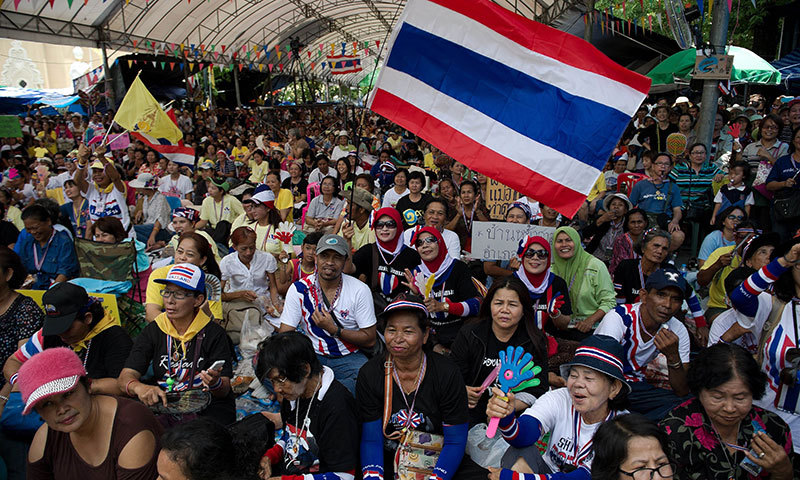
BANGKOK: Suspected Muslim separatists in southern Thailand launched a wave of more than 30 attacks on Monday including shootings, bombings and arson, police said, killing one person and injuring more than 10. Thailand is predominantly Buddhist but parts of the south, in particular the three southernmost provinces of Pattani, Yala and Narathiwat, are majority Muslim and decades-old resistance to central government rule resurfaced violently in 2004. Paradorn Pattanathabutr, a security adviser to the prime minister, said the targets included a shopping mall, which was set on fire, and electricity pylons. “One woman has died and more than ten others were injured. We believe the perpetrators are rebel Muslim groups trying to recruit more people for their cause,” Paradorn told Reuters. Police in Narathiwat province, close to Thailand's border with Malaysia, said bomb attacks were carried out at more than 10 locations and a Muslim woman was killed in one blast. More than 5,700 people have been killed in the south since January 2004 and more than 40 have been killed this year. There are various shadowy rebel factions and their main demand is for greater autonomy for their long-neglected region. The opening of peace talks with some of the rebels last year has done nothing to end the violence. Meetings have been postponed and the talks appear to have stalled, with Thailand's caretaker government preoccupied with surviving protests against it in Bangkok.

Lightning kills two near Rawalpindi

RAWALPINDI: Two young men died on Monday when lightning struck them in the area of Kahuta near Rawalpindi, DawnNews reported. Two residents belonging to the Kahuta district went searching for employment on motorcycles, when due to heavy rain they sought shelter under a tree. However, unfortunately lightning struck them killing both on the spot. The dead bodies were shifted to Tehsil Headquarter Hospital Kahuta where family members gathered to claim them. After post-mortem the bodies would be given to the relatives.

Victim's mother identifies DHA shootout suspects

KARACHI: The mother and elder brother of the deceased Suleman Lashari in the DHA shootout case on Monday identified the suspected killers during an identification parade carried out in a sessions court, DawnNews reported. Speaking in court, Lashari’s mother said the prime suspect Salman Abro opened indiscriminate fire on her son. She added that the suspects were armed with rifles when they showed up at the Lashari residence. Investigation sources said that Suleman Lashari suffered shots to the neck and hip. The sources added that the bullet that had hit his neck was fired from a government SMG rifle whereas at the time of the incident all the policemen involved, Zaheer, Rashid, Yasin, Maqbool and Imran were dressed in plain clothes. The accused, young Abro sustained bullet wounds in his spinal cord and kidney area. SP Ghulam Sarwar Abro’s son, Salman Abro, 18, along with five police guards of his father had reportedly stormed the residence of Suleman Lashari, 18, on Khayaban-i-Shamsheer at around 2am. It triggered a shootout, claiming the life of Lashari and the 27-year-old police guard, Zaheer Ahmed Rind. Abro's family had claimed that a few hours before the incident, a scuffle had broken out between the teenagers and Salman Abro went there for settlement but Lashari's guard had opened fire resulting in the clash. A case had been registered under Sections 302 (premeditated murder), 324 (attempted murder), 427 (mischief causing damage to the amount of fifty rupee) and 34 (common intention) of the Pakistan Penal Code read with Section 7 of Anti-terrorism Act, 1998 on a complaint of the deceased’s brother at the Darakshan police station.

Gunmen kill Pakistan Navy official in Karachi

KARACHI: Unknown gunmen attacked a Pakistan Navy official near Karasaz area on Karachi's Shahrea Faisal on Monday, DawnNews reported. Security and rescue teams reached the attack site situated on the port city's main artery. The targeted Navy official was rushed to a hospital for treatment where he succumbed to his wounds during treatment. Police sources said that the incident appeared to be sectarian motivated, although reports in the media indicated the killing could have been the result of a failed robbery. Earlier this month, a security guard of the Pakistan Navy was shot dead by robbers in an attack on the car of a senior navy officer in Defence Phase II. Another Pakistan navy officer was shot dead and his Swedish wife wounded in a similar attack in September last year. Earlier on Feb 27, a lieutenant commander of the Pakistan Navy was wounded in an attack in Karachi’s Keamari area who later succumbed to his injuries. In another incident on Feb 7 2013, a naval officer and his wife were injured in a mysterious explosion in their car near the city’s Karsaz area.

Sunday, May 11, 2014

PML-N lashes out at 'anti-govt' rallies

LAHORE: Leaders of the Pakistan Muslim League - Nawaz (PML-N) on Sunday lashed out at the 'anti-government' rallies being taken out by the Pakistan Tehreek-i-Insaf, Awami Muslim League (AML) and Pakistan Awami Tehreek (PAT) in the federal capital city today, DawnNews reported. Addressing journalists during a seminar on the freedom of press in the country, Punjab Chief Minister Shahbaz Sharif after stating the achievements of the current government, termed the anti-rallies being staged as against the country's development and requested PTI chief, Imran Khan, to have mercy on the nation. Terming the rally as 'ball tampering', since according to him, Imran Khan was staging a rally against a democratic government before the end of its tenure, he added that if Khan was willing to vacate his palatial residence then he too would be willing to leave his large residence. The CM Punjab also extended an invitation to Pakistan Awami Tehreek (PAT) chief Dr Tahirul Qadri asking him to leave Canada and settle down in Pakistan. He said that PAT chief was himself enjoying a cool breeze while the people were made to bear the sweltering heat out on the roads of Pakistan. On the other hand Federal Information Minister Pervez Rasheed, criticising the PTI in cricketing terms, claimed that Imran Khan wanted to enter the finals without playing the quarterfinals and added that the party wished to have its own umpire in the finals.

Pakistan PM visits Iran amid tensions

TEHRAN: Pakistan Prime Minister Nawaz Sharif met Sunday with the Iranian president at the start of visit during which talks are likely to include border security and a stalled gas pipeline deal. Sharif and Iranian President Hassan Rouhani met briefly for lunch, and are to hold more in depth talks on “bilateral issues and the expansion of economic cooperation,” the official IRNA news agency reported. During his two-day visit Sharif, who is accompanied by senior advisors, is also expected to meet supreme leader Ayatollah Ali Khamenei, Iran's ultimate authority, media reported. The visit comes amid tensions between the two neighbours following the kidnapping in February of five Iranian soldiers by militants who allegedly took them across the border into Pakistan. Tehran says the soldiers, four of whom returned home after being held for two months, were taken across the border into Pakistan, a claim Islamabad denies. The fate of the fifth soldier is unknown. His abductors claim to have killed him but it is yet to be officially confirmed. Ties between Islamabad and Tehran have also been strained following the announcement in February by the Sharif government that Pakistan was suspending work on a $7.5-billion pipeline for Iranian gas exports. The work on the Iranian side is almost complete and Tehran expects Pakistan to finish the project on its side.

Indian elections through Pakistani eyes: From Bangalore to Hyderabad

A Pakistani travels through India as the world’s biggest democracy votes in the national elections. Follow his journey to know what happens and all the people that he meets on the way. Day 4: From Bangalore to Hyderabad
Hyderabad was the capital of the largest princely state of the same name that was ruled by Muslim monarchs for centuries. After its inclusion into India, its Maratha, Kannada and Telugu speaking areas were separated and merged with the states of Maharashtra, Karnataka and Andhra Pradesh respectively. The city of Hyderabad served as the capital of Andhra Pradesh. The four century old monument, Char Minar, has become a symbol of Hyderabad. It is situated in the middle of an extremely crowded market with narrow lanes that are typical to all older parts of our cities. The old parts of the city are still dominantly inhabited by Muslims.
Many Muslims in Hyderabad have assimilated themselves into the communally mixed society and politics of Andhra Pradesh but some stick to maintaining a separate and distinct identity. The older parts of the city that are dominantly inhabited by Muslims generally vote for Majilis-i-Ittehadul Muslameen. In the provincial assembly elections of 2009, the party was successful on seven of the eight city constituencies that it had contested. The party is generally considered as an ally of Congress.
More minars in the city of Char Minar: Development has been the top demand of the people from their election candidates every where. In fact one of the major criteria the electors tend to use to assess the parties and their candidates is how much will they be supportive of developing their constituencies. And in all the places in India, I have been to, development invariably means concrete structures, flyovers, underpasses, bus lanes etc and I also saw one or more mega projects underway at all of these places. In the social circles, there are debates both for and against this approach towards development and there are stories of massive frauds and embezzlements. I am alien to neither this definition of development nor to the debates surrounding it, so I can equally participate in all of these
The state of Andhra Pradesh will be split into two, Telanaga and Andhra, on June 2, 2014. The legal measures and administrative planning has already been completed. Telengana consists of the Telugu speaking parts of the former princely state of Hyderabad. It only had hesitantly accepted its merger with Telugu speaking parts of Madras state when India redrew its internal boundaries in 1950s. It has been accusing the Andhra of exploiting its resources and denying it due share in the 'development pie'.
River water sharing has been contentious within the state of Andhra Pradesh. Almost two-third of the catchment area of the regions two large rivers, Krishna and Godavari, lies in the Deccan plateau region of Telangana while it only gets a fifth from the canal irrigation system. The rest goes to the coastal regions of Seemandhra. The farmers of the Telangana region have struggled for over half century along side its salaried middle class to get the region the status of a separate state.
Most Muslims in Hyderabad insist on maintaining a distinct identity and one very visible expression of this, you can't miss noticing in Hyderabad, is women in black burqas and they are not a minority here, I saw more black burqas in Hyderabad than I could ever see in Lahore or Karachi. The communities vigilantly guards its women and inter-religion relations among young women and men are not only discouraged but violations often face violent reactions as well. ************************************************** The other important symbol of identity for Muslims in Andhra Pradesh is Urdu. It was once the dominant language of governance and education in the state but as the generalised governance system of India replaced the princely rule in 1948, Urdu lost its status. The efforts for resurrecting it by the Muslim community organizations get a boost every time, they feel the need to assert their distinct identity.
Habibuddin, in picture above, teaches Urdu at Abid Ali Khan Educational Trust, in Hyderabad that has taught the language to over six hundred thousand boys and girls in past 20 years through its three short courses.
Hyderabad is the hub of Indian IT industry with global corporations like Facebook, Google, Microsoft and others making it their second home. IT is the biggest source of employment here and there are thousands and thousands of institutes here that offer the young job seekers trainings in various IT related skills and knowledge. The catchment area do these institutions not only includes residents of Hyderabad but its surroundings and other parts of this and the nearby states. Hyderabad's phenomenal economic growth over past decade has created new imbalances and gave more twists to its politics. It invited a massive influx of professionals from other states raising the issue of local and non-local beneficiaries. It also sharpened further the contentious issue of economic disparity among people of Telangana and Andhra. The public sector jobs have a reserved quota for lower castes but the same does not apply to the private sector. This has increased the pressure on the limited public sector to be more judicious in offering employment to the lower castes.
"Our cities can't do without the lower castes such as scavengers. The civic authorities are unable to meet the new challenges and the whole system thus tends to sustain the caste divide," said a Bahujan activist as we discussed the reasons behind the continued abject poverty despite the city making strides on the economic front.
Hyderabad has historically been a hub of trade in pearls and large diamonds. The last Muslim monarch, Sir Osman Ali Khan, of the princely state of Hyderabad was considered the richest man of the world in his time. His collection of gold and diamonds was worth half a billion pounds. The stories of the wealth of the ruler of the largest princely state of India, who was also known as Nizam of Hyderabad, sound like the ones from Alif Laila. Nizam's glory is all gone now but it has definitely left some mark on Hyderabadi aesthetics. All the public statues here are painted golden unlike other places where they stand in black, greys or at the most in copper red. During a meeting at a local tuck shop, the host ordered the waiter 'golden' for all the friends. I amusingly waited to discover only to discover that it meant milk tea (doodh patti) rich in flavour and colour! You can easily call Hyderabad 'the biryani capital of India'. Every friend of yours knowing that you are in the city will suggest you to not miss the opportunity to dine at one or the biryani joint. The most frequently recommended one, however, proved to be a disappointment for me - rice were well done, it wasn't too spicy but the quality of meat was low and the raita was too runny.
. What I missed the most, however, was the aroma that makes you utter 'wow'. The place is very popular and has the biggest share in Hyderabad's big deg of biryani. The security arrangement at the restaurant was amazingly detailed with walk through gates, patting and separate search cabin for women. Friends told me that the business has been receiving threats for various reasons. Coming from Bangalore, it was strange for me as there I had visited a minister who was meeting public without any security around. Maybe Hyderabad is too cautious of its culinary heritage


Holy wars, unholy media

Caught face-to-face in the melee, I looked at him and smiled nervously. Holding a huge stick, he smiled back and took aim at my head. I ducked and ran. The stick hit me in the shoulder, leaving me wincing with pain. Standing at a safe distance, I picked up a stone and threw it at him. He laughed, holding his ground, while I ran to rejoin my colleagues, several dozen journalists standing outside the parliament building in Islamabad. He had come with a group of militants to protest a newspaper article he believed ridiculed Islamic values. They blocked the road for an hour or so, threw some stones at policemen who ignored them, chased a few cars and dispersed. Although protesting against the press, they did not attack journalists, knowing that they needed them to cover their protest. This is how Pakistan used to be until the 1990s. We often had such encounters with policemen, political activists or religious extremists. But nobody ever held a personal grudge against the journalists. It was assumed, and accepted, that journalists will write whatever they write. If you had a complaint, you wrote a rejoinder that was also published, and the matter was settled. If you were really upset, you could grab a daring journalist straying too far from his flock, give him (not her because women were spared physical violence in those days) a few blows and let him go. People did not go about kidnapping or killing journalists. The Pakistani society began to change after 1979, during the 20 years of civil war in Afghanistan. Both the then-Soviet Union and the United States flooded our central Asian neighbour with weapons. Although meant for the war there, a lot of sophisticated military hardware ended up in the hands of religious and ethnic fanatics in Pakistan. Many young zealots went to Afghanistan to fight the ''holy war'' and returned home, fully armed and trained, ready to take on anyone who dared challenge them. Yet, the media was spared, perhaps because the media was still in chains. The government owned the electronic media, Radio Pakistan and Pakistan Television. Urdu newspapers had a clever policy: they published whatever was sent to them. Stories both condemning and praising a particular group or person were often published on the same page. Some English language newspapers did criticise religious groups and their policies but they were ignored because very few in the religious circles read them. Attitudes towards the media started changing in late 1980s, when newspapers became relatively free and even the Urdu press began to publish hard-hitting stories. Those irked by these stories attacked newspaper offices, damaged their machines, burned papers, and beat journalists – but still refrained from killing them in cold blood. The first serious attack I remember was on the British Broadcasting Corp. office in Islamabad in July 1995 by a group of Muslim militants who burned it after beating the journalists who were working there. They threatened to come back if the BBC continued to show a film report about Sipah-i-Sahaba. After the attack, I spoke to some local leaders of the group and to the BBC journalists working in the local bureau. The Sipah-i-Sahaba leaders said the film had used an interview of their leader, Maulana Azam Tariq, out of context and showed their madrassas as prisons where students were forced to stay against their will. The Sipah-i-Sahaba is not known for showing mercy and is often accused of using violence as a means to achieve its objectives. Investigations carried out after 9/11 also linked to Osama bin Laden's al Qaeda network. But after the Sept. 11 terror attacks and the consequent US military action in Afghanistan, other militant groups also used violence against the media. This increased in direct proportion to the increase in the media’s influence in society, particularly in the last 12 years. Acutely aware of the media’s massive influence on the people, and deprived of the methods political and religious groups in more sophisticated societies use to win over journalists, the militants knew only one way to coerce the press: violence. And rarely did they hesitate to use it. They hid behind ideology to justify their desire to control the media through violence. The most common excuse was that of "cultural imperialism." And this reaction was not confined to Pakistan. The arrival of satellite television in the Muslim world provoked deep anxiety among most militants, increasing their fear of Western cultural domination. They saw Western television as not only misrepresenting Islam but also threatening Islamic culture by showing images of liberal Western societies, with an emphasis on sex and violence. So they targeted Western television channels. But when local channels became too critical, they also were not spared. But the militant groups also, at times, showed grudging admiration for the free press, both Western and local. They often displayed a great desire to use the media to publicise their views, particularly those based in states with repressive regimes. In such countries, the militants often faced arbitrary arrests, torture and even executions. Getting their stories in the media, particularly on Western television channels, helped ease the pressure and sometimes saved lives too, particularly in countries like Egypt or Syria. Afraid of a popular reaction, despotic governments have had to release prisoners or at least refrain from executing them when their stories appeared in the media. Therefore, the militants not only understood the power of a free press and admired it too, but only when it suited them. Iran's Ayatollah Khomeni was a good example of this paradox. During the 1960s and '70s he railed against the authoritarian government of Reza Shah Pahlevi for its censorship and control of the Iranian press, but after the Iranian revolution the new Islamic regime with the ayatollah at its helm placed severe constraints on the media. In recent years, many militant groups have also started to attack local journalists because they believe that the press, both local and Western, favors the mostly secular forces in countries and refuses to give voice to the militant point of view. In the countries where the government still controls the media, the militants view the local press as unable to report anything other than the party line. So they turn to the Western media while also labeling them as “servants of the great Satan” because they did not promote their cause. By 1990s, control of and influence on the media has become a major battleground for Muslim secular governments and militant groups. The governments expected the media to support their suppression of religious "fanatics;" the militants expected the media to support their often-violent struggles against the government. When the media tried to maintain a neutral stance, both parties saw a free press as a major hurdle to achieving their aims. Both wanted the attention of the media but only against the other. And after Sept. 11, militants in Pakistan used another strategy to draw the world’s attention, killing journalists. The Wall Street Journal reporter, Daniel Pearl, was killed because the kidnappers knew that his abduction and death would get headlines across the globe. His may be the first death in this game but it certainly was not the last. Pearl's death made Pakistan unsafe for journalists. And since there were very few Western journalists in the country, and those who came stayed away from the militants, the attention turned to Pakistani journalists. [To be continued…]

Blast in Peshawar kills five, wounds 14

PESHAWAR: An explosion near Bacha Khan Chowk in Peshawar killed at least five persons and wounded 14 others, DawnNews reported. Witnesses said a suicide bomber entered Shahibagh stadium in Peshawar and fired gunshots. They added that the security personnel deputed on the spot opened retaliatory fire upon which the bomber detonated his explosives near a mosque inside the stadium premises. The intensive blast caused one of mosque's walls to fall down. Khyber Pakhtunkhwa police's SSP operations Najeeb ur Rehman confirmed that the blast was carried out by a suicide bomber. Tribesmen from Tirrah Valley of Khyber tribal region were gathered to get themselves registered for ration and repatriation when the attack took place. Rescue teams reached the blast site and immediately shifted the victims to Lady Reading Hospital for treatment where an emergency had been impose and additional staff was called in. Hospital sources confirmed that five persons were killed in the blast. The injured included children as well. The Bomb Disposal Squad reached the blast site and cordoned off the area as a probe into the incident was conducted. BDS official Zahid Khan said eight to ten kilograms of explosive was used in the suicide jacket, with pellets and iron pieces which caused damage.

Blog Archive