Monday, May 26, 2014

Onions have magical powers: Click here to know its 21-day tantrik remedy

Onion is an important part of every Indian’s kitchen. It is used to prepare many food items, special recipes and as a salad too. While most of us are familiar with the taste of onion, no one knows about its magical powers yet. Today we will tell you certain ancient remedies of onion, which will help you health wise in your day-to-day life. Tribals of India used to use onions as a medicine in ancient times. Even the modern day science accept these magical powers of onions. Dr. Deepak Acharya (Director, Abhumaka Herbal Pvt . Ltd., Ahmedabad) who has been collectiong the traditional knowledge about onions and its interesting herbal formulas claim that a kitchen is incomplete without the presence of onions. Dr Acharya claims that the botanical name of onion is Allium Seepa. It is an extremely healthy plant and contains important chemicals such as glutamine, arginain, sistan, seponin and glucose.
Men should consume the juice of white onions mixed with honey for a better sperm count.
If children and old people suffer from severe cough, the mixture of onion juice and mishri (sugar) should be given to them, but not more than a few drops.
Onions usually are in two colours - white and red. The white onion is beneficial for the heart and the red one increases immunity. To curb the forehead pain, white onion should be rubbed on forehead or should be smelled.
For physical development of children, a mixture of onion and jiggery should be given to them
Mixing onion juice with mustard and massaging with oil relieves joint pain. If the massage is done for 2 months continuously, it yields great benefits.
The mixture of onion juice and salt cures pain in gums and toothache.
In case of a bee bite, onion is rubbed on the wound to heal it faster
Mixing vinegar in onion juice and applying it on body can cure itching

5 ways to use mudpack according to your skin type

Homemade face packs and scrubs are the easiest ways to achieve oil free and glowing skin at home. Face packs have innumerable benefits especially those made with multani mitti. You don’t have to run off to a beauty parlour for every little festivity. Make and apply this face pack at home. Have a look at some amazing uses of multani mitti. Read on to find out. For oily skin: Multani mitti face pack: Make a mixture of multani mitti, curd, water and mint leaf powder. Put aside for half an hour. Apply a mask on the face. Wash it off when dried. For smooth skin: Make a paste of ½ tsp orange juice, 4-5 drops of lemon juice, ½ tsp multani mitti, ½ tsp sandalwood powder and few drops of rose water. Stir and refrigerate for a while. Apply and keep it on the face for 15-20 minutes. Wash off with lukewarm water. As a natural bleach: You can use a face pack of multani mitti both like a conditioner and as a bleach. Acne cure: A face pack of multani mitti can do wonders for people suffering from acne issues. It absorbs the oil on the face, keeping it dry and clean. As a scrub: Cashews are great for the skin. Soak some cashews in milk overnight. Ground them in the morning. Add some multani mitti and drops of honey to the ground cashews. Use it as a scrub.

8 ways to get rid of stubborn arm fat

If you wish to attain toned arms, then fret no more. We bring to you some really simple tips, which will help you in getting the kind of arms you hope for. Here’s what you should do. -Drinking water can both help you lose weight and help you appear thinner. Bodybuilders have been using water as a means to pump up their muscles days before a contest as it can sometimes aid in the illusion that your arms are tight. -If you want to get toned, defined and thinner arms then you need to increase your training intensity. You need to make your cardio workouts explosive and you need to put those underworked arms and legs under some full on stress -Jumping rope / skipping will boost your arms progress by miles. They get a great workout while doing cardio. -Eating natural foods like fruits, vegetables and good meats will help you tone your arms. -Using a protein powder straight after your weights workout in a post workout milkshake is particularly useful. -If you are the type of woman who has a lot of problems with big, flabby arms then boxing may be the best thing you can do. Like skipping it allows you to get a heavy cardio workout whilst working the muscles. -If you want to tone your arms you should gradually begin to use heavier weights with less reps. This is how we grow muscles. Each time you workout you should stress the muscles slightly more than the last by increasing the resistance placed on it. Toning the arms is no different. You need muscle to be able to show it off. -Remember that if you want to tone your arms you really need to focus on losing fat. It is fat that makes arms look soft and it is losing that fat that makes your arms look hard, defined and toned.

Men more prone to skin cancer than women, claims study

Young men are 55 percent more likely to die of skin cancer than women, regardless of the severity of the tumour, a new study has found. The finding suggests there are fundamental biological differences between melanoma in men and women. Looking at melanoma cases among a population of young, white men and women over 20 years, the researchers found that men accounted for 40 per cent of the cancer cases, and 64 per cent of the deaths, `LiveScience` reported. Overall, men were 55 per cent more likely to die of melanoma than women of the same age, after adjusting for other factors such as a tumour`s type, thickness and location, researchers said. Experts said that the study revealed a "striking disparity" between men and women in terms of survival. Researchers included about 26,000 white adolescents and young adults ages 15 to 39, who were diagnosed with melanoma between 1989 and 2009. White people are far more likely to develop melanoma than those of other races. During the study period, 1,561 patients died from melanoma. Men were more likely to die in each category of the tumor, and each age group, the study showed. Among patients who had an additional cancer besides melanoma, men were twice as likely to die. Women`s survival advantage may be due to habits such as better health maintenance or more visits to the doctor, which helps detect tumours when they are smaller and more curable, researchers said.

PHOTOS: Gorakhdham Express derails from track, crashes into goods train

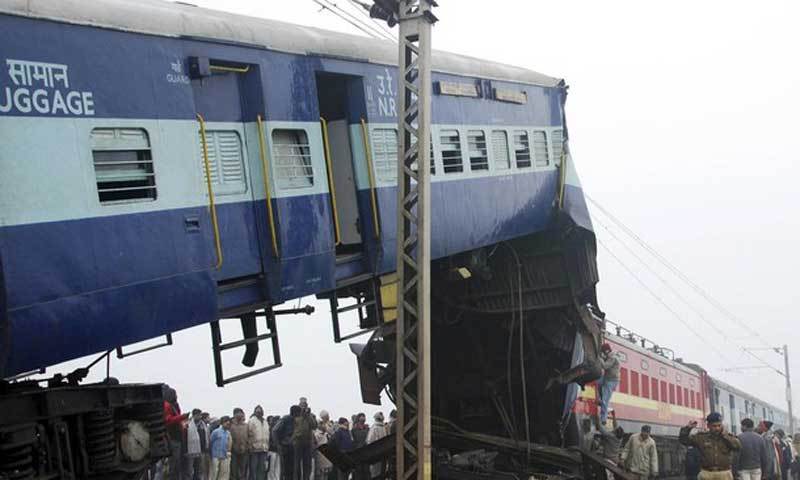
Gorakhpur: At least 20 people are feared dead as Gorakhdham Express rammed into a goods train on Monday. The incident happened neat Churaib station in Uttar Pradesh. More than 50 people are said to be injured. The train was carrying passengers from Gorakhpur to Hisar via New Delhi. As per media reports, Gorakhdham Express hit the goods train standing on the tack on its back portion. Three of the general bogies of the Gorakhdham Express are badly damaged. Bharat Lal, District magistrate, told reporters that at least 20 people are feared dead and 50 others are injured. Helpline numbers: 05222635639, 05222288890, 05512204893

Nuclear baton passes from Manmohan to Modi: Know what it means for India!

New Delhi: Narendra Modi will take oath as the next Prime Minister of the country at 6 o' clock in the evening on May 26. In the role of premier of the country not only would the dynamic leader from Gujarat draft and implement some important policy decisions, but also attain a nuclear war go-ahead authority. As per defence experts, just as swearing-in ceremony ends, incumbent National Security Advisor, Shiv Shankar Menon would hand over all the secret information related with nuclear capabilities of India to Modi. Every possible detail related with Indian nuclear locations, nuclear warfare weapon inventory will be shared with the PM. The "launch codes" which are required to order retaliatory attack in case of nuclear attack on the country will also be transferred to Modi. All three defence chiefs would also familiarize Modi regarding various defence strategies and security threats. Reportedly, Army Chief Bikram Singh was scheduled for a foreign trip from May 26 to May 28. However, he would be staying back now in order to apprise Modi. Even Navy Chief Robin Dhawan and Air Chief Arup Saha would be present in the meeting. The official authority of managing nuclear warfare weapons lies rested with Nuclear Command Authority (NCA) and Strategic Forces Command (SFC). Importance of Political Council SFC is one of the many constituents of NCA and the latter comprises of a Political Council which is headed by the Indian Prime Minister. The Political Council also constitutes members from the Cabinet Committee (Defence Affairs). This Political Council releases orders for a nuclear war go-ahead. Furthermore, there exists an Executive Council which is headed by National Security Advisor (NSA). Other than the NSA, the committee includes heads of all three defence forces and chief of SAFC. But the defence experts claim that the final authority to go-ahead with a nuclear war lies solely rested with the Prime Minister.

New-look PM India website launched, minutes after Narendra Modi takes oath

New Delhi: Within seconds after Narendra Modi was sworn in as the 15th Prime Minister of India, the PMO website was relaunched carrying his message and pictures. “As we devote ourselves to take India’s development journey to newer heights, we seek your support, blessings and active participation,” Modi said in his first message on the website. He added, “Together we will script a glorious future for India. Let us together dream of a strong, developed and inclusive India that actively engages with the global community to strengthen the cause of world peace and development.” A short profile was also uploaded on www.pmindia.nic.in which described him as “dynamic, dedicated and determined” leader who “arrives as a ray of hope in the lives of a billion Indians”. It said that his “laser focus on development and his proven ability” to deliver results have made him one of India’s most popular leaders. Without naming the RSS, it said that from a very young age, Modi immersed himself in service to the nation, working with “patriotic organisations”. An option called “Wish the Prime Minister” takes a user to Modi’s personal website.

PM Narendra Modi takes oath, Smriti youngest while Najma oldest cabinet minister

New Delhi: It is the D day, Narendra Modi is all set to take oath as the 15th Prime Minister of India. With a hectic schedule ahead today, Modi began his day by paying tribute to Father of the Nation Mahatma Gandhi at Rajghat.
LIVE UPDATE: 7.33pm: Sources say that PM Narendra Modi will not go to 7RCR from Rashtrapati Bhawan instead he will stay the night at Gujarat Bhawan. 7.32pm: Modi greets all the SAARC leaders, from Hamid Karzai of Afghanistan to Nawaz sharif from Pakistan 7.31pm: Modi Sarkar sworn in, ministers pose for photo-op with PM Modi and President Mukherjee 7.15pm: Nihal Chand from Rajasthan takes oath, Chand's name was not present in the first list of ministers sent to the Rashtrapati Bhawan. In the morning Nihal Chand & Rs. Rathore had met CM Vasundhara Raje in DElhi, his inclusion seems to be an indication of Raje having prevailed. 7.12pm: Top Lingayat leader GM Siddeswara takes oath as Minister of State 7.10 pm: BJP spokesperson 58-year-old Nirmala Sitharaman takes oath 7.06 pm: Mukesh Ambani, Nita Ambani sighted in the crowd seated in front of Vaarun Gandhi as Piyush Goyal, BJP's national treasurer takes oath 7.02 pm: BJP spokesperson Prakash Javadekar takes oath 6.59 pm: Rajya Sabha MP from Bihar Dharmendra Pradhan takes oath 6.58: pm: BJP leader from Odisha Jual Oram takes oath 6.54: pm: Former Army Chief VK Singh takes oath 6.50: pm: BJP's Smriti Irani, the youngest minister in Team Modi, takes oath 6.42 pm: Harsimrat Kaur Badal takes oath as Cabinet Minister 6.40 pm: Ananth Kumar takes oath as Cabinet Minister 6.35 pm: Sadananda Gowda takes oath as Cabinet Minister 6.30 pm: Nitin Gadkari takes oath as a Minister 6.25 pm: Arun Jaitley takes oath as Union minister. 6.20 pm: Venkaiah Naidu takes oath as a member of Modi's cabinet 6.15 pm: Sushma Swaraj takes oath as a Minister 6.10 pm: Rajnath Singh takes oath as a minister in Prime Minister Narendra Modi's Cabinet. 6:05 pm : Narendra Modi takes oath as the 15th Prime Minister of India.Click for pic 5.30 pm: Congress President Sonia Gandhi and Vice-President Rahul Gandhi arrive at the venue 5.00 pm: Delhi: Sushma Swaraj at Rashtrapati Bhawan forecourt to attend PM-designate Narendra Modi's swearing-in ceremony. CLICK HERE FOR PIC 4.45 pm: Pakistan PM Nawaz Sharif leaves for PM-designate Narendra Modi's oath taking ceremony 4.30 pm: Rakesh and Hrithik Roshan to attend Modi's swearing-in ceremony 4.00 pm: List of 24 Cabinet Ministers who are taking oath in today's swearing-in ceremony. CLICK HERE FOR PIC 3.30 pm: Narendra Modi's cabinet: Piyush Goel- power & coal, Smriti Irani-HRD, Arun Jaitley-defence, finance 2.50 pm: From Amitabh Bachchan to Rajinikanth: Bollywood stalwarts invited to Narendra Modi’s swearing-in. Click here for full report 2.45 pm: Anupam Kher, Javed Akhtar to attend Modi's swearing in ceremony 2.30 pm: "Have come to extend greetings to him (Modi), everyone is hopeful he'll do good work", says Pratibha Patil, Former President of India 2.25 pm: Salim Khan and Sohail Khan arrive at Hotel Taj Mansingh ahead of Modi's swearing-in ceremony. Click here to see pic 2.20 pm: Sources reveal Arun Jaitley likely to hold both Defence and Finance Ministry 2.15 pm: PM-designate Narendra Modi offers condolence to families of those killed in Gorakhdham Express tragedy. Prays for the injured. PTI 2.10 pm: Nawaz Sharif's son Sharif Hussein also expects a lot from the Modi government. Here's a video link of him speaking to reporters in Delhi. 2.05 pm: Maldives President Abdulla Yameen arrives in Delhi to attend PM-designate Narendra Modi's swearing-in ceremony 2.00 pm: Venkaiah Naidu likely to get the Agriculture Ministry: sources 1.30 pm: Unprecedented security cover for Narendra Modi’s swearing-in ceremony. Click here to read full report 1.15 pm: Ajit Doval to be named as National Security Advisor 1.00 pm: Traffic snarls being reported from various parts in capital. Police Check-posts installed at numerous roads leading to huge rush on roads. Here's Delhi Traffic Police advisory: The following roads shall be closed for movement of general traffic on 26th May, 2014 between 2.00 PM to 8.00 PM: 1. Rajpath (from Vijay Chowk to Rashtrapati Bhawan). 2. Vijay Chowk and its North and South Fountain area. 3. South Avenue Marg. 4. North Avenue Marg. 5. Dalhousie Road. 6. Church Road. In addition, necessary traffic diversions shall be given on the following roads/locations, situated in the surrounding vicinity of Rashtrapati Bhawan, to facilitate the movement of VVIPs/VIPs: 1. Panchsheel Marg. 2. R/A Samrat Hotel. 3. Kautilya Marg. 4. Talkatora Road. 5. Park Street. 6. Battle Honours Mess Marg. 7. Abai Marg. 8. Raisina Road (beyond R/A Rail Bhawan towards Parliament House). 9. Pandit Pant Marg (beyond R/A Talkatora towards Parliament House) 10. K. Kamraj Marg (beyond R/A Kamraj Marg towards R.P. Bhawan). 11. Moti Lal Nehru Marg (beyond R/A Udyog Bhawan towards R.P. Bhawan). 12. E-Block, Security Lines Road. 13. Mother Teresa Crescent. 14. Sardar Patel Marg. 15. Vinay Marg. 16. Shanker Road. 17. R/A RML Hospital Motorists and general public are requested to avoid using the above roads during the ceremony between 2.00 PM to 8.00 PM on 26th May, 2014. Adequate signages and boards have been provided for the information of invitees and other road users. All motorists are also requested to adhere to the directions of the traffic policemen on duty. 12.00 pm: Sources reveal Modi’s team to include 23 Cabinet ministers, 21 MoS. A few ministries to be merged as well. Merged Minstries may look like this: - Law ministry to include Company affairs - Energy ministry to include coal and renewable energy other than power - Transport ministry likely to include aviation, roads and railways - External Affairs minstry to include Overseas Indian affairs other than Ministry of External Affairs - Agriculture Ministry could include food processing, consumer affairs and Chemical & fertilizers - Industry ministry could include both heavy industry and small scale industry portfolio 11.05 am: Pakistan's Prime Minister arrives in New Delhi 10.45 am: Pakistan Prime Minister Nawaz Sharif leaves for India to attend Modi's swearing-in ceremony. 10.30 am: Rajnikanth will not attend Narendra Modi's swearing-in ceremony. 10.00 am : Sri Lanka President Mahinda Rajapaksa lands in Delhi. He is here to attend Modi's swearing-in ceremony. 9.45 am: Mauritius PM Ramgoolam arrives in India for Modi's swearing-in ceremony 9.40 am: 34 ministers to take oath today with Prime Minister-designate Narendra Modi. List of Cabinet ministers sent to President. 9:00 am: Modi reaches Gujarat Bhawan 8.19 am: Modi reaches Vajpayee's residence. 8.10 am: Modi leaves to meet Atal Bihari Vajpayee and seek his blessings ahead of his swearing in. 8.00 am:PM-designate Narendra Modi pays homage at Rajghat 7.55 am: PM-designate Narendra Modi reaches Rajghat 7.40 am: Modi leaves for Rajghat. 6.45 am: Delhi MP Mahesh Giri, Dr. Harsh Vardhan, Manoj Tewari and other BJP leaders including, Arti Mehra, Prabhat Jha, Vijay Goel, Vijendra Gupta reach Rajghat. 6.30 am: BJP leaders start gathering at Rajghat. 6.00 am: Elaborate security arrangements at Rajghat.

Geo/Jang group tenders apology to ISI, armed forces

SLAMABAD: In the backdrop of an attack on life of Hamid Mir – senior journalist and anchorperson – Geo TV network and Jang media group on Monday tendered apology to Pakistan’s armed forces and Inter-Services Intelligence (ISI) for hurling allegations on ISI chief Lt Gen Zaheerul Islam. In a published apology in English daily The News and Urdu newspaper Jang, the media group clarified that they were respectful of Pakistani forces and its leadership. “We have always appreciated their sacrifices to safeguard our borders and the security of our country,” said the apology letter. The media group clarified that the allegations were not hurled by the institution but by Hamid Mir himself and later repeated by his brother soon after the attack in Karachi. Mir had repeatedly held ISI or some elements within its ranks for orchestrating the attack on his life. The senior anchorperson had said in his first media interaction that he was being threatened to leave the country by the same elements who he alleged were behind the attack. “After serious retrospection, editorial debates, feedback and engagement with all parties, directly and indirectly, we have concluded that our coverage immediately after the tragic and unnerving attack on Hamid Mir on April 19 was excessive, distressful and emotional,” said the group in today's apology. The media giant accepted that the coverage of the incident was “misleading, disproportionate and inappropriate giving impression of a campaign,” although it followed current media practices including the version of armed forces with photo of DG ISPR televised repeatedly. The group apologised to the ISI, its chief Lt Gen Zaheerul Islam, his family, Pakistan Army and large number of television viewers for causing “deep hurt.”

JI chief wants Rs100bn for Karachi

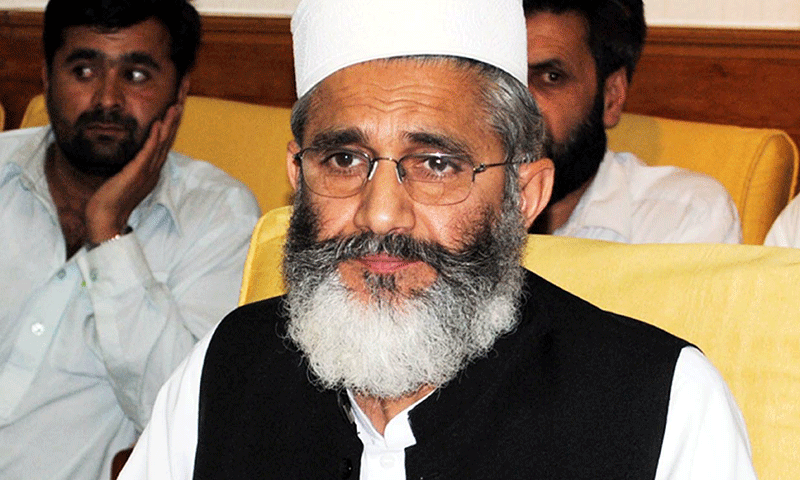
KARACHI: Jamaat-i-Islami emir Siraj-ul-Haq has urged the government to announce a Rs100 billion grant for Karachi to solve a host of problems it faces. Addressing a reception organised by his party here on Sunday on his first visit to Karachi after assuming the office of the JI chief, Mr Haq said a fraud was being committed in the name of democracy because most political parties did not hold elections within their parties. He said that Prime Minister Nawaz Sharif had decided to visit India without taking political parties into confidence. Published in Dawn, May 26th, 2014

Comment: Power struggle in PCB makes Pakistan laughing stock

THE chaotic situation the Pakistan Cricket Board (PCB) has been dragged into through years of sheer mismanagement has now finally come to a point where it is in dire need for revamp and repair. Without it there could be plenty more in store to hang our heads in shame and make us a laughing stock in the cricketing world as we have now become in the last few years. Therefore, it is important that we stop unwarranted rhetoric before initiating removal of the mess which throughout years of neglect has developed into a cancer putting the patient in the PCB on deathbed. So, unless and until remedial steps are taken for improvement of the chaotic affairs of the PCB the situation may worsen beyond control and surgery. For anyone following this enchanting game, the PCB turmoil has now become a sickening joke with mature men behaving childishly going in and out of the court in their struggle to occupy the cherished chair at the headquarters of the game in Pakistan. The ongoing power struggle in the PCB does not leave a healthy sign of the way things have been handled particularly during the last few months. Pakistan cricket, in a tug-of-war for power, has been going through administrative crisis at the cost of the game and now that the highest court of the country has been involved to help sort out PCB issues we assume that all stakeholders wait for the court decision and respect it even in case Najam Sethi is asked to lead the organisation towards a just and transparent elections within a given timeframe. Only through this way the game of musical chairs would come to end and it could only be possible if everyone contributes by focusing on the game’s welfare rather than being on a collision course. And if Sethi succeeds in what others have failed over the years in creating a workable infrastructure then only he will be remembered. In the modern cricket set-up the aim is to bring your own administration and coordinate various tasks that suit the workforce and that is what need to be kept in mind while taking the organisation in this case the PCB to a level which is at par with others. It is also very weak argument when runner of the board is criticised for not being a former cricketer, for majority of the cricket boards and their administrations throughout the world are run by professionals not cricketers besides it is not imperative as to who is at the helm of affairs but it is of utmost importance as to who can do the job in a better way. Obviously people with vested interests and having aspirations of grabbing power would from time to time create obstacles condemning and criticising one thing or the other but as long as one is able to bring in desired results in the end is what really matters. ‘End justifies the means’ is what Machiavelli’s philosophy happens to be and successful people do believe that it has its own merits. Also, I have been reading about appointments of tainted players in the present PCB set-up. What is a tainted person anyway? It could be someone totally innocent who has been tainted because of allegations made but not proven and it could be a person who has been proven guilty for the allegations made. Mike Atherton, the top man in English cricket as a writer and commentator who was also England’s captain, was fined £1,000 on allegations of ball-tampering. Shane Warne and Mark Waugh, after being fined $5,000 each by Australian cricket authorities for passing information to bookies, are tainted players too but are still playing their role in their country’s cricket in some capacity. And I can name many. The point is that none of the tainted players have been convicted by the court of law nor are the players given the job in the PCB set-up. Some of them were fined by Justice Qayyum for being ‘economical with the truth’ and not for being found guilty for the allegations made against them. I therefore think that let bygones be bygones and concentrate on what is at hand — the health of Pakistan cricket. And it can be made healthier only if an honest effort is made by all who hold the game in high regard. Published in Dawn, May 26th, 2014

Panic-gripped Waziristan tribesmen fleeing to Afghanistan

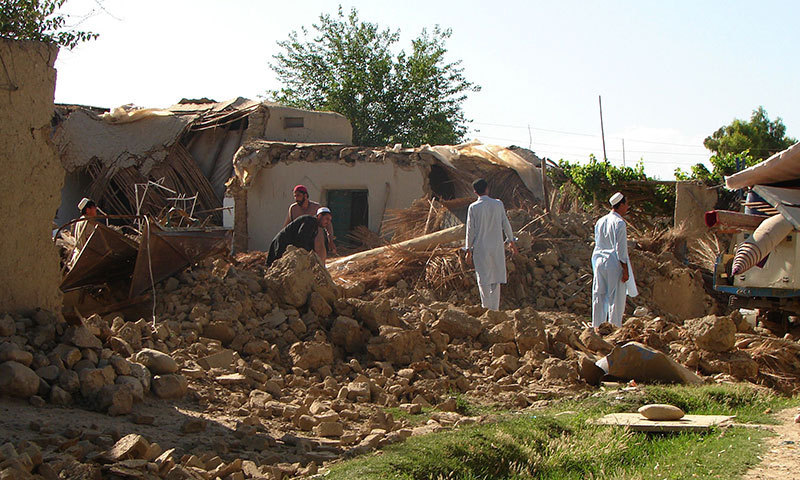
MIRAMSHAH: Panicked by the ongoing military action in North Waziristan Agency, the tribal people have preferred to take refuge in neighbouring Afghanistan instead of shifting to settled areas of Khyber Pakhtunkhwa province. According to reports, many families have migrated to Khost and Paktika provinces of Afghanistan from different areas of the volatile tribal region. Eid Mohammad Khan, a local tribesman, told this correspondent that many foreigners also moved to Afghanistan from Waziristan before the launch of military action. He said that the foreigners sold their belongings in the local market before the military action was started. “Many foreigners belonging to Uzbekistan, China, Middles East and European countries who were settled in Mirali, Miramshah and the adjoining areas have shifted to border areas of Afghanistan,” Mr Khan said. Officials say site has been selected in FR Bannu for establishing a camp for displaced people The elders of Ahmadzai Wazir tribe and local Taliban commander Hafiz Gul Bahadur had already announced that people would migrate to Afghanistan in case security forces launched operation in the area. “It will be better to take refuge in Afghanistan instead of living miserable life in tents in Pakistan,” said Gul Abbas Khan, a tribal elder. He also criticised the local political administration for its attitude with the tribal people. He said that political administration imposed curfew the moment helicopter gunships and jetfighters started shelling as a result civilians were caught in the conflict. Sources said that residents of Sherkhel, Gulkhel, Gurbez and Sidgai tribes migrated to Khost province where they took shelter with their relatives. The residents of Ghulam Khan area said that 500 families had already gone to Afghanistan and more were on their way to Khost. The displaced Mehsud families, who had shifted to North Waziristan Agency after military operation was launched against proscribed Tehreek-i-Taliban Pakistan (TTP) in South Waziristan in 2009, also moved back to their ancestral area. TTP former chief Hakimullah Mehsud and commander Asmatullah Shaheen, who was also killed in targeted attack, were also residing in Miramshah. Security forces launched targeted operation in the agency on Wednesday last and Panic-gripped tribesmen fleeing to Afghanistan bombed suspected positions in Mirali, Miramshah and Datakhel areas. Inter-Services Public Relations had claimed that about 80 militants were killed in air strikes. Sources said that displaced families, mostly nomads, were shifting from Mirali to Bannu, Lakki Marwat and Dera Ismail Khan districts of Khyber Pakhtunkhwa. The displaced tribal people, who reached Bannu, were not registered because the area was not declared as conflict zone, they added. Officials said that Fata Disaster Management Authority (FDMA) had selected site for relief camp in Bakakhel area of Frontier Region of Bannu, but it was unable to start registration of the displaced people. “Unless the area is notified as conflict zone, the authority or any other agency can’t start formal registration of displaced people,” said an official. Sources said that tents, food and non-food items were dispatched to Bakakhel and proper site was identified for establishing a relief camp. “Relief items and staff are on the ground in Bakakhel area and the authority is waiting for a green signal,” the official said. Sources said that the proposed relief would accommodate around 200,000 individuals. Provincial Disaster Management Authority has also chalked out a contingency plan for expected exodus from North Waziristan Agency. Published in Dawn, May 26th, 2014

Five bodies recovered in Mohmand tribal region

PESHAWAR: Five bodies were discovered in the Pandiali region of the Mohmand tribal region early on Monday. The bodies were discovered in the Uthmanzai area of the region where a recent surprise attack on the security forces left six soldiers dead, according to the official sources. All of the deceased appeared to have been shot dead, however, this could not be independently verified, official sources added. The area is under curfew and the bodies could not be identified as a result. Recently there has been an increase in attacks in the Bajaur and Mohmand tribal areas as the factions of the banned militant outfit Tehreek-i-Taliban Pakistan (TTP) in these areas have declared war on the Pakistani government. TTP spokesman Shahidullah Shahid on Sunday claimed that the outfit had captured important posts in the Bajaur tribal area and made advances in the area along the strategic Kaga Pass. On the other hand, the security forces also intensified their activities in the Mohmand and Bajaur tribal regions to counter the attacks by militants. In a separate incident in the region, six suspected militants were killed and two soldiers received minor injuries in a skirmish with the security forces late on Sunday night. The incident occurred at 2325 hrs in the Uthmanzai area in the Pandiali region of the Mohmand tribal area, Frontier Corps officials told Dawn.

Modi inauguration a ‘great opportunity’ for a new chapter: Sharif

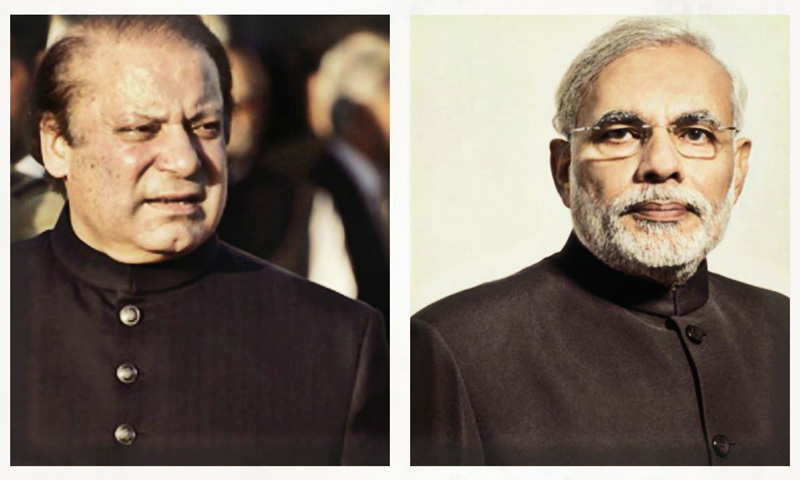
NEW DELHI/ LAHORE: Pakistan's Prime Minister Nawaz Sharif said the inauguration of Narendra Modi as his Indian counterpart Monday was a “great opportunity” for the two nuclear neighbours to open a new chapter in relations. “It is a great moment and a great opportunity,” Sharif, who is in New Delhi as a guest for the swearing-in ceremony, told the NDTV network. “This is a chance to reach out to each other. Both governments have a strong mandate,” he added, according to a transcript provided by the Pakistan High Commission. “This could help in turning a new page in our relations,” he said. Modi will be sworn today as India's prime minister at a glittering ceremony that will be as much a show of his determination to be a key player on the global stage as a celebration of his stunning election victory. Sharif is the first Pakistani prime minister to attend the inauguration of an Indian leader since the creation of the two countries in 1947 after the end of British colonial rule. The two countries have since fought three wars and remain divided over the disputed region of Kashmir. But Sharif, who is to hold bilateral talks with Modi on Tuesday, said that the neighbours should use their common heritage to help overcome their differences. Prime Minister Nawaz Sharif waves upon his arrival at the airport in New Delhi, May 26, 2014.—Photo by Reuters Prime Minister Nawaz Sharif waves upon his arrival at the airport in New Delhi, May 26, 2014.—Photo by Reuters “No two nations have ever possessed so much of cultural and traditional similarities as India and Pakistan. Why not turn the similarities into our strength?” said Sharif. “We should remove fears, mistrust and misgivings about each other. “Both countries should rid the region of instability and security that has plagued us for decades.” India's invitation to Sharif for Modi's inauguration and bilateral talks extended a couple of days ago had come as a surprise, raising hopes for a thaw in relations between the two countries that have been particularly frosty since the 2008 Mumbai attacks. “I am carrying a message of peace. Dialogue is the only solution,” Sharif told reporters before leaving Lahore today. In a goodwill gesture, Sharif ordered the release of 151 Indian prisoners on Sunday.

Egyptians vote for president after years of turmoil

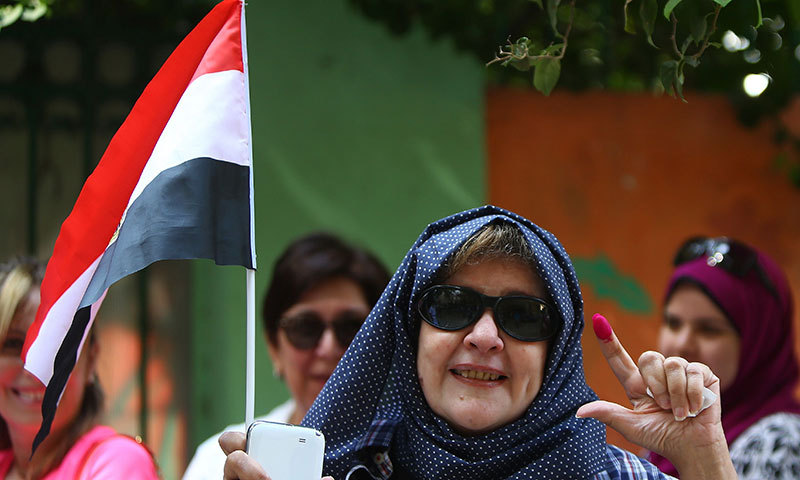
CAIRO: Egyptians voted for a new president Monday, with the ex-army chief who overthrew the country's first democratically elected leader and crushed his movement expected to win in a landslide. The two-day election is the first since the frontrunner and former army chief Abdel Fattah al-Sisi deposed president Mohamed Morsi in July, a move that unleashed the bloodiest violence in Egypt's recent history. Morsi's Muslim Brotherhood movement is boycotting the vote, as are revolutionary youth groups who fear Sisi is an autocrat in the making. But the 59-year-old retired field marshall is expected to trounce his sole rival, leftist Hamdeen Sabbahi, amid widespread calls for stability. Polling stations opened at 0600 GMT for 53 million registered voters, with Sisi arriving early at a Cairo polling station to cast his vote amid a throng of jostling reporters and supporters. Many view the vote as a referendum on stability versus the freedoms promised by the Arab Spring-inspired popular uprising that ousted veteran strongman Hosni Mubarak in 2011. The country of 86 million people has been rocked by sporadic unrest and a tanking economy since then. Mubarak's successor, Morsi, lasted only a year in power, winning the country's first democratic presidential election only to quickly alienate many Egyptians who held mass rallies demanding his resignation. “We need someone who speaks in a determined and strong way. The Egyptian people are frightened by this and respect those who are like this,” said Milad Hanna, a 29-year-old lawyer, as he lined up outside a polling station in Cairo. Hanna said he had voted for Sabbahi in the 2012 election that Morsi won, but will now vote for Sisi. “We need someone strong, a military man,” he said. Sisi has said “true democracy” would take a couple of decades to reach Egypt, and suggested he would not tolerate protests that he said disrupt the economy. He has also pledged to wipe out the Brotherhood, which had won every election after Mubarak's overthrow after being banned for decades. The movement is boycotting the election and said on Sunday it would not recognise the outcome. Heavy security “Forgery will never grant legitimacy to a butcher nor will it lessen the determination of revolutionaries,” the Brotherhood said in a statement. The vote, monitored by international and Egyptian groups, is not expected to be marred by widespread rigging. The Brotherhood, now blacklisted as a terrorist group, has been decapitated in a police crackdown that has killed more than 1,400 people, including an estimated 700 protesters on one day in August. Morsi himself has been detained and placed on trial. Hundreds of soldiers and policemen have been killed in militant attacks since Morsi's overthrow, with the deadliest claimed by an Al Qaeda-inspired group based in the restive Sinai Peninsula. The military and police deployed heavily to secure polling stations. Sisi has called for a high turnout in the election, billed by the military-installed authorities and the West as a milestone toward elected rule in the country. “You need to go down now more than any other time in (the country's) history. Go down, show to the entire world that there are 40, 45 (million) or even more” voters casting their ballots, Sisi said as campaigning closed on Friday. The presidential poll will be followed by parliamentary elections this year. Sisi's sole election rival Sabbahi, a veteran dissident, has vowed to defend the democratic aspirations of the 2011 revolt. “We swear to God that symbols of corruption and despotism (from the Mubarak era) will not return,” he said on Friday. Sisi has raised fears that Egypt could see more repression than under Mubarak's regime. “What tourist would come to a country where we have demonstrations like this?” he asked Egyptian newspaper editors. “You write in the newspapers: 'No voice is louder than freedom of speech!' What is that?” he asked. The interim authorities have justified the overthrow of Morsi by saying the army heeded mass street protests against his single year of divisive rule. The April 6 youth movement, which spearheaded the anti-Mubarak revolt and whose leader has been jailed, has called for a boycott of the election.

Airport in east Ukraine's Donetsk shut after rebel raid

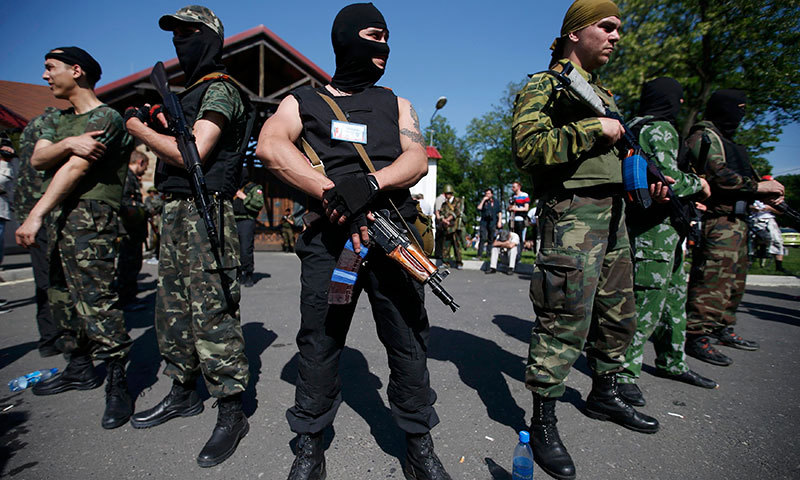
DONETSK, Ukraine: The main airport in Ukraine's eastern city of Donetsk shut down on Monday after being raided by dozens of armed separatists who vowed to keep up their resistance a day after presidential polls. “At 3:00 in the morning, a group of armed men came. There was no shooting and they demanded that soldiers guarding the perimeter of the airport be withdrawn,” spokesman Dmytro Kosinov told AFP. Kosinov said the airport halted operations at 7:00 am and now appeared to be under control of gunmen who identified themselves as “representatives of the Donetsk People's Republic” that has proclaimed independence from Kiev. An AFP reporter saw three trucks full of armed men in camouflage and some wearing orange-and-black St George ribbons representing an allegiance to Russia pass a police checkpoint and head toward the airport. They were followed by two sports utility vehicles with tinted windows. Separatists in the heavily-Russified eastern rust belt of the ex-Soviet nation launched an insurgency against Kiev's rule in early April that saw them seize about a dozen cities and towns in the Donetsk and Lugansk regions neighbouring Russia. The rebels thwarted voting across parts of eastern Ukraine during Sunday's presidential election that pro-Western billionaire Petro Poroshenko was set to win in the first round. Several rebel commanders said on Sunday they would not recognise the tycoon's legitimacy and would continue their independence fight.

At least 10 dead in India passenger train crash: official

NEW DELHI: A passenger express train slammed into a stationary freight train in northern India on Monday, killing at least 10 people with others feared trapped in the wreckage, an official told AFP. Scores of passengers were also feared injured in the crash that occurred on Monday morning near Khalilabad in northern Uttar Pradesh state, the Indian Railways official said. Six carriages were derailed in the accident and medical teams and rescue workers were racing to the site to free those still trapped, officials said. “We are trying to ascertain the exact number of casualties. What we know now is that six bogies of the train derailed following the collision and at least 10 people have died,” the official said in New Delhi, requesting anonymity. The train was travelling from Hisar in Haryana to Gorakhdham in neighbouring Uttar Pradesh when the accident occurred near Khalilabad, 700 kilometres east of New Delhi. “We are focusing on rescue and relief at the moment. It's going on in a war footing to ensure minimum casualties,” Indian Railways spokesman Anil Kumar Saxena told AFP. The injured were being taken to nearby hospitals. Local media reports say 20 passengers are feared dead. Narendra Modi, who is set to be sworn in as India's new prime minister later Monday, expressed his sadness at the loss of life. “My condolences to families of those who lost their lives in the Gorakhdham express tragedy. Prayers with the injured,” Modi said on his official Twitter account. “Spoke to the Cabinet Secretary. Asked him to take an overview of the situation & ensure timely assistance to those injured,” he said. India's dilapidated railway system has a notoriously bad safety record, with deadly accidents reported annually. In 2012, a government report said almost 15,000 people were killed every year on India's railways, describing the deaths as an annual “massacre” due mainly to poor safety standards.

US-based Ahmadi doctor shot dead in Punjab

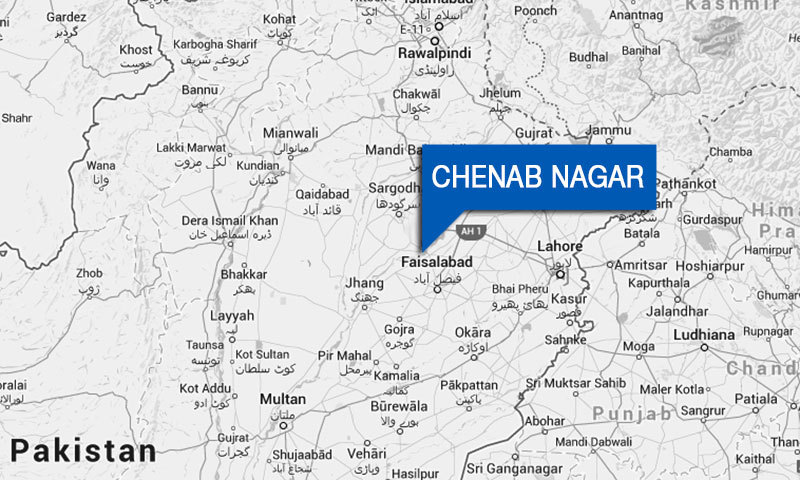
LAHORE: Gunmen shot dead a doctor from the minority Ahmadi community on Monday in Chenab Nagar town in Punjab province, officials said, the latest attack on the beleaguered group. Mehdi Ali, a 50-year-old heart surgeon normally based in the United States, was attacked as he visited a cemetery in the town of Chenab Nagar. “Two gunmen riding on a motorbike shot dead a cardiac surgeon, Dr Mehdi Ali outside the Ahmadi graveyard in Chenab Nagar,” local police official Ahmed Ali told news agency AFP. He said the incident occurred early on Monday morning when the doctor was going to the graveyard with his family. “The assailants have fled the scene. We are looking into the incident. It seems to be a targeted attack,” Ali said. Saleem Uddin, a spokesman for the Ahmadi community, confirmed the incident and said the doctor’s family escaped the attack unharmed. The doctor was in Pakistan on a short visit to do voluntary work at the Tahir Cardiac Hospital, a private institution that he himself helped build a few years back.

Indian Hindu, Muslim mobs clash in Modi's heartland

AHMEDABAD: Indian police fired tear gas to break up clashes between Hindu and Muslim mobs in Narendra Modi's heartland of Gujarat on the eve of his swearing in as prime minister, officials said Monday. Angry crowds set fire to several shops and vehicles and pelted stones at each other during the clashes in western Gujarat state's main city of Ahmedabad on Sunday night, police and fire officials said. Ahmedabad joint police commissioner Manoj Shashidhar said officers fired tear gas to halt the violence which left four people injured. Shashidhar said an investigation was under way into the clashes which appear to have started when two cars from the different communities crashed in an accident during a marriage procession. “The incident flared up following a petty argument between people of two communities on Sunday night in Gomtipur area of the city. The situation was immediately brought under control,” Shashidhar told AFP. The incident escalated when mobs set property on fire, Ahmedabad chief fire officer M.S Dastur told AFP. “Some three shops, one mini-bus and a couple of two wheelers were burnt during the incident,” Dastur said. The clashes came as Hindu nationalist Modi, chief minister of Gujarat for 13 years, was set to be sworn as premier on Monday after a landslide victory at elections as head of the Bharatiya Janata Party. Modi has pledged national unity as he attempts to revive the faltering economy, but he remains tainted by anti-Muslim riots on his watch in Gujarat in 2002 that left at least 1,000 people, mainly Muslims, dead. Modi has denied wrongdoing and a court investigation found he has no case to answer. But some members of religious minorities fear a rise in communal tensions under a Modi government and warn they will be sidelined at the expense of the Hindu majority.

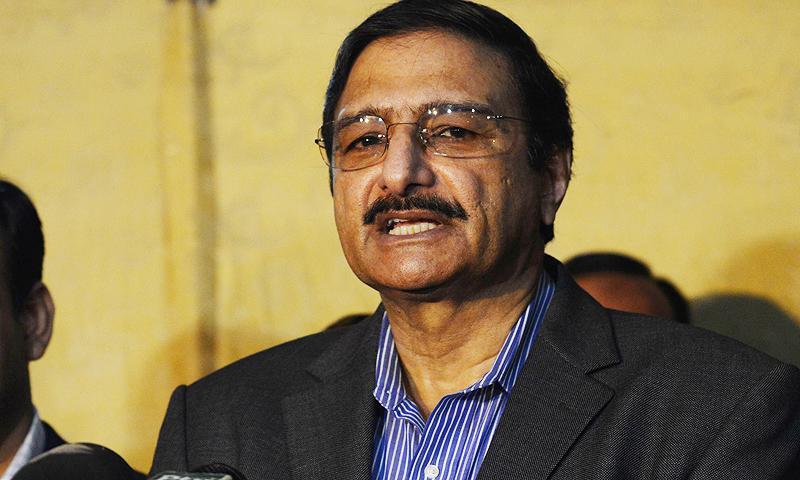
PCB to probe 'irregularities' during Zaka's tenure

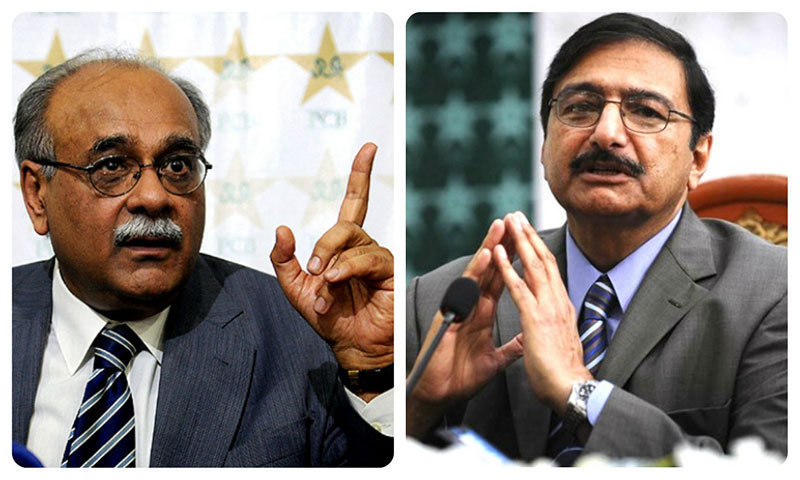
LAHORE: The management committee of the Pakistan Cricket Board (PCB) currently led by Najam Sethi has decided to investigate alleged irregularities committed during the tenure of Zaka Ashraf as chairman of the board. The committee met on Monday and decided to investigate Ashraf’s tenure during which the board is said to have spent an amount of Rs20 million. The committee moreover bestowed its trust on Sethi to launch and carry the probe. On the other hand, Ashraf told DawnNews that Sethi had committed contempt of court by returning in the role of the board’s chairman. He said today’s meeting of the management committee was illegal, adding that the sport of cricket was being damaged simply because the government wanted to reward a particular individual. The management committee’s meeting had been convened over the latest situation prevailing in the backdrop of quick changes of the PCB chairman in the recent past and a case pending in the Supreme Court in this regard. Questions have been raised over Sethi’s chairmanship after a stay order issued by the Supreme Court last Wednesday against the Islamabad High Court (IHC) decision. Following the IHC decision, Zaka had resumed charge as chairman on May 17. But after the Supreme Court’s stay order on Wednesday, Zaka did not come to the office as Sethi rejoined it on Thursday, claiming he came after the Ministry for Inter-provincial Coordination (IPC) had allowed him to do so, claiming the Supreme Court decision did not create any legal problems in his way to join it. But Sethi’s rivals claim that he is no more PCB chairman following the Supreme Court decision. They have also warned the IPC, Sethi and other stakeholders that a contempt of court may be filed if Sethi rejoins the PCB duty. Both Sethi and his rivals are still firm on their stand.

Nearly 370,000 kids ‘will miss’ polio drive in Pakistan

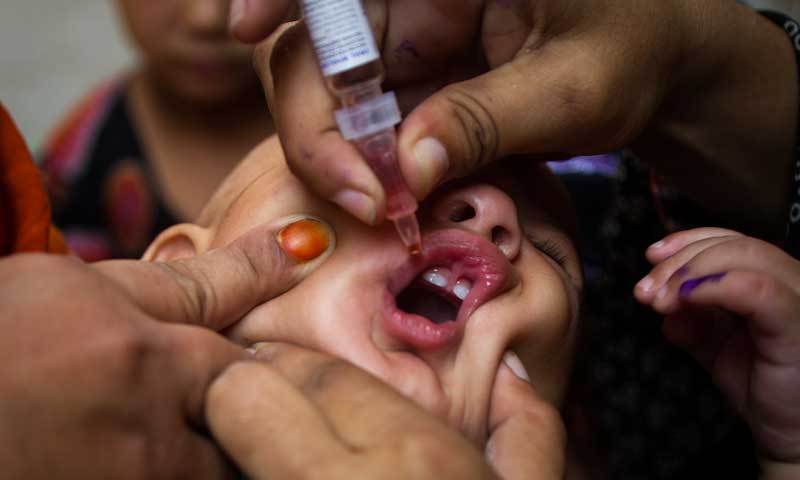
PESHAWAR: Pakistan launched a fresh polio vaccination drive in its restive tribal belt Monday, but officials warned that nearly 370,000 children are likely to miss out because of security problems. At the start of May, the World Health Organization (WHO) declared a global “public health emergency” after new polio cases began surfacing and spreading across borders from countries including Pakistan. Pakistan’s seven semi-autonomous tribal areas along the Afghan border are the epicentre of the country’s polio cases and the government has set up checkpoints to ensure anyone leaving the belt is immunised. A three-day vaccination drive began on Monday in four tribal areas, a senior government official in Peshawar, the region's main city, told reporters, with more than 620,000 youngsters on course to receive polio drops. But the official, speaking on condition of anonymity, warned that children in three of the four targeted areas “would not be able to receive polio drops because of the militancy and opposition to the immunisation”. Violence has badly hampered the campaign to stamp out polio in Pakistan, where militant groups with strongholds in tribal areas, including the Pakistani Taliban, see vaccination campaigns as a cover for espionage. “A total of 369,039 in three districts would not receive polio drops because of the law and order situation,” the official said. The three districts in question are North Waziristan, South Waziristan and Mohmand, the official said. Part of the fourth district, Khyber, would also be affected. Pakistan is one of only three countries where the crippling disease remains endemic, and is responsible for 80 percent of polio cases diagnosed around the world this year. Some 56 people including health workers and police officials providing security have been killed in militant attacks on polio vaccination teams in Pakistan since December 2012. There are also long-running rumours about polio drops causing infertility. Two senior health officials confirmed the latest drive and figures and told AFP that WHO and UNICEF was helping and providing logistic support in the polio campaign.

With hope and fear from Kashmir

After Pakistani Prime Minister Nawaz Sharif finally accepted Narendra Modi’s invitation to attend the latter’s oath-taking ceremony as the 15th Prime Minister of India, ordinary people, commentators, and politicians in Kashmir began deliberating upon the various pros and cons of the situation, and discussing the future of possible talks on all contentious issues, including Kashmir. There is a mix of apprehension and hope in Kashmir. Some key Kashmir observers believe that Modi’s ascendancy to power could prove detrimental to the “interest” of Muslims in mainland India, but has several “positives” for Kashmiri resistance against the status quo. Some politicians are also pinning their hopes on Modi that he would carry forward the legacy of former Indian Prime Minister Atal Bihari Vajpayee, while others insist on a wait-and-see policy. In the backdrop of the 2002 Gujarat pogrom and the image of Modi as one of the most aggressive leaders of the Hindu nationalist Bharatiya Janata Party [BJP], the fears and apprehensions of the people of Kashmir are not entirely unfounded. However, after his meteoric rise and landslide victory in the recently held parliamentary elections, Modi has also shown some positive signs and appears to be a different man than the one people witnessed during his belligerent campaigning. Yasin Malik, chief of the pro-freedom Jammu & Kashmir Liberation Front (JKLF), is of the view that it would be hasty to pin hopes on a man who has won a huge mandate as an advocate of the Hindu extremist Rashtriya Swayamsevak Sangh (RSS) ideology. “It is too premature to attach expectations or conclude anything substantial as of now. Only time will tell whether Narendra Modi makes a u-turn on his core political ideology and sets on a peace mission with the Pakistani and Kashmiri leaderships to resolve the dispute,” Malik said. Contrary to the JKLF chief’s opinion, the pro-India Peoples’ Democratic Party (PDP) in Jammu & Kashmir perceives Modi’s invitation to Sharif and their meeting as “big moment for diplomacy”. As Kashmiris, we look up to every small opportunity and try catching every single straw. Narendra Modi’s invitation to Nawaz Sharif is definitely a big moment for diplomacy and politics. “This marks a new beginning of a peace process initiated by Atal Bihari Vajpayee, which, to some extent, was consolidated during the United Progressive Alliance (UPA-I) government led by the Congress. But sadly, the Kashmir-centric Confidence Building Measures (CBMs) and decisions which were already taken by the two foreign ministers were not implemented by the UPA-II regime,” said PDP’s chief spokesperson Naeem Akhtar. Akhtar was referring to the CBMs such as those of extending cross-LoC travel beyond divided families, increasing the frequency of trans-Kashmir bus service, opening of new routes, and strengthening border trade, etc. The Pakistani premier’s attendance will be a first in the chequered history of the South Asian neighbours, who have fought three wars and a mini-war in Kargil since their independence in 1947 and remain bitterly divided over the disputed Himalayan region of Kashmir. Besides Sharif, Modi had extended invitations to other neighbouring heads of government from the South Asian Association for Regional Cooperation (SAARC) to his swearing-in ceremony. International relations and global politics experts are keenly observing all moves made by the India and Pakistan leaderships and their future policy on Kashmir. Dr Dibyesh Anand, head of Politics and International Relations department at London's Westminster University, opines that resolving Kashmir would mean treating Kashmiris as political actors. “But there is nothing to suggest that Narendra Modi who has benefited from the rise of rabid Hindu nationalism in India, will see Kashmiris as people with rights,” Dr Anand wrote in his e-mailed response. “Both leaders (Modi and Sharif) will focus on consolidating their positions within their own countries through neo-liberal economic growth and out-manoeuvring their political opponents without care for democratic principles of minority rights," he said, adding: There is nothing to indicate that they have the will, vision or political expediency to resolve the dispute over Kashmir. Trade, and not Kashmir, will be their primary agenda. It is also interesting that Nawaz Sharif has thus far not indicated to meet any Kashmiri resistance leaders during his visit to the Indian capital. This is being seen as a break from earlier traditions set by the Pakistani High Commission in New Delhi, which would extend invitations to the key Kashmiri leadership for talks whenever any top dignitaries from Pakistan, prime ministers and presidents included, visited India. Almost all top Kashmiri leaders have denied receiving any invitation from the Pakistani High Commission this time around. Kashmir's head priest and chairman of a faction of Hurriyat Conference Mirwaiz Umar has supported the Nawaz-Narendra meeting and has urged both leaders to move boldly towards a final settlement of the dispute. On the other hand, Kashmir's popular octogenarian resistance leader Syed Ali Shah Geelani has not attached any hopes with the event. Moreover, hardline Pakistan based Jamaat-ud-Dawa (JuD) chief Hafiz Saeed has criticised Sharif for meeting Modi and has termed his move as a "betrayal" against the cause of Kashmiris. There are, however, some Kashmiri voices that remain optimistic. “Pakistan is engaging with Hindu India for the first time. By inviting the Saarc heads, Narendra Modi has indicated that he sees the forum as a window of opportunity and hope. There is a chance of resolving disputes, but how Modi moves forward remains to be seen,” said Peerzada Ashiq, a Kashmiri journalist who works for India’s leading daily Hindustan Times. In his latest column, Dr Sheikh Showkat Hussain — expert in international law and associate professor at the Central University of Kashmir — wrote: “‘Modi’-ficaton of India has several positives for Kashmir resistance. Kashmiris, now, do not need to convince the world that they are subjugated under a fascist set-up because the notoriety of Modi and the Hindutva forces is too obvious to need any introduction.” Dr. Sheikh further articulated that in the past, governments in New Delhi would project coalition politics as one of the main impediments towards the resolution of Kashmir; but, Modi doesn’t have any baggage of coalition compulsions to use them as a pretext for deferring the resolution of Kashmir. The flip side, however, is the background of Modi and that makes many wary and suspicious of him. A young Kashmiri engineer, Zahid Umar, expressed his view on a social networking site in a rather interesting manner: “The Prime Ministers of two neighbouring countries are meeting and I don’t know why we, Kashmiris, are attaching so much hope, and speculating on a private affair between our two neighbours.”

Blog Archive