Friday, May 23, 2014

‘Now, we have a democratically elected totalitarian government’ — Arundhati Roy

In Pakistan, apprehensions are rife about Narendra Modi’s flamboyant success. But fervent Modi supporters in the Indian middle classes prefer to place him in the economic governance arena. Dawn recently talked to renowned Indian writer, Arundhati Roy, in Delhi to explore what Modi’s rise means for India. “The massive, steeply climbing GDP of India dropped rather suddenly and millions of middle-class people sitting in the aircraft, waiting for it to take off, suddenly found it freezing in mid-air,” says Ms Roy. “Their exhilaration turned to panic and then into anger. Modi and his party have mopped up this anger.” India was known for its quasi-socialist economy before it unfettered its private sector in 1991. India soon became global capital’s favourite hangout, sending its economy on a high. The neo-liberal roller coaster ride, however, hit snags. The Indian economy, after touching a peak of over 10pc growth in 2010, tapered down to below 5pc in the last three years. The Indian corporate class blames this lapse solely on the ruling Congress party’s ‘policy paralysis’. Its ‘meek’ prime minister, Manmohan Singh, was now identified as a hurdle. The aggressive Modi thus provided the ultimate contrast. “What he [Modi] will be called upon to do is not to attack Muslims, it will be to sort out what is going on in the forests, to sweep out the resistance and hand over land to the mining and infrastructure corporations,” explains Ms Roy. “The contracts are all signed and the companies have been waiting for years. He has been chosen as the man who does not blink in the face of bloodshed, not just Muslim bloodshed but any bloodshed.” India’s largest mining and energy projects are in areas that are inhabited by its poorest tribal population who are resisting the forcible takeover of their livelihood resources. Maoist militants champion the cause of these adivasis and have established virtual rule in many pockets. “Bloodshed is inherent to this model of development. There are already thousands of people in jails,” she says. “But that is not enough any longer. The resistance has to be crushed and eradicated. Big money now needs the man who can walk the last mile. That is why big industry poured millions into Modi’s election campaign.” Ms Roy believes that India’s chosen development model has a genocidal core to it. “How have the other ‘developed’ countries progressed? Through wars and by colonising and usurping the resources of other countries and societies,” she says. “India has no option but to colonise itself.” India’s demographic dynamics are such that even mundane projects, such as constructing a road, displace thousands of people, never mind large dams and massive mining projects. The country has a thriving civil society, labour unions and polity that channel this resistance. The resistance frustrates corporate ambitions. “They now want to militarise it and quell it through military means,” she says. Ms Roy thinks that the quelling “does not necessarily mean one has to massacre people, it can also be achieved by putting them under siege, starving them out, killing and putting those who are seen to be ‘leaders’ or’ ‘instigators’ into prison.” Also, the hyper Hindu-nationalist discourse which has been given popular affirmation will allow those resisting ‘development’ to be called anti-nationals. She narrates the example of destitute small farmers who had to abandon their old ways of subsistence and plug in to the market economy. In 2012 alone, around 14,000 hapless farmers committed suicide in India. “These villages are completely resourceless, barren and dry as dust. The people are mostly Dalits. There is no politics there. They are pushed into the polling booths by power brokers who have promised their overlords some votes,” she adds, citing her recent visit to villages in Maharashtra that has the highest rate of farmer suicides in India. So is there no democracy in India then? “It would be too sweeping to say that,” she retorts. “There is some amount of democracy. But you also can’t deny that India has the largest population of the poor in the world. Then, there hasn’t been a single day since independence when the state has not deployed the armed forces to quash insurgencies within its boundaries. The number of people who had been killed and tortured is incredible. It is a state that is continuously at war with its people. If you look at what is happening in places like Chhattisgarh or Odisha, it will be an insult to call it a democracy.” Ms Roy believes that elections have become a massive corporate project and the media is owned and operated by the same corporations too. She opines that “some amount of democracy” in India is reserved for its middle classes alone and through that they are co-opted by the state and become loyal consumers of the state narrative of people’s resistances. “The 2014 elections have thrown up some strange conundrums,” she muses. “For eg, the BSP, Mayawati’s party, which got the third largest vote share in the country, has won no seats. The mathematics of elections are such that even if every Dalit in India voted for her, she could have still not won a single seat.” “Now, we have a democratically elected totalitarian government,” she continues. “Technically and legally, there is no party with enough seats to constitute an opposition. But many of us have maintained for several years that there never was a real opposition. The two main parties agreed on most policies, and each had the skeleton of a mass pogrom against a minority community in its cupboard. So now, it’s all out in the open. The system lies exposed.” India’s voters have given their verdict. But the blunt question that Ms Roy raises remains unanswered: where will India’s poor go? Published in Dawn, May 23rd, 2014

North Waziristan assault intensifies; death toll crosses 80

PESHAWAR: Four suspected militants were killed and scores of others were injured as targeted action in the North Waziristan tribal region intensified on Friday with security forces entering the Machis Camp area on the outskirts of agency headquarters Miramshah which is considered a stronghold of foreign militants, most of them Uzbeks. The four were killed in Machis Camp whereas five suspected militants were also arrested during the targeted action. Moreover, security forces blew up militant bases in the area while artillery and jet fighters struck another insurgent base in Sokhel Wazir. The death toll since action began with air strikes followed by targeted on ground action crossed 80, with over 75 suspected militants and four security personnel among those killed.
Locals in and around Mir Ali and Miramshah have started moving to safety from the troubled areas but so far there has been no entry of the affected into Khyber Pakhtunkhwa, not even in the first bordering city of Bannu. There is also no visible camp set up in Bannu or any other towns to accommodate the internally displaced persons in case of mass movement. Local tribesmen say scores of families have shifted to neighbouring Afghanistan for safety in case the fighting between the militants and the security forces intensifies.
Additionally, the curfew in North Waziristan’s volatile areas was relaxed from 9:30 am to 7 pm following which some roads were reopened. The road from Mir Ali towards Bannu was open for traffic but no movement was being permitted from Bannu towards Mir Ali and Miramshah. Traffic, however, was being allowed to ply on the Dattakhel Road which connects areas within the tribal region. Furthermore, the KP government has directed special security measures to ward off the threat in the wake of targeted action against militants in North Waziristan. A high-level security meeting chaired by KP Governor Sardar Mehtab Ahmed Khan reviewed the law and order situation in the province. The meeting was also attended by the KP Chief Minister Pervaiz Khattak, IG KP Police, IG FC and other security officers.

Pakistan-India engagement positive: US

WASHINGTON: Increas­ed engagement between India and Pakistan is a positive step, says the US State Department while welcoming India’s prime minister-elect Narendra Modi’s invitation to the Pakistani premier to attend his inauguration. “Broadly speaking, we welcome increased engagement between India and Pakistan and their leaders … and India’s engagement with its neighbours leading up to the inauguration,” said State Department Spokesperson Jen Psaki when asked to comment on Mr Modi’s gesture. Asked if the United States would encourage Pakistan leaders to attend the swearing-in ceremony, Ms Psaki said: “I don’t think we’re going to get into that level of engagement, but certainly, the invitation has been issued, we support increased dialogue, and this is representative of that.” The US official added: “We believe increased engagement between India and Pakistan is a positive step, so we’ll see what happens.” Published in Dawn, May 23rd, 2014

The government’s ‘martial’ security plan

ISLAMABAD: Fearing a backlash from the outlawed Tehreek-i-Taliban Pakistan (TTP) in the government seat of Islamabad, an apprehensive PML-N government has decided to use both the security forces and the police on high alert to maintain peace in the capital as well as other parts of the country. It appears as if the government has decided to put the option of talks on hold and focus on a military operation in the militant-infested North Waziristan Agency (NWA). Sources in security forces told Dawn on Thursday that an operation of sorts had been started with air strikes on the militant hideouts on Wednesday. When contacted, Information Minister Pervez Rashid confirmed that an operation had been launched against the militants. “Security forces will carry out their operation where the life of the citizens is in danger.” Asked whether talks between the government and the outlawed (TTP) had failed, the minister replied: “We will talk with those who are ready for it and the operation is being launched against those who are not ready to come to the negotiating table.” Army may be deployed in Islamabad in wake of military operation in NWA In reply to another question regarding the deployment of army in Islamabad in view of the possible reaction from the TTP, Mr Rashid did not deny the reports: “It is the duty of the government to protect the citizens not only in Islamabad but also across the country. Such arrangements are part of the government’s precautionary measures.” It may be mentioned that militants have reportedly warned the government of suicide attacks in the country if a military operation was launched in their stronghold. In fact, this backlash in the cities has been used as an argument by those who oppose an operation in NWA. A senior official of the capital police said the government had asked the police of Rawalpindi and Islamabad to get assistance from 111 Brigade of the army for the security of the twin cities. The official said Inspector General of Police Aftab Ahmed Cheema and Senior Superintendent of Police Mohammad Ali Nekukara met Corps Commander Rawalpindi Lt-Gen Qamar Javed Bajwa at the General Headquarters (GHQ) and sought assistance of the 111 Brigade. He said under a strategy chalked out in consultation with the police, troops may be deployed in the city for patrolling with the police. As it is, the capital police are facing a shortage of manpower and the pickets set up in the city are considered to be an ineffective counter terrorism step. The officials said that in December 2013 the capital police had sought the assistance of the Rangers but despite directions from the interior minister the paramilitary troops were still reluctant to help the police. At a news conference on Thursday, the SSP neither denied nor confirmed the deployment of army troops in the city area. Meanwhile, the Pakistan People’s Party (PPP) appreciated the government’s move against the militants and vowed to back it. “We have always said the militants are not amenable to negotiations and understand only the language of force,” said PPP leader Farhatullah Babar. “We supported the government’s initiative of dialogue for the sake of political unity against the extremists. Now if force is being used against them, it is but natural,” he added. The Pakistan Tehreek-i-Insaf (PTI), however, opposed a military action against Taliban. PTI Chairman Imran Khan in a statement said: “It (military operation) is a source of concern.” Mr Khan expressed concern over the aerial bombing in NWA. “This could be the start of a full-scale ground operation which would lead to more internally displaced persons (IDPs),” he said. He pointed out that already there were almost two million IDPs who were in bad shape and almost forgotten by the state. Mr Khan demanded Prime Minister Nawaz Sharif inform the parliament about the status of the dialogue with the TTP which had resulted in a sharp decline in acts of terror, especially in KP. He said the main tribes in Waziristan were fully supportive of the talks. Published in Dawn, May 23rd, 2014

Four suspected militants reported killed in North Waziristan

PESHAWAR: Gunship helicopters and fighter jets on Friday pounded suspected militant hideouts, killing four and injuring several in the North Waziristan tribal area, DawnNews reported. During the action, suspected insurgent sanctuaries were targeted in the tribal region's Miramshah, Machis Camp and Mir Ali bazaar areas. Sources said four suspected militants were killed in today's action. Since Wednesday, at least 73 suspected local and foreign militants have been killed in a series of air strikes on hideouts and bases in North Waziristan and in a later clash following an attack on security personnel. An army major and three other security personnel also died in that clash. The Inter-Services Public Relations (ISPR) had said in a statement that the air attacks of Wednesday were in retaliation for the killing of “a large number of civilians and security forces personnel” by terrorists in Fata, Khyber Pakhtunkhwa and Karachi.

India says consulate in western Afghanistan attacked

NEW DELHI: Gunmen attacked India's consulate in the main western Afghan city of Herat Friday before being repelled by security forces, the foreign ministry in New Delhi said. “Earlier this morning, the Indian consulate in Herat was attacked,” foreign ministry spokesman Syed Akbaruddin told the news channel NDTV. “One gunman was shot by the ITBP (Indo-Tibetan Border Police) while they were trying to breach the consulate,” he said, adding that Indian and Afghan security forces had been “successful in rebutting this attack”. While there was no word from India of who was behind the attack, it comes days after incoming prime minister Narendra Modi invited Pakistan's premier Nawaz Sharif to his inauguration ceremony in Delhi next Monday. India has previously accused Pakistan's security services of being behind attacks on Indian targets in Afghanistan.

Analysis: Tamed media to hurt Pakistan

AFTER battling a mounting charge on its policies, practices and credibility for over a month now Geo and its parent group Jang have claimed the television channel is finally down, even if temporarily. Cable operators in most parts of the country appear to have pulled the plug on the channel. Why was this media giant targeted, how has it been felled and what does it signify? Considering Geo’s iconic influence, trademark cockiness and its leadership of the sectoral market and ratings, an answer to this question probably lies in the framework of Pakistan’s grand national theatre where power, politics, religion and business collide, rather than viewing it through a media prism alone. Yes, it was the murderous attack on Hamid Mir that started it all, triggering a chain of events that quickly snowballed into something entirely different, along the way collecting charges of treason, blasphemy and fatwas of being haram for Geo. But it was really the channel’s philosophy of overweening brashness that found it overreaching one time too many by miscalculating its ability to push back limits that its most other rivals keep an unclosing eye on. Such as calling out the ISI and its chief in the way it did as being the alleged mastermind behind the assassination attempt on Mir. Irrespective of the merits or demerits of this allegation and the manner in which it was made, what happened next is a fascinating case study of not just who the principal players in Pakistan’s power matrix are but, more revealingly, what their place and power is in the scheme of the national polity and how they exercise it. And how they test and exercise their powers to re-arrange their limits of influence and interplay. Not everyone wins. Consider: Nawaz Sharif’s PML-N, which also happens to head the government and which in the past has itself a bruising and bitter history with the military, stretched its silence to the Geo’s accusations to long hours. Was the government gleeful that its old nemesis, which had only the week earlier piled pressure on it to sack Khawaja Asif and Khawaja Saad, was put in probably the worst public spotlight discomfort ever in its history? Or was it that the government was genuinely unable to make its mind on what public position to take on the issue considering its sensitivity? Both reasons are frightening in their implications. The ISI struck back after a few hours first in the shape of a short statement through the ISPR refuting the charges and then a day later in a lengthier follow-up statement blasting Geo and counter accusing it of treason. And then Sharif visited Mir in hospital in Karachi, a posture seen by the military as the government taking the wrong side in the row. The result: the army chief then visited the ISI chief at the latter’s office in an astonishing override of protocol. Shortly thereafter an application was filed with media regulator Pemra, through the Ministry of Defence no less, requesting that Geo be shut down and penalised. Things had become ominous: it was a mistake by the government to not react within the first hour of Geo’s allegations by taking the public position that it would be premature to make such allegations, assuring an investigation into the charges nonetheless and defending the security establishment against being condemned unheard. After all intelligence agencies are part of the government and the government should have at the minimum defended them against the unusual charge backed by an announcement to set up a commission to probe the attack on Mir. Win-win on both sides; the ensuing escalation would have been pre-empted and the law would have taken its course without the massive chaos that soon followed. Since intelligence agencies don’t have the luxury to get involved in slanging matches in public, and that too with the market leader in TV news with a pervasive cross-media ownership, they will inevitably speak through proxies if they are condemned unheard, or beyond a point. And sure enough the security establishment did. Imran Khan and his PTI suddenly found a voice several days after the attack on Mir and as soon as the complaint was filed with Pemra. Militant groups, sectarian entities and jihadi types that have thinly disguised and well-documented ties with the security establishment crawled out of the woodworks and swiftly became omnipotent on thoroughfares across the country waving pictures of the ISI chief and the army chief. The PML-Q, with its proudly transparent affiliations with the GHQ, was also pressed in service to promote an exaggerated dose of martial patriotism. And if all this wasn’t enough, Geo, which until last week had been unrepentingly unrelenting with its stance on ISI, tripped up big time with its Shaista Lodhi morning show and its controversial content. In Pakistan no one escapes charges of blasphemy unscathed. It is telling that sects that would otherwise fight each other over which one had been offended and which was being foolishly critical have banded together against Geo. The religious groups are the easiest to be mobilised into frenzy and so they have been. Geo was quick to apologise over the morning show but it was never going to be enough because the blasphemy charges are supported by the same quarters that have pressed treason charges against Geo. That’s a deadly cocktail. What does it all mean? The felling of Geo means a clear warning to all other TV channels and would also mean a drastic reduction in the public margins to criticise the security establishment for ills both real and imagined. The space will, likewise, shrink for the government to dissent against the establishment on priority public policy issues such as the Taliban, Afghanistan and India, the flip side of which is re-asserted and re-expanded dominance of the establishment over the body politic. The parliament will remain under pressure — the ongoing questioning of its legitimacy at the hands of alleged rigging is a part of the same pressure on political forces resulting from the Geo episode. What should be done? The media has been the easiest to pressurise and manipulate into delegitimising its own freedoms (demands and support for ban on Geo by most of its rivals) and compromise on its fundamental function of being the guardian of public interest. Both the existing media regulations and media regulator Pemra have spectacularly failed to prevent the media from plunging into a crisis of credibility. No less than an urgent overhaul of the regulations and the regulator, both of which mostly predate the media sector they regulate, is required. We need to have an industry endorsed set of minimum standards of professionalism, including journalistic ethics, as well as an enforcement mechanism that while embracing best practices and higher ideals of freedom of expression and access to information also incorporate complaints and redressal mechanisms to preempt extremist positions. Good examples of regulators that incorporate both ideals and enforcement regulations overseen by effective mechanisms are Ofcom of the UK and FCC of the US. Failure to do so hurts Pakistan’s aspirations for a pluralistic, tolerant and open society and a delay only exacerbates the situation. The author is a media analyst and media development specialist. He tweets at @adnanrehmat1. Published in Dawn, May 23rd, 2014

Twitter blocks 'blasphemous' tweets in Pakistan upon requests

The micro-blogging website, Twitter, has honoured five requests put forth by an official from the Pakistan Telecommunication Authority (PTA) to block tweets that he regarded as blasphemous, a report published in the New York Times said. All five requests were made in the month of May by the PTA’s Abdul Batin who had asked Twitter to censor accounts, tweets or searches on the social network that he described as “blasphemous” or “unethical.” Twitter honoured all requests which called for the blocking of content from drawings of the Prophet Muhammad (PBUH), photographs of burning copies of the Holy Quran and messages from a handful of anti-Islam bloggers as well as an American porn star who now attends Duke University, the NYT report said. The blocking of these tweets in Pakistan is in line with Twitter’s country-specific censorship policy that it made public in 2012. The NYT report moreover said that it was the first time that the social network had agreed to block content. Twitter’s compliance with the PTA’s requests comes at a time when Pakistan is already confronted with multiple censorship challenges. At the same time, discussion on the country’s blasphemy laws has also become increasingly precarious with the targeting of secularists. It is pertinent to mention that In May 2012, Twitter was briefly blocked in Pakistan over ‘blasphemous’ posts about a Facebook competition involving caricatures of Prophet Muhammad. The website had been blocked by the PTA on the orders of the Ministry for Information Technology amid accusations it refused to remove messages about the Facebook contest. The ban had sparked anger, and many in Pakistan appeared to have found a way to circumvent the restrictions and post on the microblog regardless. Several hours after it was cut off, the PTA had restored access to the website. In Pakistan, Twitter is used by prominent public figures such as celebrities, cricketers, cabinet ministers and members of parliament.

Thursday, May 22, 2014

Why did Narendra Modi praise this woman in front of nearly 400 party leaders?

New Delhi: The future Prime Minister of India Narendra Modi was elected as the leader of BJP Parliament Party on Tuesday. On that occasion, he appreciated a woman in front of nearly 400 ministers. In the meeting, when Modi addressed Vijaykanth, he asked him to call his wife on stage so she could meet everyone. DMK leader Vijaykanth's wife Premlata came on stage and met Modi. Narendra Modi praised her hard work and efficiency. During that time no one really knew about the reason behind why Modi was praising Premlata. DMK is one of the associated parties of BJP in south. In giving this alliance a last shape, Premlata has played a crucial role. Though, the name of DMK chief's wife is not very popular in politics but she along with his brother LK Sudhish are associated with the youth wing of the party. In the year 2005, since DMK came into existence, Premlata remained influential over the decisions made by Vijaykant. During the Lok Sabha Elections 2014, DMK had fielded 14 candidates from different constituencies but failed to win any seats. BJP knew that DMK was the only party among its 7 allies which campaigned at all the 39 seats in the state. Also, the leaders of DMK do not engage in talks with media persons. In the end, it was Premlata, who came forward and accepted the alliance with BJP. She talked to the candidates of her party who were contesting the elections. Since past 4 elections, Premlata has been heading the campaigns of the party. If the party workers see Vijaykanth as party captain then the position of Premlata is that of an elder sister. It was Premlata who convinced the party workers for alliance with BJP and ensured that their problems of water and electricity supply will be solved.

Sonia Gandhi rejects Assam CM Tarun Gogoi's resignation letter

New Delhi: It appears Assam Chief Minister Tarun Gogoi will have free hand to deal with the dissident activities in the state as Congress President Sonia Gandhi has rejected his resignation. Tarun Gogoi on Thursday met Sonai Gandhi but she rejected his offer to quit, according to state agriculture minister Nilomani Sen Deka. After the Congress got its lowest-ever tally in Assam — 3 out of 14 Lok Sabha seats — in the recently concluded Lok Sabha Elections, 78-year-old Gogoi had said on Saturday that he would resign within a week. These elections, the BJP won seven seats and the AIUDF three, while one seat was bagged by an independent candidate in the state. Asked why he did not submit his resignation to the state governor if he was serious, the senior Congress leader said it was the party tradition to submit the resignation letter to Congress president. On why he did not convene the Congress Legislature Party meeting to discuss the leadership issue, Gogoi, who has been the chief minister of Assam since 2001, said he could not do so as he did now know whether he would remain in the post or not. The three-time chief minister has already admitted to "arrogance and complacency", but said he would not leave politics and would continue to work for party's recovery. The Congress debacle in the Lok Sabha election is now viewed within the Congress as major fallout of the ongoing dissidence. On Tuesday night, a group of 45 rebel Congressmen, which include three ministers and rest legislators, met here over dinner. For the last two years, Gogoi has been a mere spectator to dissident activities in the state by a group of ministers and legislators. He has not been able to crack the whip on dissident activities because of interference from a powerful AICC functionary.

Pakistani students win special award at Intel ISEF 2014

LOS ANGELES: The week-long Intel International Science and Education Fair 2014 came to an end over the weekend with the Grand Awards Ceremony held at the Los Angeles Convention Centre. The Special Award winners included recipients from Pakistan. The winning students from Daanish Girls School, Hasilpur, were awarded $1,000 by King Abdul-Aziz and his Companions Foundation for Giftedness and Creativity. The students, Sana Batool, Shazia Bibi and Iqra Irshad were honoured for their project titled working of wind turbine with low air pressure. Their teacher Sara Saeed, also present at the event, was thrilled by this acknowledgement. The Daanish Girls School is a boarding school system that enrolls only those students whose household income is less than six thousand rupees. Fourteen-year-old Iqra Irshad from Ahmedpur prefers mathematics "but my teachers say my physics is quite good". She plans to have a career in electrical engineering. Resident of Vehari and the daughter of a farmer, Shazia Bibi said that this was the first time in her family a girl was obtaining higher education. She intends to become a mechanical engineer. Sana Batool from Bahawalpur, the daughter of a seamstress, however plans on becoming a civil servant. Earlier, speaking to Dawn, the participating students said that they had thoroughly enjoyed the opening ceremony which included exchanging of pins and badges with students of other countries. Haris Bin Ashraf of Sheikh Khalifa bin Zahid College, DHA, Karachi, said that he wore the traditional attire of sherwani and Jinnah cap at the function due to which many students came up to him to get their picture taken. "It was so much fun," he said. He was participating in the world's largest science fair along with his classmates Babar Shah and Tahir Ajmeri with their group project on converting plastic garbage into combustive oil and other commercial products. "People are so curious about Pakistan and several students came to us to get their photos taken," said Iqra. On Thursday, the students got a chance to showcase their projects to the general public at the convention centre. Talal Waseem of the Aga Khan Higher Secondary School who had created a surveillance spy robot using C-sharp programming was seen explaining his project confidently to several students and teachers who visited his booth. Other participating students and their projects included cure of piles by Syed Minahil from Forward Girls College, Hayatabad, Peshawar and prevention of ozone layer by environment protection filter by Sidra Riaz of the Katchi Memon Academy, Gaya Girls College, Karachi.

Warning signs for expansion in HIV epidemic: UNODC

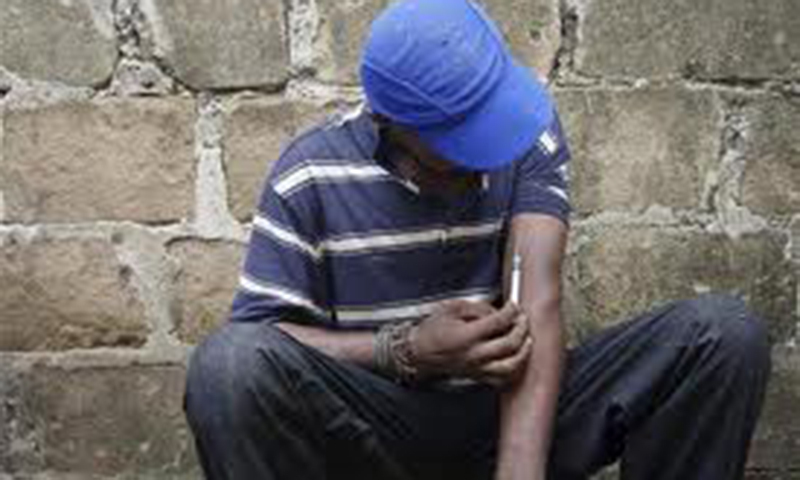
There are warning signs for a rapid expansion in the HIV epidemic in Pakistan according to the United Nations Office on Drugs and Crimes (UNODC). The UNODC revealed its findings in a report titled ‘Drug Use in Pakistan 2013’ which also marked the use of various drugs among Pakistanis as ‘very high’. The report, which was launched in Islamabad, was compiled after a detailed survey conducted in 2012. The survey results detected a very high prevalence of HIV risk behaviours among people who were also injecting drugs users (IDU). According to the report majority of people who tested positive for HIV and were IDUs were unaware of their infected status, and subsequently were not taking precautions to prevent further transmission. Due to a lack of awareness regarding how HIV is transmitted opportunities to prevent infection are likely to be missed. The study also revealed drug use in Pakistan as being ‘highly differential by gender’ stating the use among men was ‘very high’ where as with women it was generally low. The low levels for women are, however, offset by considerable levels of misuse of prescription opioids, tranquilisers and sedatives. It is important to mention here that while prevalence estimates reported here are more extensive than estimated in previous surveys they are still likely to underestimate drug use among women. There is a considerable past-year use of both plant-based and medical prescription drugs, particularly cannabis, prescription opioids (painkillers), tranquilisers and sedatives, and opiates (heroin and opium), the report read. Reported to be the first ever comprehensive national study on drug use across the country it provides baseline information on the prevalence and patterns among population aged 15 to 64. Interviews of 4,500 high-risk drug users , 58 drug treatment centre representatives, 1,200 key informants and 51,000 participants randomly selected from the general population were used to compile the data for the study which shows prevalence and pattern of drug use in Pakistan. The survey reads: ‘Although Pakistan is a country with a large population of youth, drug use was more common among those between the ages of 25 to 39 than 15 to 24.’ Among drug users detected in these surveys, dependence and severity of dependence were high. Of the 6.7 million past-year users of any illicit substance, 4.25 million are considered to be drug dependent. Further, among those who are dependent, there is an overwhelming need for drug dependence treatment and care interventions including low-threshold services, both of which need to be up-scaled. Three-quarters of the regular opiate users interviewed reported a strong desire for treatment, but cited either a lack of access or an inability to afford treatment. Also, taking into consideration the very high levels of dependency among those who were detected, it is believed that recreational or casual drug use is more common but was not detected due to under reporting in the general population.

Want to marry Prince Harry?

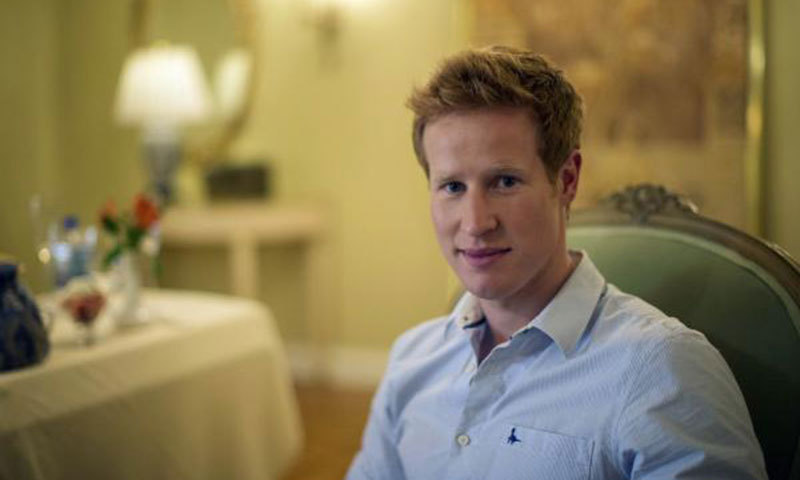
LOS ANGELES: An English country manor, a gaggle of giggling bachelorettes, a slew of butlers and one very mysterious ginger-haired Prince Charming are at the center of Fox's new dating show, where the bachelor is not quite what he seems. Meet Matt Hicks, the 24-year-old British environmental consultant who bears more than a passing resemblance to Britain's Prince Harry, and was given the task of persuading 12 American girls that they were vying to date the fun-loving royal. "As far as I was aware, impersonating a member of the royal family was treason and I'm pretty sure the punishment for that was being locked in the Tower of London," Hicks told Reuters. Premiering on Tuesday, Fox's "I Wanna Marry Harry" spins a twist on the televised dating format used most notably by ABC for "The Bachelor," where one man is charged with finding love from a group of 25 women, honing it down to the lucky one over a series of glamorous and drama-filled dates. Hicks, brought up in Hertfordshire, a neighboring county to London, went to Southampton University, graduating with a degree in geology and oceanography, a different path from his royal look-alike's military career. In "I Wanna Marry Harry," Hicks was sought by the show's producers after being spotted on a celebrity look-alike website, and was given the ultimate makeover. They dyed his blond hair red, gave him intensive training on royal family history and put him in a manor house with guards and a facade of wealth. His quest, over five weeks and a series of dates, is to persuade the girls that he really is the 29-year-old prince, and at the end, to reveal his true identity to the one girl left, and hope that she accepts him for his real self. "There was a lot of weight on my shoulders, they had put a massive budget on this, but I was never really too worried about not pulling it off," Hicks said. "It was just down to being genuine and charming and getting the girls to like me." The female contenders for Hicks' affection range between Rose, the saucy 22-year-old pre-school teacher to 25-year-old Karina, studying for a PhD in physical therapy. All have quite an impact on Hicks when he first meets them at a masquerade ball, where they already suspect he may be Harry. Hicks, who never once calls himself Harry and is referred to throughout the show as "Sir" or "The Gentleman," said he never thought the show's premise was mean or deceiving to the girls, despite him masquerading as the prince. "They put themselves in this situation," he said. "They're not weak, mentally fragile girls who especially might break down, and at the end of the day we're all there for a laugh." And as for what the real Prince Harry may think of the show? "I think he'd think it was quite funny," he said.

Review: Surface works as laptop, has trade-offs

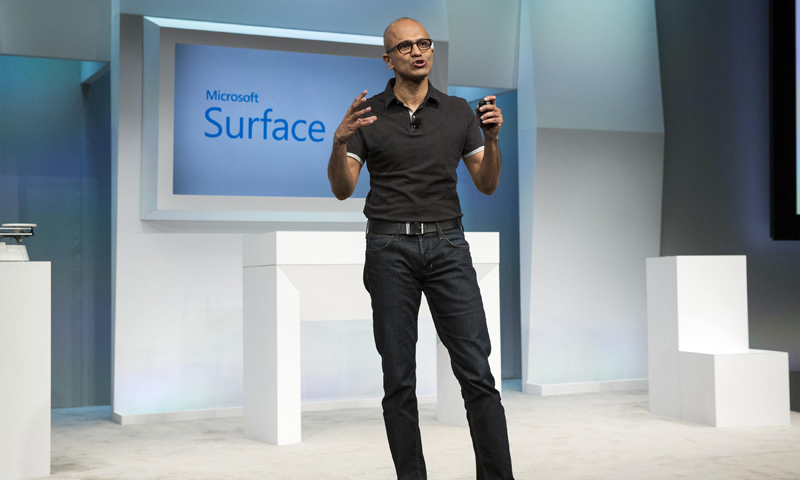
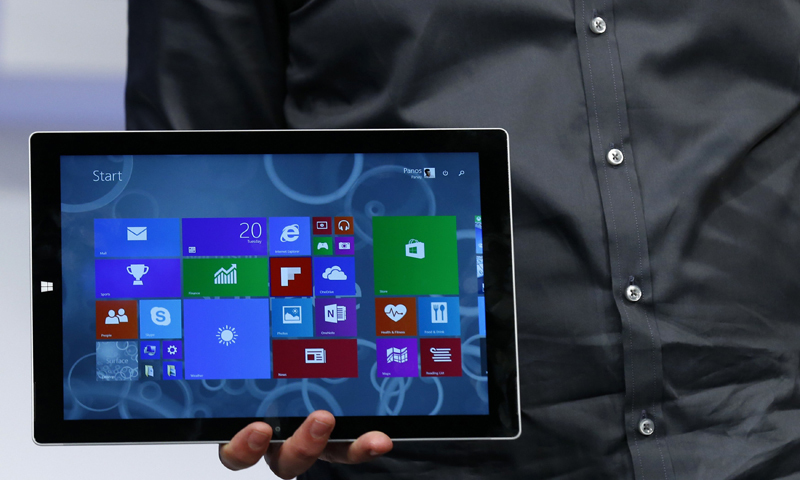
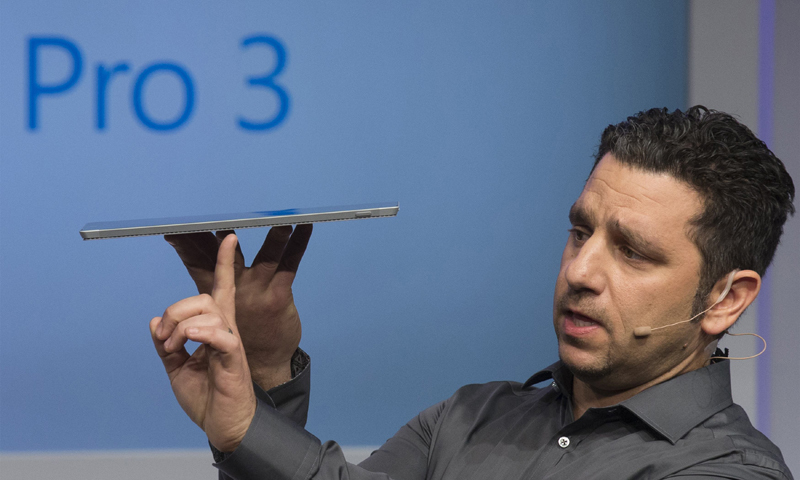
NEW YORK: To appreciate Microsoft's latest tablet computer, you need to accept the notion that one device can do it all. The Surface Pro 3 works as a tablet when you want to watch video or read e-books. It works as a laptop when you need to get serious work done. The Surface delivers on both, though it falls short of meeting Microsoft's claim to do so without compromising on either. The Pro 3 runs a full version of Microsoft's Windows 8 system, the same as you get on a traditional desktop or laptop computer. That means that, unlike other tablets, it can run just about any program designed for Windows: Microsoft Office, Photoshop and more. The Surface has a touch screen like other tablets, but it also has an optional cover that opens to reveal a physical keyboard and touchpad. It has a USB port and one for external displays, both of which are rare on tablets. It also matches laptops in price. Although the new Surface starts at $799, the keyboard cover is $130 extra. As a laptop replacement, you'll want a faster processor and more memory. Configurations run up to $1,949, or $2,079 with the keyboard. A comparable MacBook Air laptop costs $1,749 - though buying a separate tablet will run you a few hundred dollars more. The mid-range configuration comes out June 20, with the rest coming out later this summer. Microsoft began taking orders Wednesday. I've had about a day with the Surface since Tuesday's announcement. I wrote this story with my feet on my desk and the Surface on my lap. The previous model had a kickstand that rests in two positions - one for the desk and one for the lap. The new one gives you a range of angles, akin to adjusting a laptop screen on its hinge to any position. I was able to adjust the angle to reduce glare from overhead lights. Of course, the MacBook also does all that, while allowing me to hold it in one hand. When I try to do that with the Surface, the keyboard or screen moves back and forth like a swing. Then again, the MacBook isn't convenient to open on a crowded subway or bus, and it isn't comfortable for watching video in bed. The Surface, without the keyboard, is ideal for those situations. Apple's iPad is good for that, too, and it has a greater range of tablet-specific apps unavailable for Windows or even Android. The Surface and other Windows tablets have the benefit of being able to run multiple apps side by side, something I long for in the iPad when I want to check e-mail or Facebook while watching video. The Surface also has a bigger screen, at 12 inches diagonally, compared with the iPad's 9.7 inches. The Surface comes with a stylus that feels like a real pen. Clicking on it takes you to Microsoft's OneNote app, where you can start handwriting or doodling, just as you would on a pad of legal paper. The screen is sensitive enough to tell whether you're pressing lightly or hard, and what appears adjusts accordingly, just like real paper. One potential annoyance: The pen doesn't have a rechargeable battery. You need a AAAA battery (the first time I've heard of that size) plus two wristwatch-type coin-cell batteries. And you need a small screwdriver, not included, to replace the coin-cell batteries. The new Surface departs from most other tablets, including previous Surface models, in adopting a screen ratio of 3:2. Most tablets use 16:9 for widescreen television. The iPad uses 4:3, which is common for older TV shows and standard digital photographs. That means you'll get wasted space whether you watch 16:9 or 4:3 video. It tends to be one or the other on other tablets, though the amount of wasted space is larger when you do have it. Microsoft says the 3:2 ratio is the "sweet spot" that covers both types of content. It's also good for photos from single-lens reflex, or SLR, cameras. A bigger consideration than the screen ratio is whether you need a single device that does all things. There are plenty of professions that don't involve sitting at desks all day: health care, retail and teaching, to name a few. A hybrid might make sense in those cases. But I'm not one of those people. When I'm reading e-books on a train or a bus, I prefer a smaller tablet or dedicated e-reader. When I'm editing photos or writing, I prefer a laptop with a larger screen. When I'm watching video, I prefer a streaming device attached to a big-screen TV. The Surface is good for those who want just one device, but there are trade-offs, notwithstanding Microsoft's insistence otherwise.

Domestic dispute: Husband kills lady health worker in Karachi

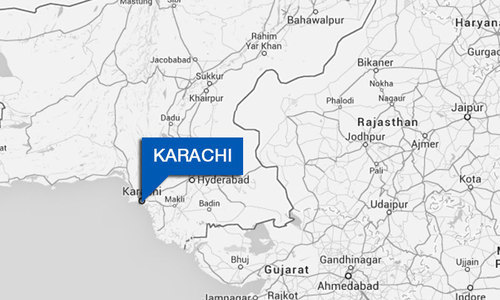
KARACHI: The husband of a lady health worker (LHW) killed her over a domestic dispute, Express News reported on Thursday. The incident took place in the Sachal area of the city. After the murder, the other lady health workers, who are part of the same anti-measles drive as the deceased, boycotted the drive for a day. The workers announced that they will wear black armbands to register their protest. Incidents of domestic disputes that have lead to deaths of family members are not uncommon in Pakistan. Previous incidents In February, a man was killed in Hyderabad by his brother and nephews over a domestic dispute. According to SHO Tando Yousuf police station Shaukat Baladi, the incident had happened in the American Quarters area. In November last year, a woman was severely burnt allegedly by her husband over a domestic dispute in Alhaj Colony. Paharipura police had said the husband threw kerosene in the room his wife was asleep in at night before setting it on fire. A man shot dead his ex-wife and son and injured a neighbour in Fazal Town in the jurisdiction of Airport Police Station, Rawalpindi. The police had said that the man had had a heated exchange with his ex-wife and 25-year-old son, during which he opened fire on them.

Pakistan, US among countries that systematically violate rights of workers: Report

The International Trade Union Confederation (ITUC), an alliance of regional trade confederations that advocates for labour rights around the world, ranked Pakistan alongside the US among countries where systematic violations of rights of workers are reported. The report ranked countries on a scale of 1-5 (1 being best and 5 worst) on the basis of standards of fundamental rights at work, in particular the right to freedom of association, the right to collective bargaining and the right to strike. The workers in countries with the rating of 4 have reported systematic violations. The government and, or companies are engaged in serious efforts to crush the collective voice of workers putting fundamental rights under continuous threat. The report put Central African Republic, Libya, Palestine, Somalia, South Sudan, Sudan, Syria, and Ukraine as the worst country to work. In countries with a score of 5+ on the Index, workers were reported to have no guarantee of rights due to the breakdown of the rule of law. The situation in India and Bangladesh was worse than Pakistan with both countries scoring 5 on the index. While the legislation in countries with a rating of 5 may spell out certain rights workers but workers have effectively no access to these rights and are therefore exposed to autocratic regimes and unfair labour practices. Other prominent countries with the rating of 5 include Saudi Arabia, Qatar, United Arab Emirates, China, and turkey. The report further pointed out that in Qatar and Saudi Arabia, where the work force is primarily comprised of migrants, workers are often kept in deploring conditions. “In countries such as Qatar or Saudi Arabia, the exclusion of migrant workers from collective labour rights means that effectively more than 90 per cent of the workforce is unable to have access to their rights leading to forced labour practices in both countries supported by archaic sponsorship laws.”

Why BJP will find it tough to field Kiran Bedi as Delhi's CM candidate

New Delhi: Kiran Bedi might've made her intentions quite clear in last few months that it's Bhartiya Janta Party (BJP) & Narendra Modi who she supports, but her restlessness to join BJP fold could see a lot of opposition from within the saffron camp. Her Tweets such as “Let not a single vote go waste! Delhi must reap full rewards of ModiSarkar!"; "I no more rule out entering Indian political service on capability basis. I am moving towards some flexibility in this" clearly signalled her desperation to join the resurgent Modi wave that swept away not just the opposition but the entire nation. It is interesting to note that just a few months before the 2013 Delhi elections, the former IPS officer clearly ruled herself out of active politics. But cut to 2014 and you'll find her statements such as - “I will consider myself to be ready for it if such an offer is made. If they ask me then I will accept it. I had refused earlier when they asked, but now I will accept." Quite clearly, it's now upto Modi & co to just whisper the magical words to her 'Yes, you can!' But it's not going to be a walk in the park for Bedi. If reports, as published by Firstpost.com, are to be believed - new found aspiration to become BJP’s chief ministerial candidate nominee in Delhi has not gone down well with the party leaders. They are deeply resentful for two reasons – without being even a member of the BJP she is aiming for the topmost executive position. Second, it comes after the parliamentary election results, and there is no denying the Modi wave swept across nation, Delhi included. She is vying for the job now that it is a 'no risk, all gain' proposition. Delhi BJP president, Dr Harshvardhan, now an MP who was party’s chief ministerial candidate last year, told Firstpost, “See as far as my latest knowledge of state of affairs in my party goes this issue, (Kiran Bedi) is a non issue”. Few other senior leaders had similar response: a clear `No’ to Bedi's chief ministerial ambition. But that does not mean there will be resistance to her joining the BJP. The party leaders objections relate only to leading the party in the Delhi elections and vying for the chief minister’s post. "You don’t offer such primacy of position to a fresh entrant to the party," said another BJP leader. Sources said Bedi was offered a ticket in both assembly and parliamentary elections over the past year, but she refused. She perhaps was unsure of BJP's prospects and thus didn’t want to take a risk. “She wanted a zero risk situation. She turned us away when we asked her to join the party and lend her name to our campaign. Now that Modi wave has swept the nation, the foot soldiers tireless works have yielded the harvest, she wants to thrive on it," a woman BJP leader said. Sources, however, insist Bedi will still have a lot to gain by joining the party. She could be offered a position in the government with a degree of functional autonomy where her experience and expertise in matters of dealing with the crime, police reforms, prisons, women and child welfare could be utilised.

SHOCKER: Man attempts self-immolation outside Tis Hazari Court

New Delhi: A 25-year-old man allegedly tried to immolate himself outside Tis Hazari Court this morning and his condition is stated to be critical. The man, Sandeep, a resident of Babarpur area, was apparently upset over his relationship with a girl following which he took the extreme step and set himself on fire outside gate number one of Tis Hazari Court around 11 AM, police said. "When Sandeep reached near Gate Number 1 of Tis Hazari Court, he suddenly poured inflammable liquid on his body and set himself on fire. Seeing this, passersby tried to rescue him and informed the police," a senior police officer said. A police team immediately rushed Sandeep to Aruna Asaf Ali hospital from where he was referred to LNJP hospital. "Sandeep has sustained 90 per cent burn injuries on his body and his condition is critical. As per preliminary investigation, he took the step over some girl, but police is yet to establish the exact reason," the officer said. His family members are also being questioned in this regard and further investigation is on, he added.

Patna blasts: NIA arrests doctor for alleged connections with terrorists

Ranchi: National Investigation Agency has arrested a doctor working with a leading private hospital for alleged connections with terrorists. The operation was carried out with the help of local police. Police officers have also arrested another man, Shoaib Akhtar, from a lodge here. NIA team is interrogating both of them and trying to get more information in connection with Patna blasts case. Investigating officers have procured important information from the laptop of a alleged terrorist Haider. Information so collected proved instrumental in the latest arrests. NIA and local police teams have been carrying out regular raids in Jharkhand for the last three-four days in pursuit of criminals involved in the blasts. A conspiracy had been hatched to harm Prime Minister-elect Narendra Modi, the National Investigation Agency claimed on Wednesday, saying it has cracked last year's Patna serial blasts case with the arrest of four persons including a juvenile allegedly having association with banned terror groups like SIMI and Indian Mujhaideen. Terming it as a "big success", NIA Director General Sharad Kumar told reporters at a hurriedly called press conference here that "definitely the conspiracy among these people was to harm Modiji. The people whom we have arrested earlier in the Patna blast case had said that they had recced Modi's rallies and went there to see how to get near him. The central intelligence agencies had been trying to crack the Patna blast case especially after the arrest of Yasin Bhatkal who was nabbed from Bihar last year. On October 27 last year, a bomb exploded on platform No 10 of the Patna Railway Station ahead of Modi’s rally. Later, blasts took place at Gandhi Maidan outside the rally. The NIA had named the four as absconding accused in its charge sheet filed earlier. So far, eight persons have been arrested in this case.

Former cricketer Vinod Kambli's wife Andrea slaps man for misbehaving with her

Mumbai: The Bandra police in Mumbai have registered a case against former cricketer Vinod Kambli's wife Andrea Hewitt. She is accused of slapping a man after both had an argument regarding parking space. On Sunday, Vinod Kamli went for dinner along with his wife and son. As soon as they parked the car outside the hotel, another man came to the spot along with his car. The man asked Kambli to move his car a little but he refused to do so. Both of them had an argument regarding the parking space. It did not end here. The man followed them inside the hotel and abused Kambli. When Andrea tried to interfere in the matter, the man held her hand. Annoyed with such behaviour, she slapped the man. The police have registered the case against man for misbehaving with the family. But a case is also filed against Andrea for slapping the man.

Anandiben Patel becomes first woman Chief Minister of Gujarat

Gandhinagar: Anandiben Patel took oath as the Chief Minister of Gujarat on Thursday around 1:45 in the afternoon. Prime Minister designate Narendra Modi and other prominent leaders of BJP including LK Advani, MM Joshi, Prakash Singh Badal and Nitin Gadkari attended the swearing-in ceremony of Anadiben as she became the first woman CM of Gujarat state. The Ministries of rest of the ministers of Gujarat will remain the same as it were during the tenure of Modi. The oath taking ceremony was held at Mahatma Mandir in Gandhinagar. Anandiben Patel, Gujarat’s revenue minister and a close aide of Narendra Modi was on Wednesday chosen the next chief minister of Gujarat. Prime minister-designate Modi resigned as the chief minister of Gujarat and handed over his resignation to the Governor Kamla Beniwal earlier on Wednesday. In an emotional speech, 72-year-old Patel had said, "I will ensure that Gujarat continues on the path of development." Patel is a post graduate in Science and is known for his hard work and efficiency as a BJP leader. She has earlier handled portfolios of road and buildings and revenue management during Modi government in Gujarat.

From vegetarian high-tea to security arrangements, Rashtrapati Bhavan braces for Modi's swearing-in ceremony

New Delhi: Narendra Modi will be sworn-in as Prime Minister of India on May 26. BJP's massive victory has prompted NDA to make a political statement and convey to the world that they are here to do business and all are welcome to be part of the journey. It is going to be a grandeur show and all SAARC nation leaders including Pakistan Prime Minister Nawaz Sharif have been invited. Rashtrapati Bhavan is making all efforts to ensure that the huge event turns out to be a big success. According to media reports, forecourt of the Rashtrapati Bhavan will be the venue for the swearing in ceremony. In the past, only two prime ministers, A B Vajpayee and Chandrashekhar, were sworn in at the Rashtrapati Bhawan forecourt which can house 4,000 people. Media reports say, work has already begun for beautification of the forecourt.
Rashtrapati Bhawan is also keeping the Durbar Hall ready, which can seat around 500 people. This is more suitable considering high security needs. But, the list of guests is going to be long and forecourt remains the first choice. GUEST LIST On Wednesday, Modi had invited leaders from the South Asian Association for Regional Cooperation (SAARC) countries, including Pakistan PM Nawaz Sharif, to attend his swearing-in ceremony, signalling his priority to engage with neighbours. Afghanistan President Hamid Karzai and Sri Lankan President Mahinda Rajapaksa will attend the ceremony, sources said. Bangladesh Prime Minister Sheikh Hasina will be on an official visit to Japan on May 26, the sources said. Therefore, she will be represented by Bangladesh Parliament’s Speaker Shirin Sharmin Chaudhary. However, Sharif’s participation has not been confirmed yet. SECURITY Potential list of guests for the ceremony is around 4,000 which include VIPs and VVIPs. Providing foolproof security is going to be a big task. MENU According to reports, arrangements are being made for 3,000 guests and vegetarian high tea. Gujarati food will definitely find place in the menu list. VIPs will be served at the forecourt. VVIPs will enjoy the food inside the building.

MODI'S GRAND PLAN: The reasons why Modi invited the leaders of SAARC nations to his swearing-in ceremony

New Delhi: Sources reveal Pakistan’s Prime Minister, Nawaz Sharif is likely to accept invitation for Narendra Modi’s swearing-in ceremony. Heads of other SAARC nations have been invited to Narendra Modi's swearing-in ceremony on May 26. According to reports Foreign Ministry had also sent the invitation to Prime Minister of Pakistan Nawaz Sharif. Though the Ministry of External Affairs hasn’t confirmed the acceptance of the invitation. Prime Minister-designate Narendra Modi has invited the heads of the governments of all South Asian states to attend his swearing-in on Monday.
1.It’s a first of its kind in India In a gesture, which diplomats and experts said was without precedent. Though foreign envoys stationed in New Delhi have attended past swearing-in, Ministry of External Affairs sources said, no world leader has been invited to attend what has traditionally been seen as a domestic event. The move startled regional diplomats-but also caused surprise in the Rashtriya Swayamsevak Sangh, which was not consulted on the decision, Bharatiya Janata Party sources said. Foreign Secretary Sujatha Singh, the Ministry of External Affairs said, despatched formal invitations on Wednesday afternoon to the Presidents or Prime Ministers of Afghanistan, Bangladesh, Bhutan, Maldives, Nepal, Pakistan and Sri Lanka. Hamid Karzai, Afghanistan’s President, has accepted the invitation but there was no immediate word on which other leaders would attend.
2.To exhibit his might to the world powers like China and USA For years Modi has been in news for not being able to travel to the United States of America but immediately after BJP’s landslide victory, world leaders including US President Barack Obama and Russian President Vladimir Putin called Modi to congratulate him. Modi through his Twitter handle thanked the leaders for their wishes. EH was welcomed by the White House to visit USA at his wish and will. The invitation of swearing-in ceremony to the leaders of the SAARC nations is just a way to put across a subtle message to the world powers that Modi is here to stay and will ensure growth of India. India is one of the powerful nations in the subcontinent and now its time to take India seriously.
3. To allay regional fears Modi’s surprise outreach, an advisor present at the meeting said, was intended to allay regional fears that his rise to power would herald a new hawkishness in Indian foreign policy. The Prime Minister-elect had ruffled feathers in Bangladesh by threatening to expel migrants from India’s north-east, while Sri Lanka was concerned over the influence ethnic nationalists in Tamil Nadu might have over his foreign policy.
4. Initiate peace talks with Pakistan UPA in its 10 year regime has not managed to achieve concrete steps to resolve differences between India and Pakistan. With an invitation sent out to the Prime Minister of the neighbouring country political analysts see it as Modi wasting no time to get down to business. In fact UPA’s ally and Jammu and Kashmir Chief Minister Omar Abdullah described as "excellent" Prime Minister-designate Narendra Modi's move to invite Pakistan's Prime Minister Nawaz Sharif and other SAARC leaders for his swearing-in ceremony. Abdullah expressed the hope that it would be the beginning of sustained talks between India and Pakistan.
5. Makeover of his hardliner image Known for his dictatorial image and ruling with complete control in Gujarat, Modi has now resorted to an image makeover. Starting with an emotional speech on his debut in the Parliament and reaching out other parties Modi has now adapted a softer image. He has been criticised world over for his hardliner image. This invitation is seen as his way to reaching out to other countries and shedding his image of being an intolerant and autocratic leader.

Modi meets his mother before leaving for Delhi; says 'Aavjo Gujarat'

Ahmedabad: Prime Minister-designate Narendra Modi today left for New Delhi after finally bidding adieu to Gujarat saying, "Aavjo (goodbye) Gujarat'. "When I am leaving for Delhi, as per our tradition, I would like to say 'Aavjo' to 6.25 crore people... 'Aavjo Gujarat (goodbye Gujarat)," Modi said at the airport before leaving for New Delhi. Modi met his mother before leaving for Delhi. She offered him sweets and was apparently very happy. The ex-chief minister will be sworn in as the Prime Minister on May 26, after he led his party to a resounding victory in the 2014 Lok Sabha Elections. Modi also thanked media persons of Gujarat before the departure. "I would like to thank all the media persons, be it reporters of television channel, print media, editors, columnists, from the bottom of my heart for their cooperation in the last 13 years. I am hopeful that we will continue to work for development of Gujarat and India," Modi said. Modi completed all his tasks in Gujarat like resigning from the post of the Chief Minister and MLA and giving the state a new chief minister in form of Anandiben Patel before leaving for Delhi. Modi had been Chief Minister of Gujarat from October 7, 2001.

Pakistan, China sign pact on Lahore Orange Line metro project

President Mamnoon Hussain and Chinese President, Xi Jinping witnessing the signing of the Framework agreement between China and Pakistan on Lahore Orange Line Metro Train Project after meeting in Shanghai on Thursday, May 22, 2014. Chief Minister Punjab, Muhammad Shahbaz Sharif signed the documents from Pakistan side. — Photop by PPI************************************************* SHANGHAI: Pakistan and China on Thursday signed the framework agreement on Lahore Orange Line Metro Train Project. Chief Minister Punjab, Muhammad Shahbaz Sharif signed the agreement from Pakistan side at a ceremony which was also witnessed by President Mamnoon Hussain and Chinese President Xi Jinping. The 27 kilometre long elevated mass transit project in Lahore is aimed to facilitate commuters' movement in the city.

Senators say ban on any media organisation unacceptable

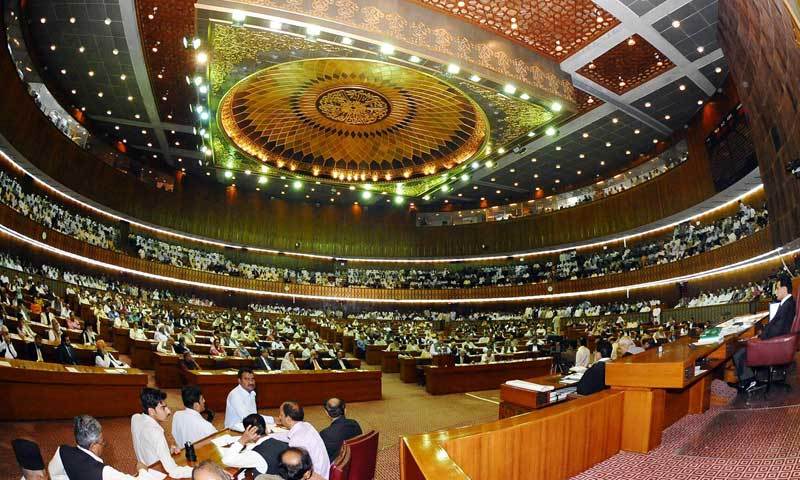
ISLAMABAD: Senators from the treasury and opposition benches on Wednesday said that they will not accept any kind of ban on any news organisations in the presence of a democratic government. Commenting on the motion in Senate regarding the ongoing political situation in the country, Awami National Party (ANP) Senator Afrasiab Khattak said that the journalist community sacrificed lives along with members of political parties for the purpose of democracy in the country. The ANP leader said that the role of a free media is essential for democracy in the country. “The government should play its role to ensure freedom of expression in this regard,” he added. “Some elements are creating confusion among media organisations but the Parliament will not accept any kind of ban on any media organisations,” he said. Khattak said that the democratic system has been taking roots since the elections of 2008, which the opposition parties will support at all costs. He said that the government should take the parliament into confidence regarding the dialogue process with the Taliban. “It is difficult to understand that while the government is involved in a dialogue process with the Taliban, it has also conducted strikes on militant’s hideouts in North Waziristan today,” he added. PML-Q Senator Kamil Ali Agha said that the ban on any news organisation is not a solution of any problem. He said the government should take all the stakeholders on board and introduce a code of conduct for media organisations. He said that the Pakistan Electronic Media Regulatory Authority (PEMRA) is operating without its chairman and stressed there should be a strong regulatory authority which implements its decisions in this regard. “The situation would be totally different if there is any code of conduct for the media organisations as yet,” he said. Agha said that it is the responsibility of the government to play its role to stop the ongoing tussle between different media houses. BNP-A Senator Kalsoom Perveen said that the role of Pemra is questionable in the present circumstances. The government should play its role to establish a regulatory authority for the implementation of its decisions, she added. PML-N Senator Prof. Sajid Mir said that media organisations should play a positive role to counter the ongoing situation within media houses while the government should mediate to remove the tussle in this regard. Earlier, PPP Senator Mian Raza Rabbani said on a point of order that the association of the Independent Power Projects (IPPs) has threatened the ministry of water and power through a letter that the government should paid their outstanding of Rs300 billion otherwise it should be ready to face loadshedding for 14 hours across the country. Rabbani said that the government had already paid Rs480bn to the IPPs to clear its circular debt, but the people are still facing loadshedding for up to 10 hours. The PPP also staged a token walk out from the Senate against the attitude of the IPPs. Later, Leader of the House Senator Raja Zafar ul Haq said that it was the PPP government which bought electricity on high cost from the IPPs during their last tenure. During the question hour session, Minister for Railways Khawaja Saad Rafique told the House that 58 new locomotives at the unit price of one hundred and ninety-two million rupees are being procured from China and a fifteen per cent down payment has been made in this regard.

PM to award 3G, 4G spectrum licences on Thursday

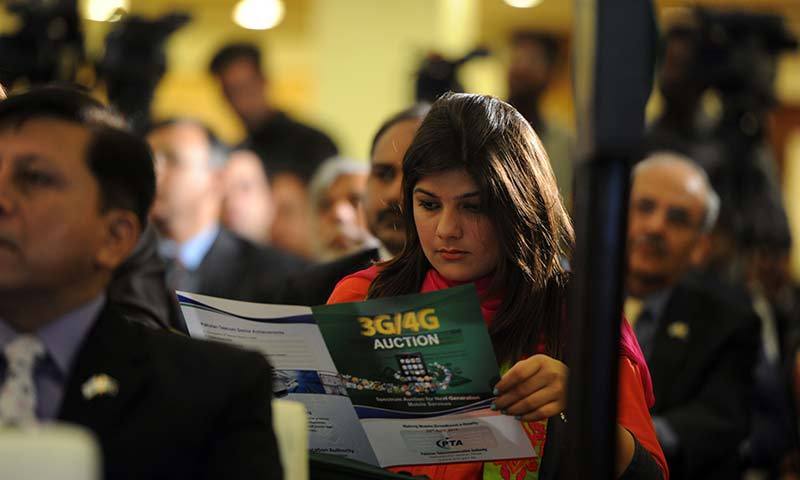
ISLAMABAD: Prime Minister Nawaz Sharif will award 3G and 4G mobile spectrum licences to the successful mobile operating bidders on Thursday while deadline for free 3G services by different mobile companies will end on Friday. Following the auction held by Pakistan Telecommunication Authority (PTA) in April, the government raised $902.82 million in the first auction for 3G mobile phone networks and $210 million for the 4G spectrum. Winning mobile operators for 3G Licence include Mobilink, Telenor and Ufone, while ZonG was declared successful for both 3G and 4G Licences. Official sources at telecommunication ministry told Dawn.com on Wednesday that ZonG has paid 100 per cent payment of license fee for 3G, 4G spectrums including 10 per cent of withholding tax while Mobilink paid all amount of license fee of 3G spectrum. They also informed that Ufone and Telenor have paid 50 per cent of the licence fee also with 10 per cent of withholding tax. Giving details of payments by qualified bidders/cellular mobile operators (CMOs), a top seated official at telecommunication ministry also said that Mobilink has paid $300.9 million, Ufone and Telenor paid $73.75 million each while ZonG has paid $516.918. Pakistan has more than 132 million mobile phone subscribers and has now provided the latest mobile communication technology to its users. Prime Minister Sharif previously directed the ministry of information technology to speed up the introduction process of both 3G and 4G technologies in Pakistan simultaneously to catch up with the rest of the world. The award of these licenses will provide Rs260 billion additional revenue to the exchequer and at the same time open up thousands of employment opportunities in the country. It may be mentioned that mobile consumers, who were enjoying the befits of 3G spectrum from last 28 days without paying any bills, would no longer find free service from Friday as they will have to pay for subscribing a bucket to use the service.

TV channel faces FIR onslaught

TV channel faces FIR onslaught The Newspaper's Staff Reporter Published about 11 hours ago KARACHI: A sessions court ordered on Wednesday registration of a case against a television channel for airing objectionable content in a morning show. The order was issued on an application filed by a lawyer under Section 22-A of the Criminal Procedure Code for registration of the case under the blasphemy law against the management of Geo TV, the host of the show and other people responsible. The applicant said that he had approached the station house officer of Mithadar police station for lodging the case, but police did not entertain his plea. After hearing arguments of the applicant and police, Karachi South District and Sessions Judge Ahmed Saba asked the SHO to record the statement of the complainant under Section 154 of the CrPC and register the first information report (FIR). Our Staff Reporter in Lahore adds: Old Anarkali police registered a case against Geo TV’s owner, the show’s host, the actress and her husband who attended the show and five management personnel for hurting people’s religious sentiments. The FIR was registered on the complaint of Advocate Sardar Aftab Ahmad. Our Staff Correspondent in Faisalabad adds: Kotwali police in Faisalabad also booked the head of the channel and participants of the show under Sections 295-A, 295-C, 298-A and 34. The District Bar Association’s secretary Ijaz Ahmed had filed a petition in the court of Additional District and Sessions Judge Shahid Bashir on May 14. The court sent the petition to Kotwali police with a directive to proceed in accordance with the law. Kotwali police had submitted its reply before the judge that a case on the same allegations had been registered at the Margalla police station. Published in Dawn, May 22nd, 2014

Current account deficit rises to $2.16bn

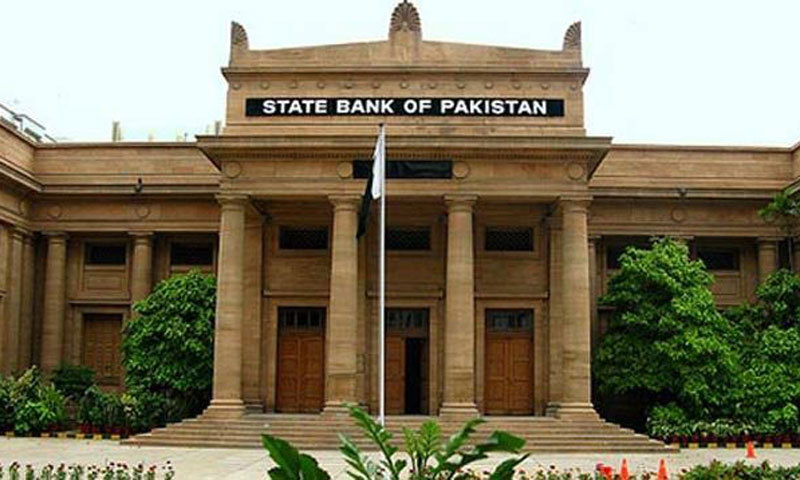
KARACHI: Current account deficit in the first 10 months (July-April) of this fiscal year rose to $2.162 billion, reflecting a large trade gap compared to $1.574bn during the year-ago period, the State Bank reported on Wednesday. The foreign exchange reserves of the country have significantly increased during the last six months, eroding any possibility of default on external payments. However, the current account deficit is still a problem for the country which has increased its reserves with massive borrowing from debt market as well as bilateral sources. The government recently borrowed $2bn through the sale of Eurobond which helped it build its reserves but could not reduce the deficit. It may liquidate the positive impact of Eurobond. The imbalance of trade in goods during this period was higher than last year’s as it rose to minus $13.161bn compared to minus $12.822bn during the same period of last year. This widening trade deficit is the real threat which appears as current account deficit. Despite ever increasing remittances, which rose by 11.45 per cent year on year to $12.9bn during the 10-month period, the current account deficit is critical for the economy. Further details showed the real imbalance was visible in the trade of services as the deficit in this sector rose to minus $2.267bn while it was minus $1.013bn during the same period of last year. The State Bank said the current account deficit in April this year was minus $55 million. Analysts believe that the deficit of $2bn was enough to raise the negative impact of borrowed reserves. Published in Dawn, May 22nd, 2014

3.35m broadband users

ISLAMABAD: The number of broadband users in the country has reached 3.35 million, an increase of around 10 per cent from the previously reported figure of 3.02m. According to latest figures issued by Pakistan Telecommunication Authority, PTCL is still leading the market as it added 317,481 subscribers in the last three months. Main contributors remained the EvDO technology, which acquired 256,543 new subscribers — or 80pc of new broadband customers. Published in Dawn, May 22nd, 2014

Contempt plea against five politicians

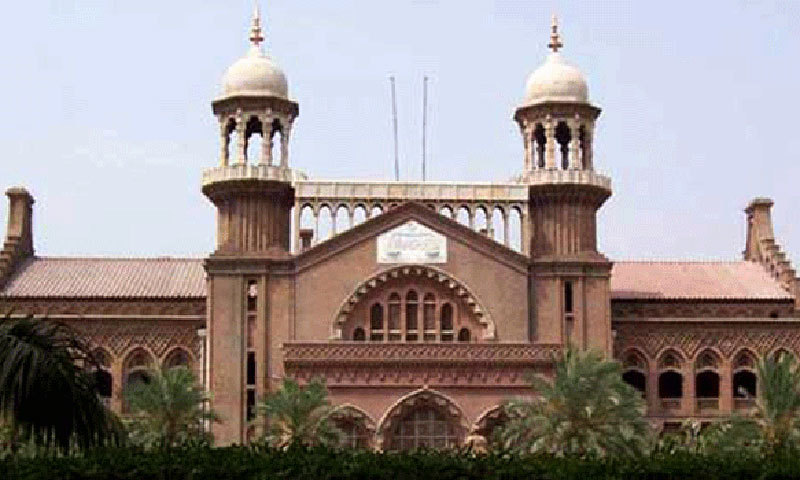
LAHORE: A contempt of court petition has been filed in the Lahore High Court against Prime Minister Nawaz Sharif, his wife Kulsoom Nawaz, son Husain Nawaz, PML-Q chief Shujaat Husain and Humayun Akhtar Khan for refusing to receive court notices in a case questioning their alleged foreign assets. Barrister Javed Iqbal Jafree filed the petition saying these politicians committed contempt of court by not receiving the summons. He said the act of the respondents amounted to creating hurdles in dispensation of justice. He sought proceedings against the respondents under contempt of court law. In the main petition of Barrister Jafree, a LHC single bench had on Tuesday decided to issue a proclamation in newspapers to serve notices on the respondents. The politicians could not receive the notices for different reasons. Published in Dawn, May 22nd, 2014

KP faces Rs22bn budget shortfall

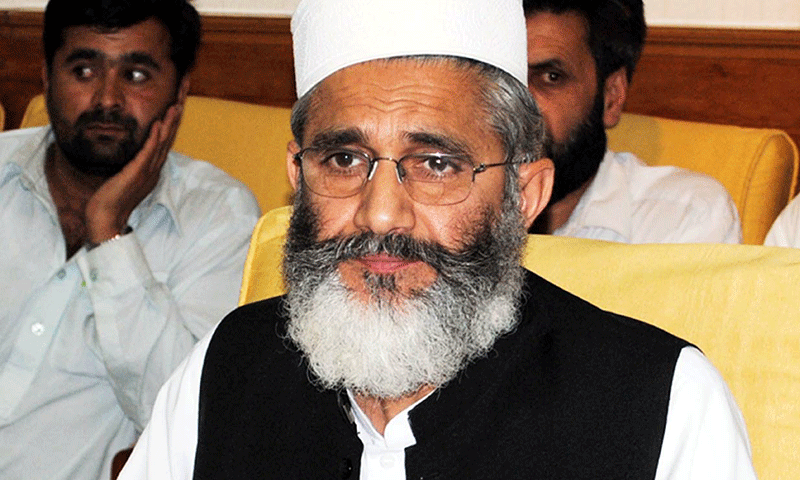
PESHAWAR: As the annual budget for the next fiscal year is round the corner, Khyber Pakhtunkhwa finance minister Sirajul Haq on Wednesday said the province was facing serious shortfall of Rs22 billion due to the ‘one-sided’ variation in the total divisible pool of resources. “The monetary condition of the province can worsen if the centre doesn’t release the Rs22 billion share of Khyber Pakhtunkhwa before the end of current financial year. The province has already suffered a lot due to militancy,” the minister told a news conference here on Wednesday. He said the issue was taken up in the biannual meeting of the National Finance Commission (NFC) in Islamabad on Tuesday, where federal finance minister Ishaq Dar was in the chair. “During the meeting, I took up various issues, including delay in the payment of arrears on account of net hydel profit, delay in the imposition of excise duty on oil and imposition of the infrastructure development cess,” he said. Siraj says situation will worsen if centre doesn’t pay arrears Mr Haq said Khyber Pakhtunkhwa would be in position to give loans to other provinces if the centre ensured the timely payment of arrears. “Delay in the payment of arrears including on account of NFC and net hydel profit can adversely affect the pace of development in the province. The lukewarm response of the centre has disappointed us,” he said, adding that the coalition government utilised all legal options and democratic forums to protect the rights of the province. The minister said initially, the finance ministry had estimated the total volume of divisible receipts at Rs2,475 billion under which the province was due to get Rs222.09 billion and that the budget was prepared in light of those estimates. He said payments during the current financial year remained below the target and the federal government also cut down the target of total divisible receipts from time to time without taking provinces into confidence. “At one stage it was fixed at Rs2,345 billion, Rs2,270 billion and at last at Rs2,229 billion,” he said. Mr Haq said under NFC, the share of the provinces in total divisible pool was 57.5 per cent and population basis the share of Khyber KP faces Rs22bn budget shortfall Pakhtunkhwa was 14.62 per cent. He said under the head of the war on terrorism, its share in the total divisible receipts was one per cent, which was 1.8 per cent of the total share of the province and that was still outstanding. The minister said the total share of Khyber Pakhtunkhwa in the federal divisible pool was 8.97 per cent of the receipts. He said under the Finance Act 2013, the Khyber Pakhtunkhwa government had decided imposition of infrastructure development cess and all arrangements were finalised but it could not be implemented due to the objections of the federal government. Mr Haq said the federal minister had promised early resolution of all outstanding matters and the immediate removal of all hurdles to the levy of cess to help generate the maximum receipts for the province. He said soon after the meeting, the relevant authorities had been informed of the progress, while the provincial excise and taxation department and that the Federal Board of Revenue had been informed in written to removal hurdles in this regard. The minister said he had raised the issue of non-payment of Rs138 billion arrears on account of the net hydel profit and urged the federal minister to resolve the issue permanently. “According to the arbitration award, the centre has to pay Rs138 billion arrears on account of net hydel profit, while under the AGN Qazi formula, the federal government owes Rs475 billion to Khyber Pakhtunkhwa,” he said, adding that the province was subjected to the unbecoming treatment. Mr Haq said after the 18th Constitutional Amendment, excise duty on oil was to be imposed under Article 161(1)(b) of the Constitution but after the lapse of three years, it was not levied. He said under the formula in question, Khyber Pakhtunkhwa could receive Rs14.6 billion per annum as it produced 40,000 barrel oil per day, half of the country’s total production. Published in Dawn, May 22nd, 2014

Several dead and injured in blast in China's Xinjiang: Xinhua

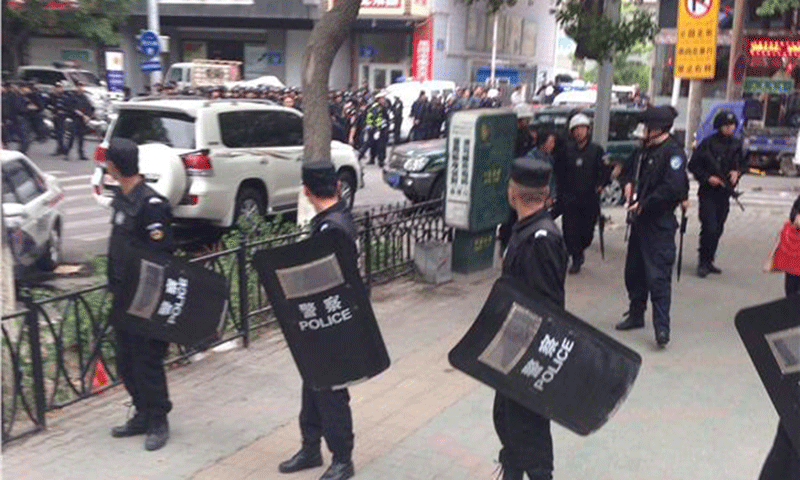
BEIJING: Several people were killed and injured Thursday when two vehicles ploughed into a market and explosives were thrown in China's restive Xinjiang region, home to mostly Muslim Uighurs, the official Xinhua news agency reported. Two off-road vehicles drove into people at the market in the regional capital Urumqi, with one of them exploding, Xinhua said, the latest apparent violent incident in the far western region. Pictures posted on Weibo, a Chinese equivalent of Twitter, showed victims lying in a tree-lined street, as others sat on flimsy stools. Flames rose in the background, while other images showed smoke billowing over market stalls behind a police roadblock. None of the photographs could immediately be verified. A witness at the market told Xinhua he heard a dozen “big bangs” during the incident, which happened at about 7:50am (2350 GMT), when Chinese morning markets, which usually sell fresh groceries, are commonly crowded with shoppers. “There were multiple strong explosions in the morning market at the Cultural Palace in Urumqi,” wrote one Weibo poster who said he was less than 100 metres (yards) from the scene. “I saw flames and heavy smoke as vehicles and goods were on fire while vendors escaped leaving their goods behind. “All the injured had been sent to hospital, the Xinjiang regional government's web portal Tianshan said. Beijing sees separatist threat The vast, resource-rich far-western region has seen periodic violence which has increased and sometimes spread beyond it in recent months. Beijing says it faces terrorism from a violent separatist movement there, driven by religious extremism and foreign groups. Critics say the security threat in Xinjiang is exaggerated by Beijing to justify hard-line measures, and instead point to economic inequality and cultural and religious repression of Uighurs as causes of unrest. On April 30, the final day of a visit by President Xi Jinping to the region, assailants armed with knives and explosives carried out an attack at a railway station in Urumqi, killing one person and wounding 79. Two attackers also died. The main plotter had formulated plans from abroad, then eight days before the incident ordered 10 people to make an explosive device and choose a target, Xinhua said in a later report. In March attackers went on a stabbing spree at a railway station in the southwestern city of Kunming, killing 29 people and wounding 143 in an incident dubbed “China's 9/11” by state media. Four of the assailants were shot dead by police. In 2009 ethnic riots erupted in Urumqi between Uighurs and the country's majority Han Chinese, leaving 200 people dead and prompting a security crackdown. China has dramatically increased the number of armed patrols on its streets in response to the spate of violent incidents. Thursday's blasts came a day after state media reported that courts in Xinjiang jailed 39 people for offences including spreading “terrorist videos”. The 39 were given prison sentences of up to 15 years, the state run China News Service said, adding that several had “organised, led and participated” in terrorist organisations. Rights groups say the tensions in Xinjiang are driven by cultural oppression, intrusive security measures and immigration by majority Han Chinese which have led to decades of discrimination and economic inequality. Beijing says that its policies in the region have brought prosperity and higher living standards.

Blog Archive