BAGHDAD: A crucial parliament session kickstarting the government formation process was delayed and shelling killed a general on Monday, as solutions to Iraq’s worst crisis in years appeared increasingly distant.
The developments highlighted bickering among political leaders despite calls for unity to counter a jihadist-led offensive that has overrun swathes of territory and which the security forces have struggled to repel.
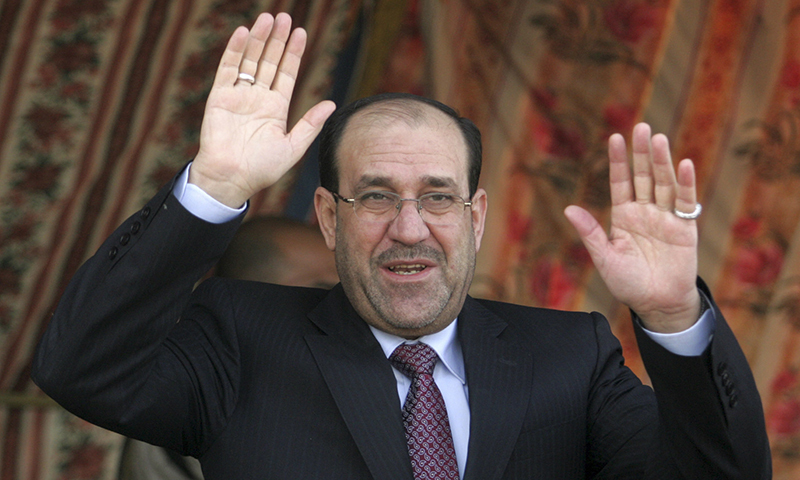
The swift advance has displaced hundreds of thousands, alarmed the international community and heaped pressure on Prime Minister Nuri al-Maliki as he seeks a third term in office.
But the government formation process, which international leaders and Iraq’s top cleric have urged be expedited, was dealt a blow when a parliament session scheduled for Tuesday was postponed.
Officials and a lawmaker said the meeting was rescheduled for August 12 because MPs could not agree on a new speaker.
More than two months after elections in which Maliki’s camp won the most seats, though not a majority, parliament has yet to begin choosing the country’s top three positions, which according to an unofficial deal are split between the Shia Arab, Sunni Arab and Kurdish communities.
A session last week ended in chaos, with MPs trading heckles and threats before some eventually walked out, forcing an adjournment. The UN’s special envoy warned that further delays risked plunging the country into “Syria-like chaos”.
Maliki seeking third term: Despite telling this news agency in a 2011 interview he would not seek a third term, Maliki vowed last week he would not bow to mounting international and domestic pressure to step aside and allow a broader consensus.
Iraqi forces have largely regrouped after the debacle that saw soldiers abandon their positions and, in some cases, even weapons and uniforms as militants led by the Islamic State (IS) jihadist group conquered second city Mosul and advanced to within about 80 kilometres of Baghdad.
But while Iraq has received equipment, intelligence and help on the ground from the United States, Russia, Iran and even Shia militias it once shunned, government efforts to battle the militant offensive were dealt a blow when a senior general was killed on Monday.
Major General Najm Abdullah al-Sudani, commander of the army’s 6th division, was killed by “hostile shelling” in Ibrahim bin Ali, Lieutenant General Qassem Atta said in a text message.
Ibrahim bin Ali is in the Abu Ghraib area, just west of Baghdad, near where security forces have been locked in a months-long standoff with militants who have seized the city of Fallujah.
Security forces have for more than a week also tried to retake the Sunni stronghold of Tikrit from a loose alliance of IS fighters, other jihadist groups and former Saddam Hussein loyalists, but have so far failed to do so.
Iraqi forces have been hamstrung by a lack of combat experience and dearth of intelligence in Sunni areas.
Collateral damage: “The army and the police are seen as sectarian... and therefore the Sunni community doesn’t provide support or, crucially, intelligence to the security forces,” said John Drake of the AKE Group security company.
“If you don’t have good intelligence on the ground, your strikes are not precise, they involve collateral damage and casualties... making everything worse.” While most observers have argued Baghdad is not about to fall, violence there has continued.
In the latest attack, a suicide bomber struck the northern entrance to the Shia-majority Kadhimiyah area on Monday, killing at least five people and wounding at least 13, officials said.—AFP
Published in Dawn, July 8th, 2014

No comments:
Post a Comment